




Read how John Armstrong developed the Southern Pacific Lines Shasta Division for Otis McGree, Jr. Main line through the mountains […]
Main line through the mountains
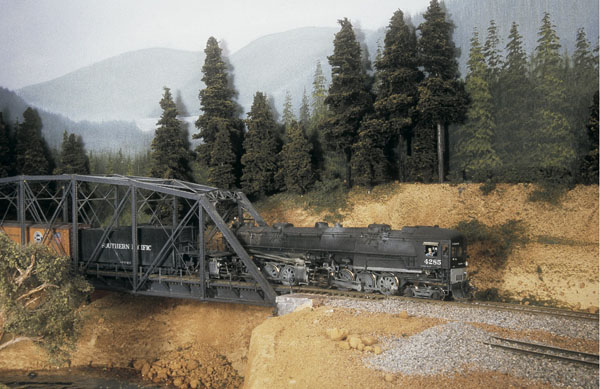
Read how John Armstrong developed the Southern Pacific Lines Shasta Division for Otis McGree, Jr. Main line through the mountains […]
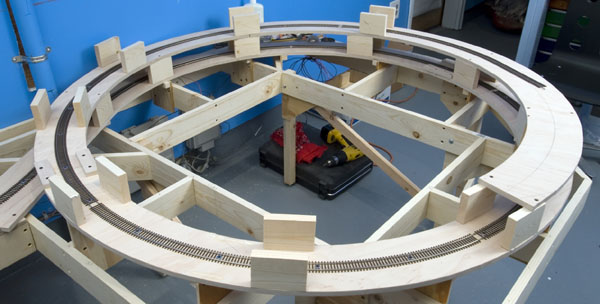
A house, a car, and a layout all have something in common: they turn out better when they’re built on a solid framework. This is especially true of a helix. A helix – a spiral ramp meant to lift a model train from one level of a layout to another – may not be prototypical, […]
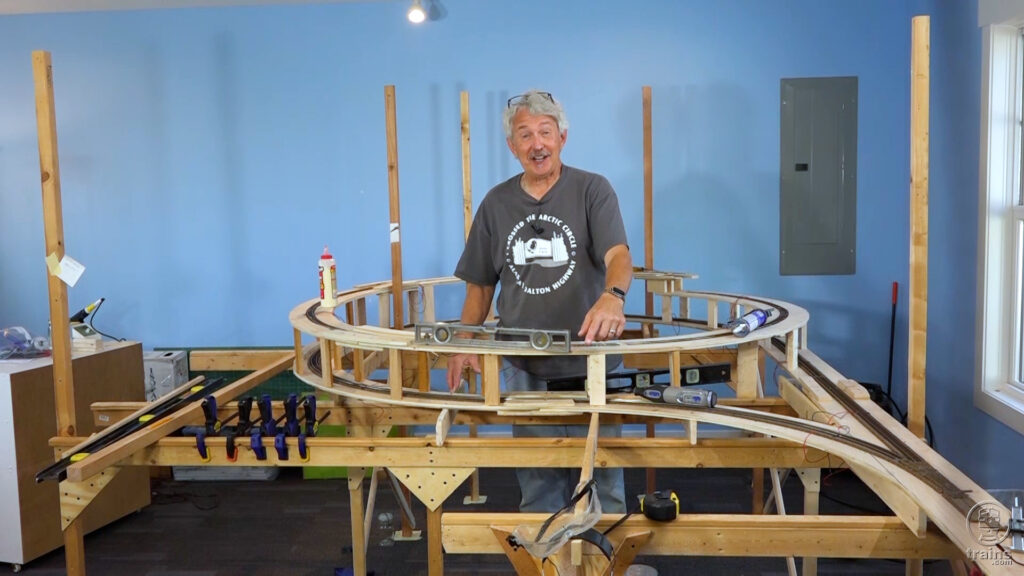
Even with a little help from a friend, host Gerry Leone still struggles with benchwork construction. But after setting joists straight and level, he jumps right into raising the grade along the helix. Discover a few new track tips and tricks along the way. […]
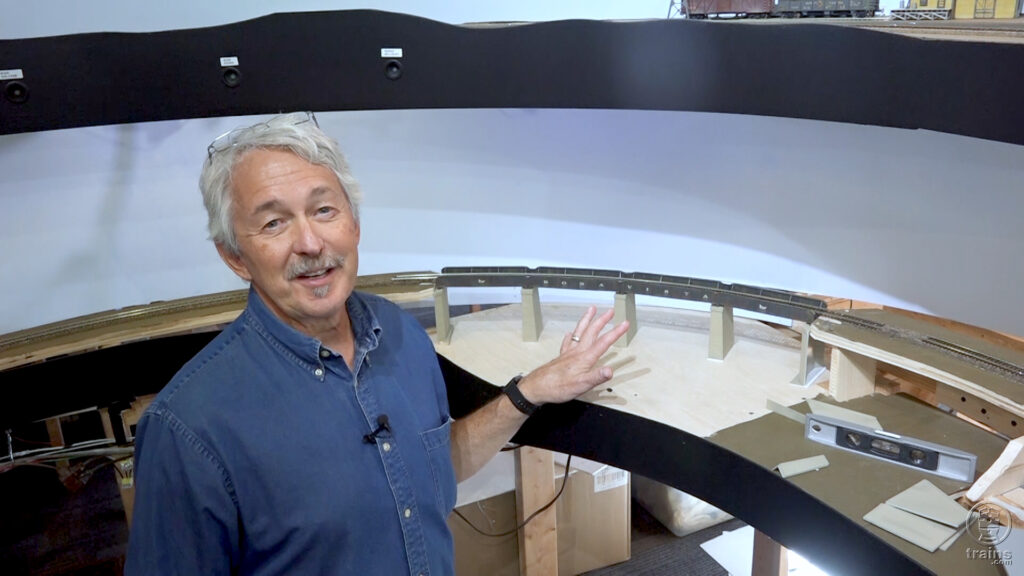
By popular demand! Back on Track host Gerry Leone jumps ahead in time to begin an effort to shape a common layout space into a unique place! In this episode, you’ll see the start of the lake scene takes the curved mainline into consideration. First, Gerry works to build up a plate girder bridge to […]
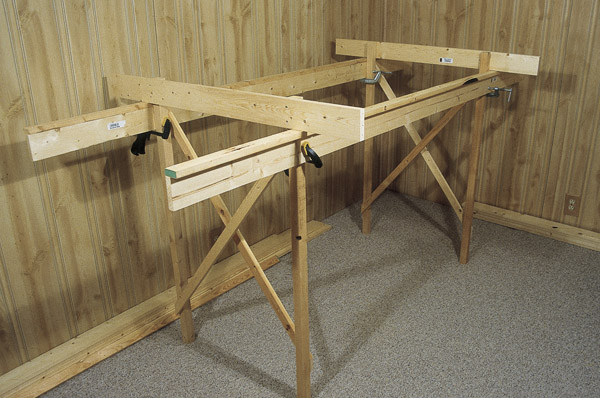
Open-grid benchworkStarter layouts are often flat and built on a 4 x 8 sheet of plywood. However, the majority of layouts have tracks at varying heights separated by grades. The easiest way to add elevation to a layout is to use open-grid benchwork. For this type of construction you place a plywood subroadbed under the […]
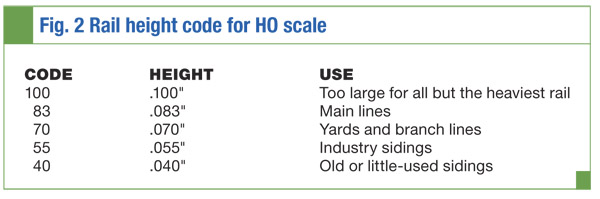
Code of railPrototype railroads use rail of varying heights and weights depending on the type and frequency of trains that run on it. On model railroads, code is the height of the rail measured in hundredths of an inch. See fig. 2. FlextrackWhile some modelers handlay their tracks by spiking the rail to individual wood […]
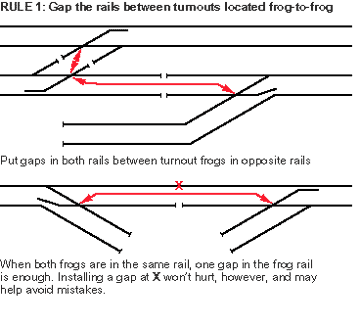
How to wire power-routing turnouts: While it may initially seem difficult, basic two-rail wiring for power-routing turnouts is easy if you understand and apply just two simple rules. The diagrams below demonstrate these crucial wiring principles. Rule 1: Gap the rails between turnouts located frog-to-frog. Place gaps in both rails, between turnout frogs in opposite […]
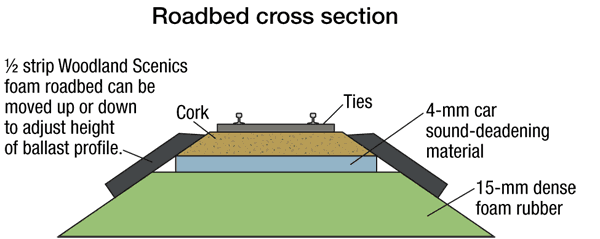
A number of years ago I started to experiment with substitutes for white glue to hold down the track and fix the ballast in an attempt to limit the transmission of sound through the benchwork. Part of my solution came in the form of acrylic-latex caulk (the type used around doors and windows). I use […]
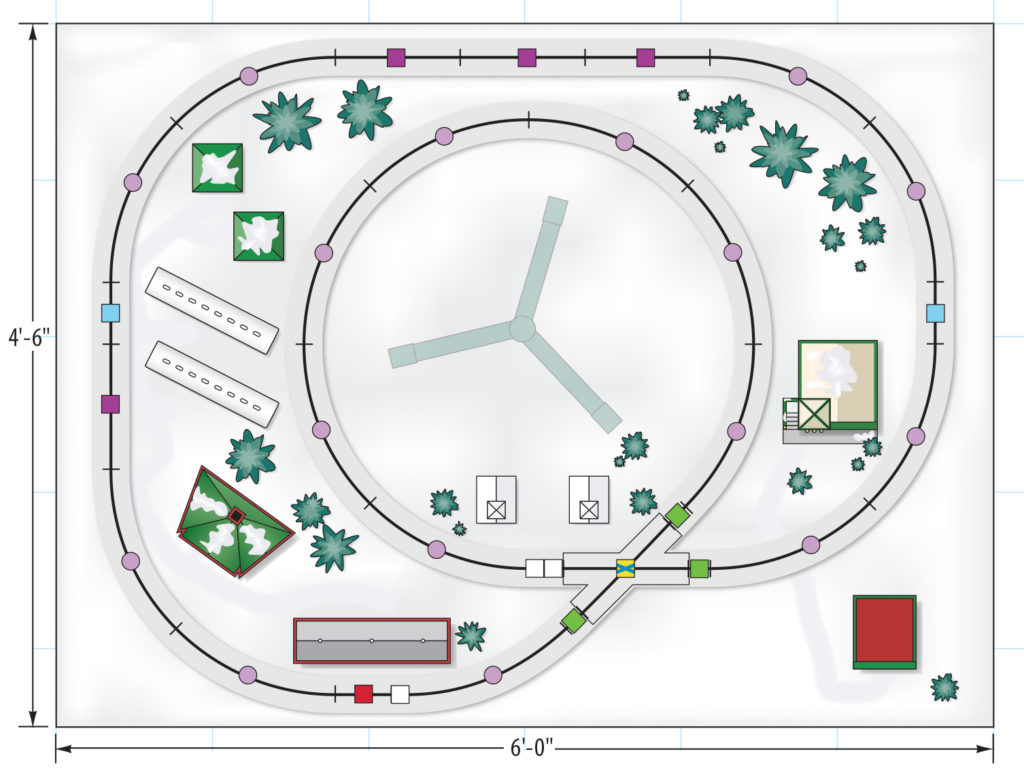
This multi-level layout plan, contributed Lou Melick, first appeared in the December 2007 issue of CLASSIC TOY TRAINS. A previously published CTT track plan inspired this affordable and fun holiday layout. […]
Watch video of this logging-themed 4 x8 project railroad, the Cascade & Timber Trail Ry. […]
Watch video of this logging-themed 4 x8 project railroad, the Cascade & Timber Trail Ry. […]
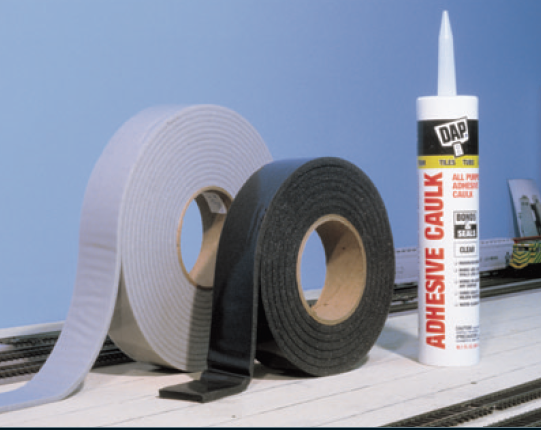
Instead of using spikes or contact cement, Model Railroader contributor Chuck Hitchcock shows you how to use DAP adhesive caulk and topper tape (a material used to insulate pickup truck caps) to lay track. Quick and easy Flextrack […]
