

How to wire power-routing turnouts: While it may initially seem difficult, basic two-rail wiring for power-routing turnouts is easy if you understand and apply just two simple rules. The diagrams below demonstrate these crucial wiring principles.
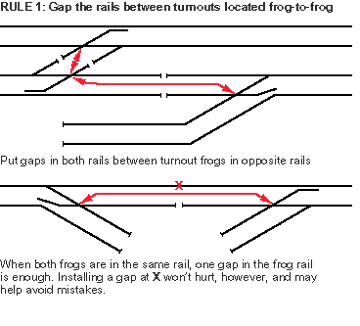
Rule 1: Gap the rails between turnouts located frog-to-frog.
Place gaps in both rails, between turnout frogs in opposite rails. When both frogs are in the same rail, one gap in the frog rail is enough. Installing a gap at X in the diagram above won’t hurt, and may help avoid mistakes. Notice that what is important is the arrangement of the turnouts, and not the distance between them.
Place gaps in both rails, between turnout frogs in opposite rails. When both frogs are in the same rail, one gap in the frog rail is enough. Installing a gap at X in the diagram above won’t hurt, and may help avoid mistakes. Notice that what is important is the arrangement of the turnouts, and not the distance between them.
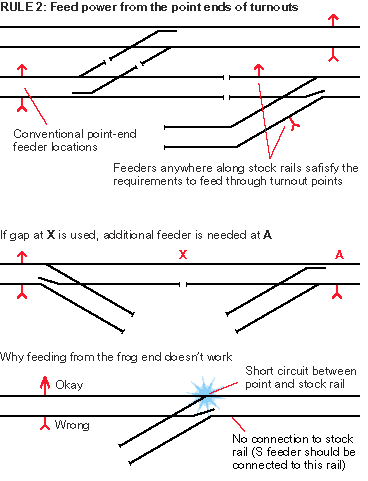
Rule 2: Feed power from the point ends of turnouts.
This graphic shows why rule 2 is necessary, and what it means. Notice that feeders anywhere along the turnout stock rails satisfy rule 2. That’s because the frog and the rails beyond it are still supplied with power only through the turnout points.
This graphic shows why rule 2 is necessary, and what it means. Notice that feeders anywhere along the turnout stock rails satisfy rule 2. That’s because the frog and the rails beyond it are still supplied with power only through the turnout points.
It may seem difficult to wire power-routing turnouts, but keeping these two rules in mind, many errors can be prevented, and while wiring is not a favorite task for many, it is none the less essential. Looking for more information on turnouts? Read Five tips for trouble-free turnouts, which demonstrates how to improve performance and electrical continuity on your layout.
From Wiring Your Model Railroad by Andy Sperandeo, published by Kalmbach Books.