
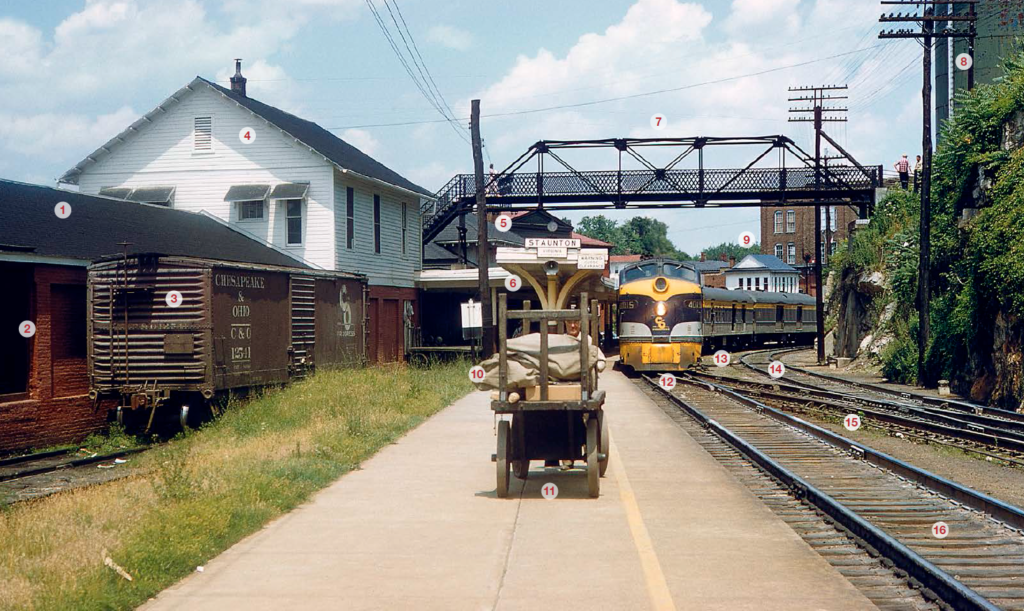
What’s in a photograph?: C&O’s ‘Sportsman’ at Staunton, Va.
StauntonVa

A single photo from the 1950s of C&O’s ‘Sportsman’ at a small-city station at Staunton, Va., reveals plenty of small, easily overlooked details. 1 – Freight house Staunton (“Stan-ton”) in 1950 had a population of 19,927. All towns of this significance once had a freight house where less-than-carload (LCL) freight was handled. Warehousemen used a […]

Read More…

If a Transcontinental Railroad were Built Today

Union Pacific transcontinental railroad construction crew

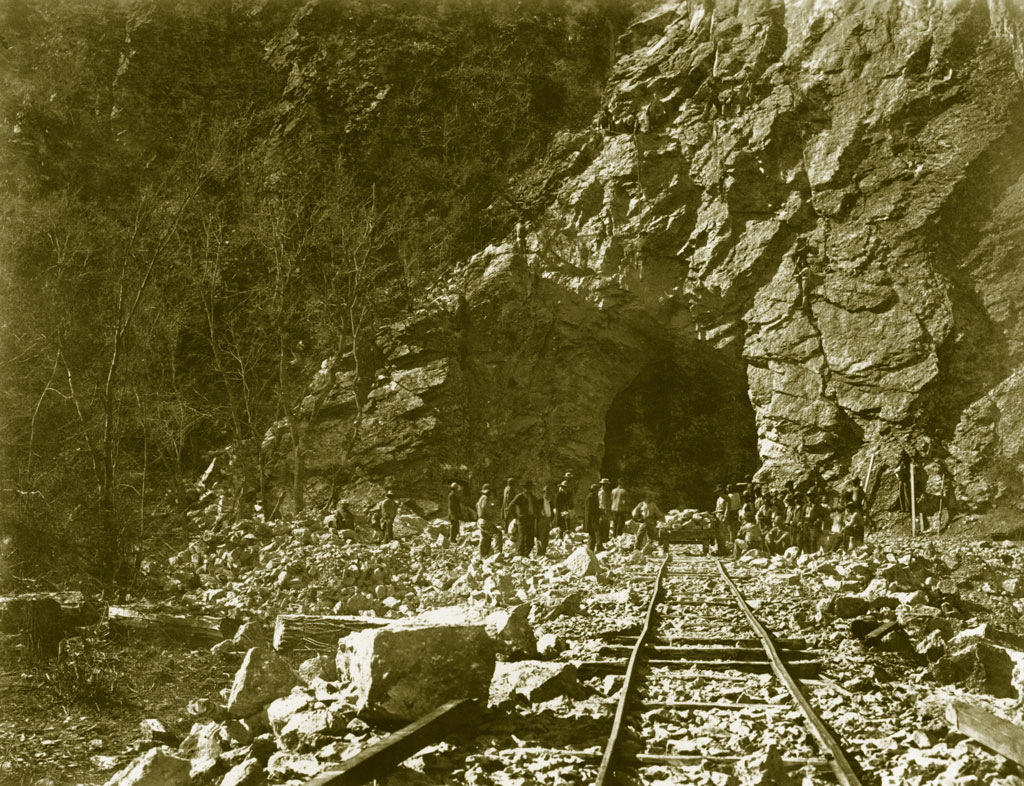
Construction crews working westward on the Union Pacific encountered rough going when they reached Utah’s Weber Canyon. Trains collection If you built a transcontinental railroad today from scratch, how long would it take, given the regulatory environment of the modern world? Nobody knows for sure, but the best guess is about 57 years. Here’s a […]

Read More…

Year-by-year, a timeline of completing the Transcontinental Railroad

Timeline Union Pacific transcontinenta lrailroad building Archer Wyoming

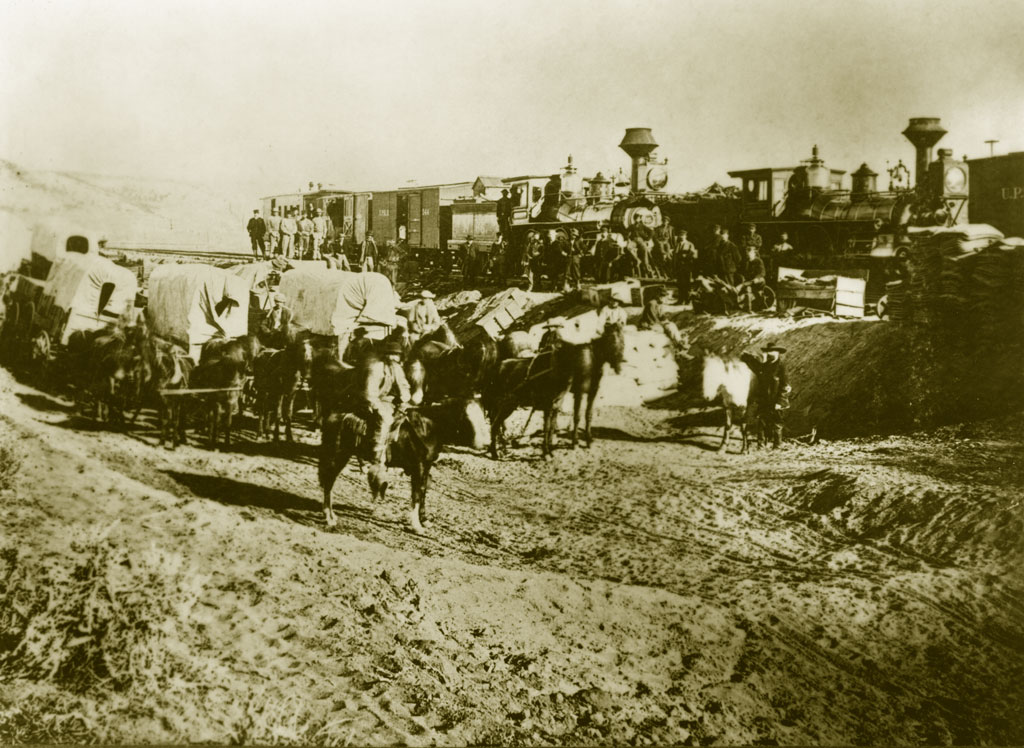
Union Pacific trains and ocvered wagons congregate near the end of track at Archer, Wyo., in 1867 during construction westward. Union Pacific 1832: Proponents call for transcontinental railroad 1845: New England merchant and traveler, Asa Whitney begins advocacy for Pacific Railroad 1853: Congress appropriates $150,000 for survey of five routes 1855-1860: 12 volumes of findings […]

Read More…

Drew’s Trackside Adventures: Episode 41 Gallop to the Gateway City

DTA host Drew Halverson, along with pals Kent Johnson and Charlie Conway, launch their summer-long mission to explore the hottest railroad action in the state of Missouri. But first, they have get to the Gateway to the West. Make the trip with the guys, as they chase and race trains (and rain) along a wandering […]

Read More…

Taking Care of Business: Caledonian Sleeper, Part 2

UK-style passenger trains near a station platform, one paused in front of a "Stop" signal.

Charlie Conway continues his UK travels with unprecedented access aboard The Caledonian Sleeper. Follow Chas to the cab, as he rides along with the drivers responsible for providing slumbering passengers with a safe and sublime journey into the Scottish Highlands. […]

Read More…

What’s in a photograph?: Norfolk & Western at Blue Ridge, Va.

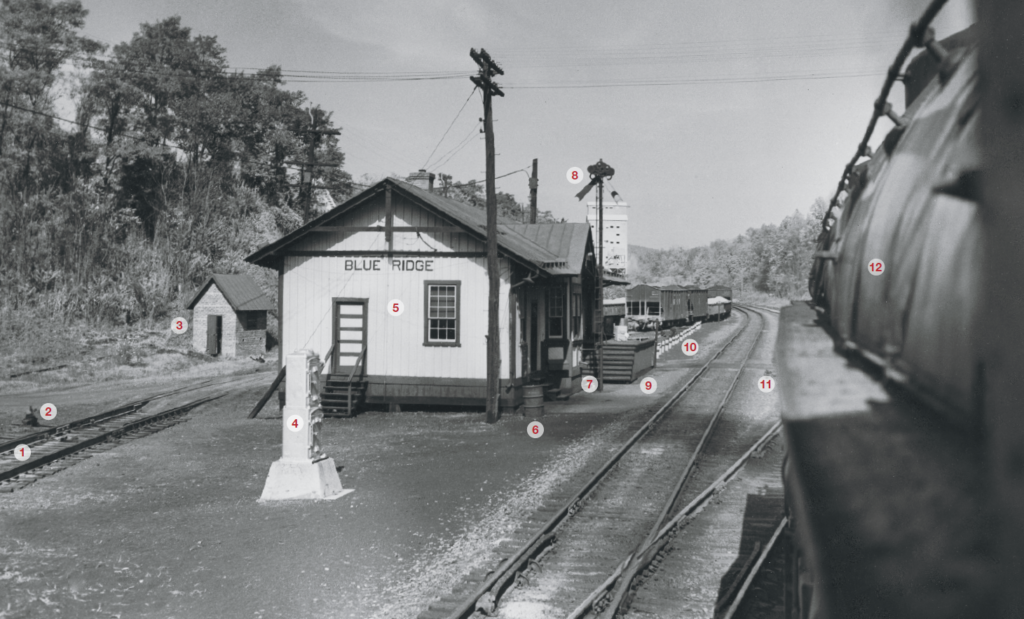
View from the cab of a Norfolk & Western 2-6-6-4 steam locomotive on an eastbound freight in 1953 at Blue Ridge, West Virginia. The photograph is black and white with 12 numbered callouts.

1 Split-point derail device. Considered more effective than a lifting-block derail when there is extra risk of cars rolling out onto the main line from a “house track” or “back track” (terms for station trackage other than a passing siding), or from an industry track, especially when there is a descending grade toward the switch, […]

Read More…

Switch heaters

TRNAT1116_99

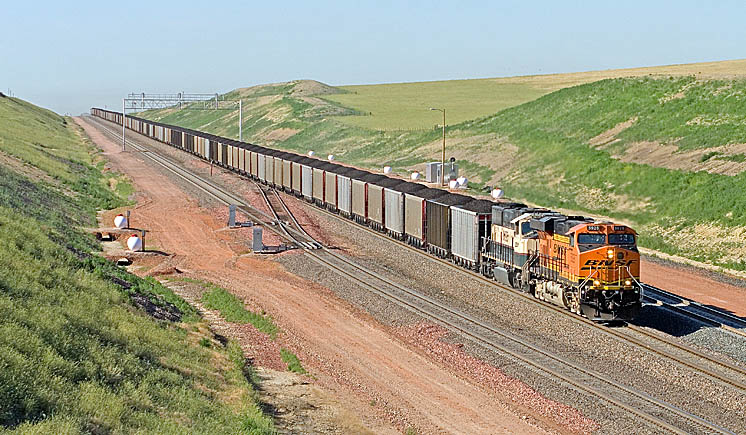
A northbound BNSF coal train passes Coal Creek Junction, Wyo., in July 2008. Steve Glischinski Q The picture on page 42 of the March 2016 issue shows some interesting trackside equipment. It looks like they could be switch heater propane tanks, however, I don’t see any switches. – Bruce Bussert, Saratoga Springs, N.Y. A The […]

Read More…

‘Curvo’ the Transcontinental Railroad’s mainline challenge in Utah

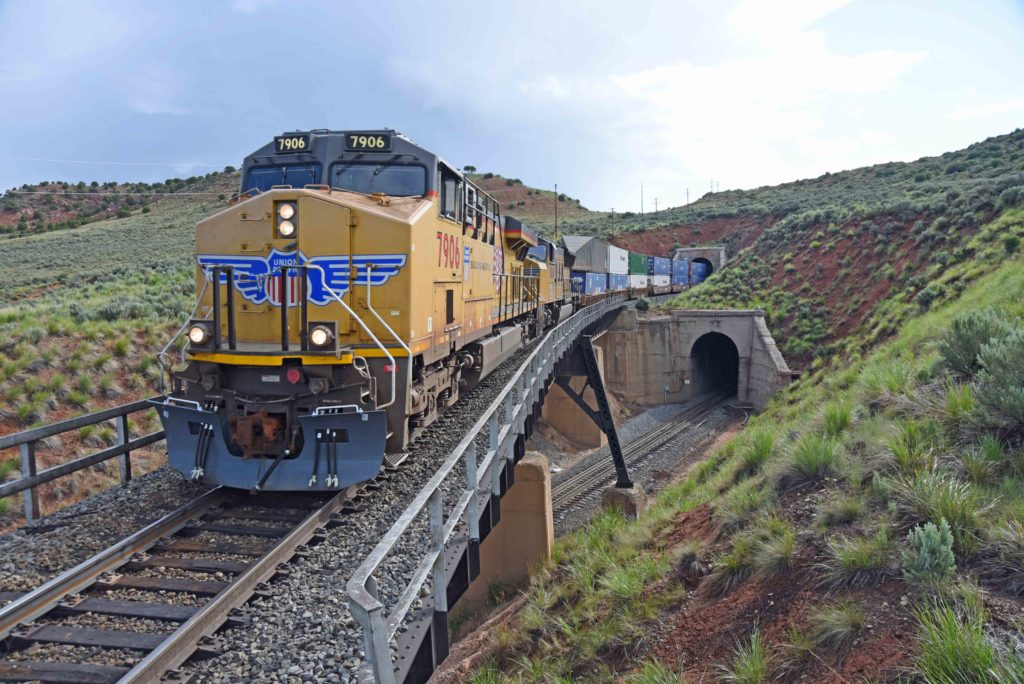
A westbound Union Pacific intermodal train is seen at Curvo in Utah, along the first Transcontinental Railroad.

A close-up look at Union Pacific ES44AC No. 7906 leading a westbound intermodal train at “Curvo,” a little-known engineering hotspot on the route of the first Transcontinental Railroad. TRAINS: Jim Wrinn Curvo, Utah, is a location on the route of the first Transcontinental Railroad that may be unique in American railroading. A Transcontinental Railroad spot […]

Read More…

Leland Stanford’s Sacramento mansion: Living like a Transcontinental Railroad tycoon

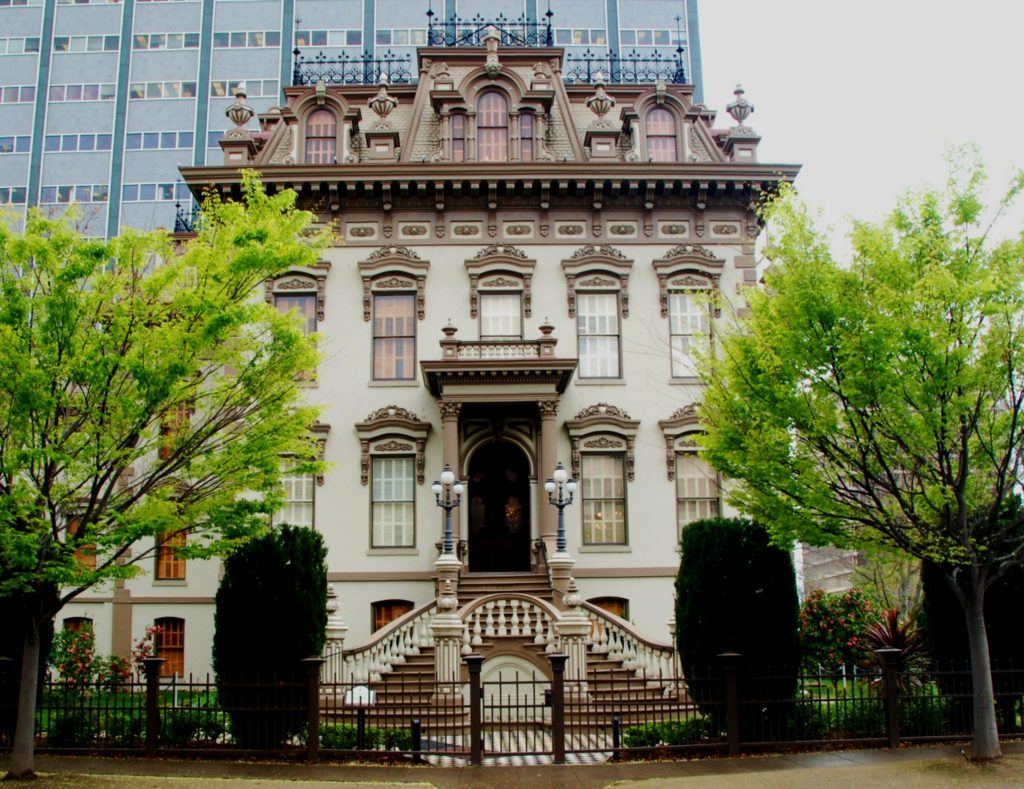
Transcontinental Railroad tycoon Leland Stanford's Sacramento, Calif., mansion.

Leland Stanford’s Sacramento, Calif., mansion. Don Cox The Leland Stanford Mansion in Sacramento, Calif., offers today’s visitors a glimpse into the life of a remarkable man — Central Pacific Railroad president, California governor, and founding father of a great university. Charles Crocker, Mark Hopkins, Collis P. Huntington, and Stanford all had mansions, but only one […]

Read More…

The Transcontinental Railroad’s Impact on World War II, Part 2

CTRH0319_007

Beyond the raised hat in the foreground, SP’s L. P. Hopkins, Utah Gov. Herbert Maw, and UP’s E. C. Schmidt stand with the just-removed “Last Spike,” undoing 73 years of history. Often called “Promontory Summit,” the location was simply “Promontory” to SP and in the Official Guide. Classic Trains collection Removing the Transcontinental Railroad’s last […]

Read More…

Where was the Transcontinental Railroad completed?

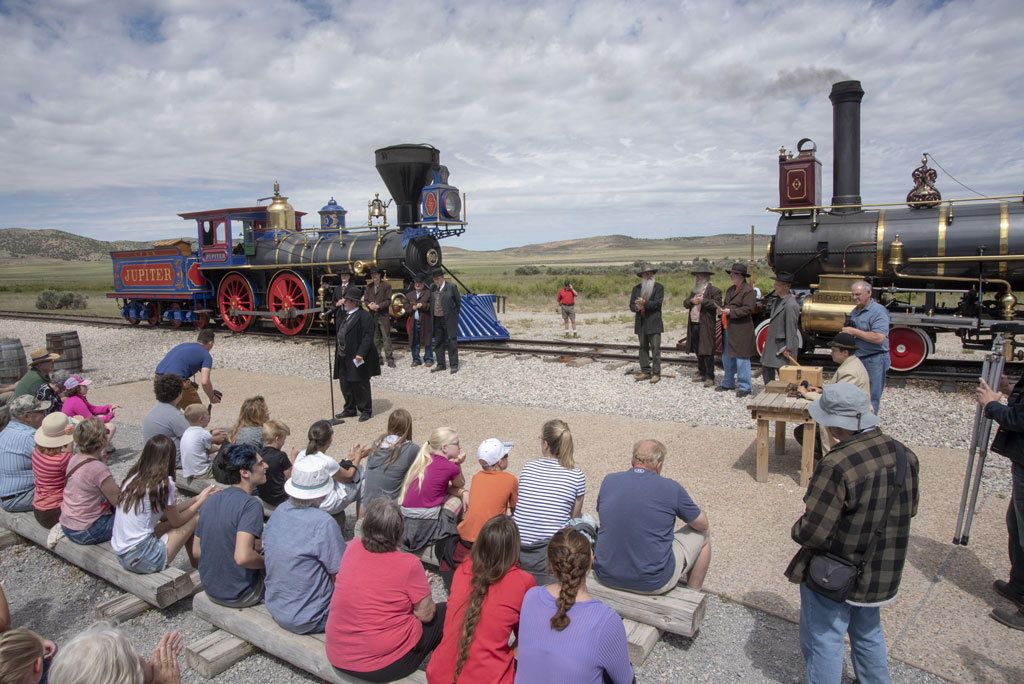
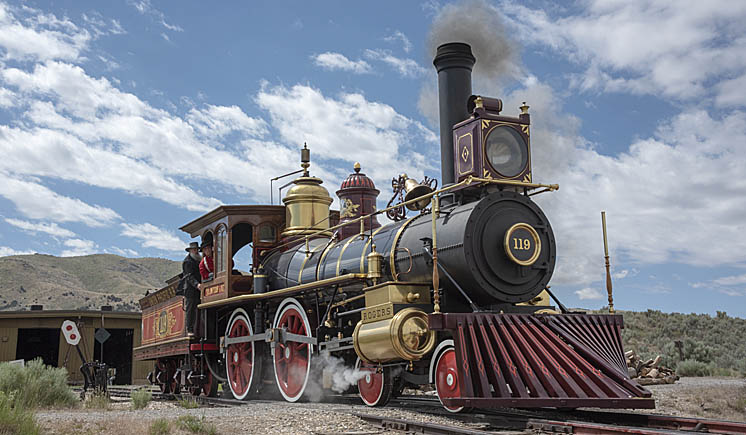
Today, Promontory Summit is home to the recreated Golden Spike Historic Site, home for two replica 4-4-0s: Union Pacific No. 119, shown, and Central Pacific Jupiter.

Today, Promontory Summit is home to the recreated Golden Spike Historic Site, home for two replica 4-4-0s: Union Pacific No. 119, shown, and Central Pacific Jupiter. Jim Wrinn Most school children learned that the Transcontinental Railroad was completed May 10, 1869, at “Promontory Point,” where the Central Pacific and the Union Pacific met, and where […]

Read More…