
Display layouts and showrooms
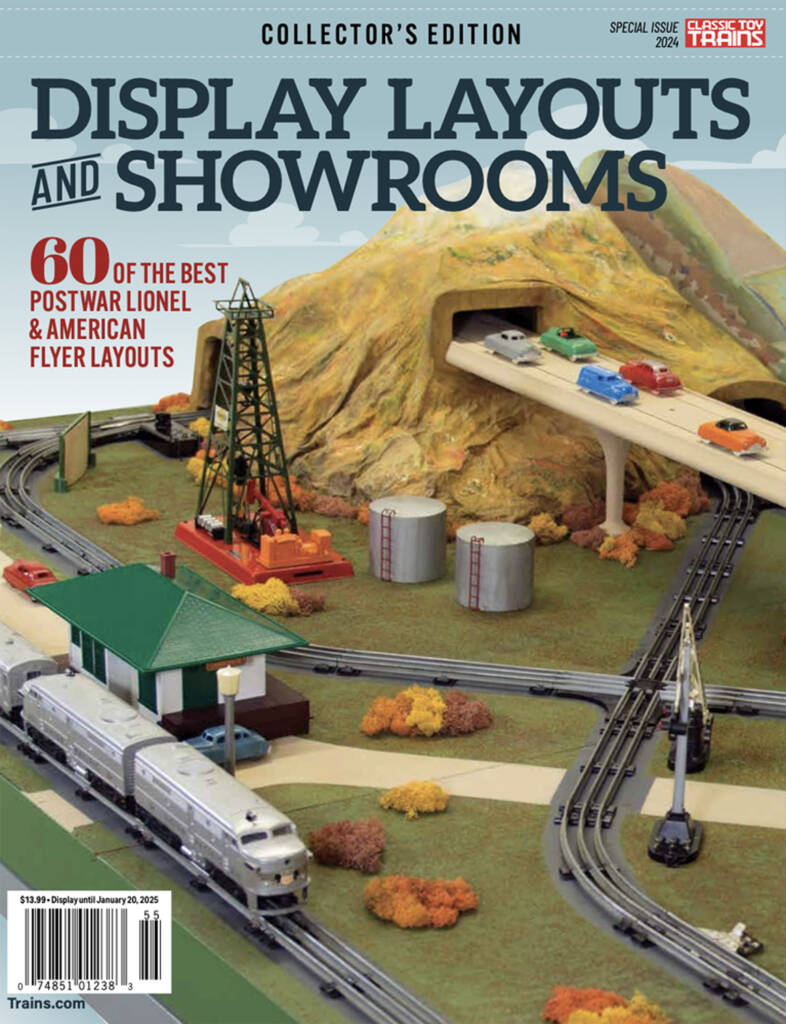
The cover for Classic Toy Trains Magazine's Display Layouts and Showrooms special issue which features a large toy train display layout on the cover

Also in this issue: Showroom out west Rare Lionel photos from 1940 take us inside First decade at the Gilbert Hall of Science The company thrilled New York City in the 1940s Tribute to a forgotten showroom display Where Lionel ran accessories in 1945 Lionel builds a hub for the Midwest The Chicago showroom handled […]

Read More…

Lionel Legacy Alco S2 switcher

maroon model train on a layout with figures nearby

Hidden in the back of the Lionel 2023 Volume 2 catalog — behind large Legacy steam and diesels locomotives, plus a few heavyweight passenger cars — was the small yet proven Alco S2 switcher.  The S2 was one of Alco’s most reliable and successful locomotives. Powered by a turbocharged inline 6 cylinder engine, it pumped […]

Read More…

KR Models HO skeleton log car

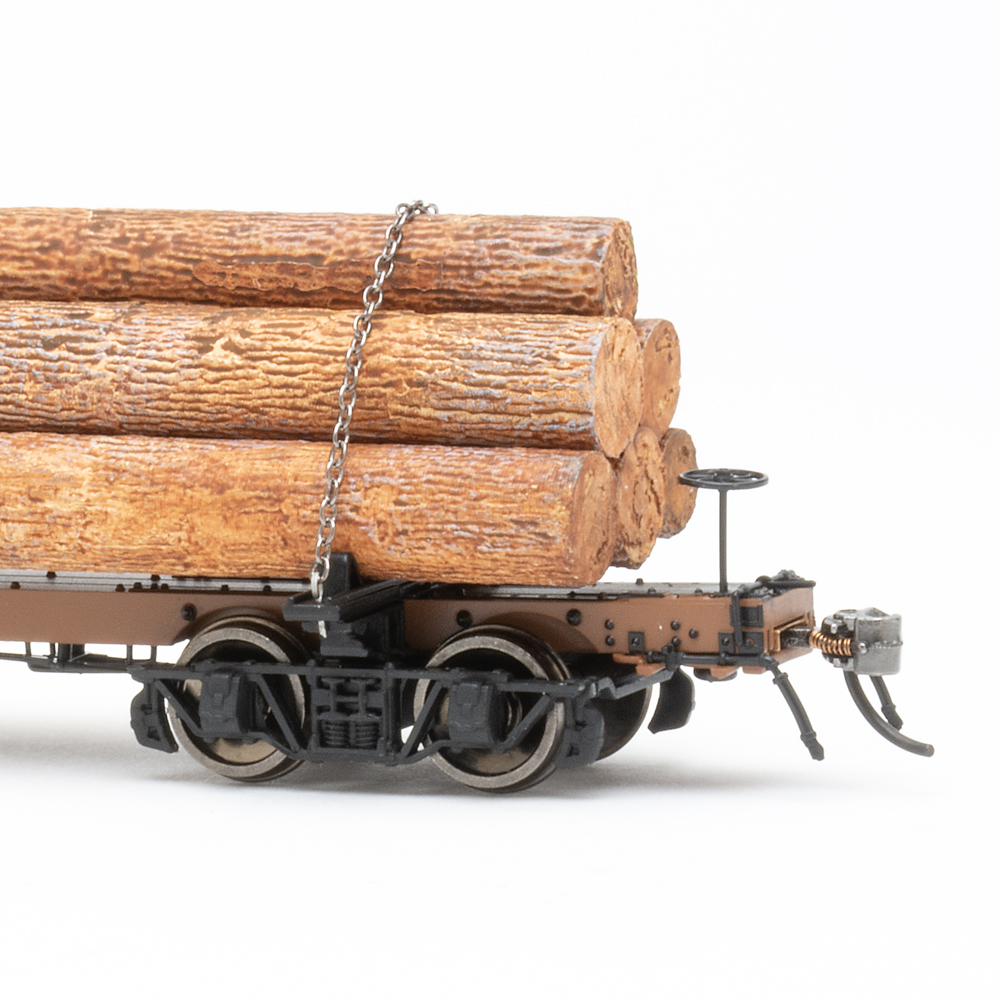
Color photo showing HO model with log load.

Price: $60 (without logs), $75 (with logs) Manufacturer KR Models Ltd. No. 100 — 17865 106A Ave. Edmonton, Alberta, Canada T5S 1V8 krmodels.net Era: Early 1900s to 1950s Comments: Loaded and empty skeleton log cars are now available in HO scale from KR Models Ltd. The ready-to-run model features injection-molded plastic construction, metal wheelsets, and […]

Read More…

Resurrecting unused locomotives

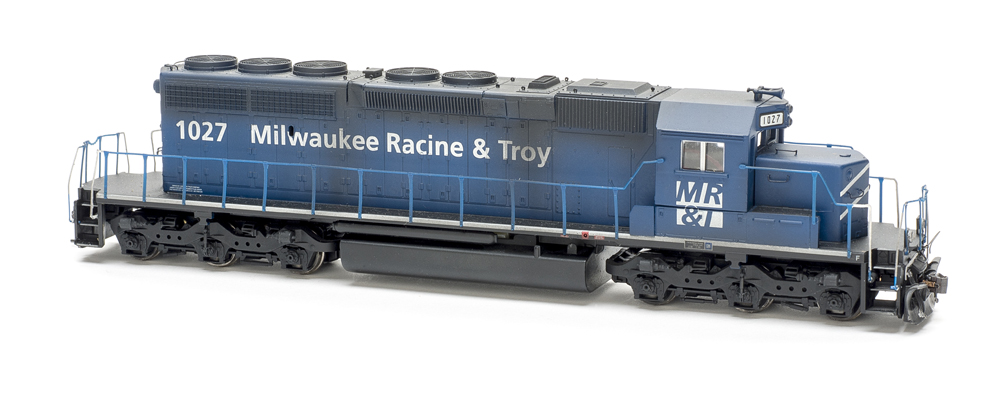
Photo of weathered dark blue six-axle road unit on white background

There are many reasons you might need to bring a locomotive back to life. Here are some tips for resurrecting unused locomotives. Disassembly The first thing you’ll need to do is to get inside the locomotive shell. Maybe you’re lucky enough to have an exploded-view diagram of your model. If not, you can check the […]

Read More…

5 tips for great urban scenery

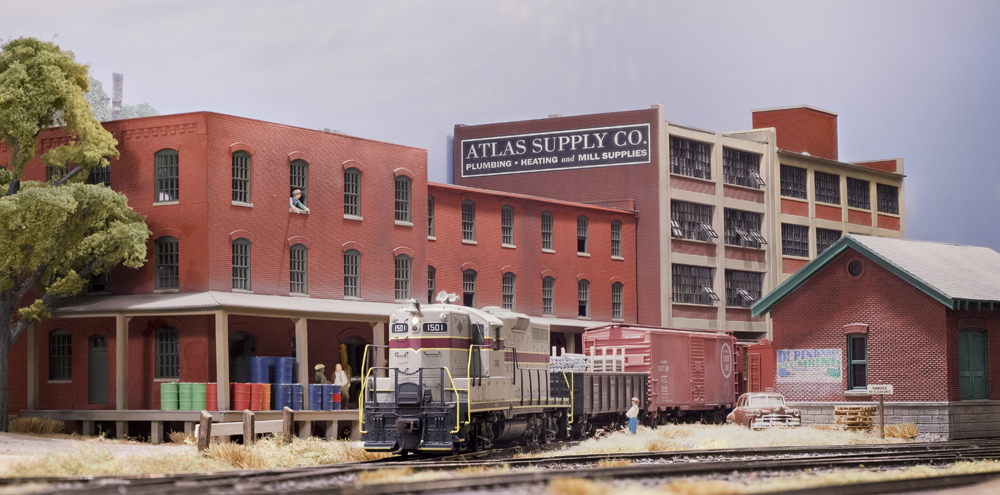
Color photo HO scale train with assorted brick buildings in background.

Contrary to popular belief, modeling an urban scene doesn’t require a bunch of space. Want proof? Check out the Winston-Salem Southbound, our 2018 project layout, shown in the photo above. The 2’-9” x 8’-2” HO scale shelf layout depicted the railroad’s Tar Branch in Winston-Salem, N.C. It featured more than a half-dozen rail-served industries, as […]

Read More…

Model steam locomotive driver flanges

A black model steam locomotive

Q: Why are the flanges on model steam engine drive wheels so much larger than on the prototypes? Is it because the models don’t weigh very much? Or is it because they have to navigate tight curves? And do larger scales (like G scale and live-steam models) have flanges that are closer to the prototypes? […]

Read More…

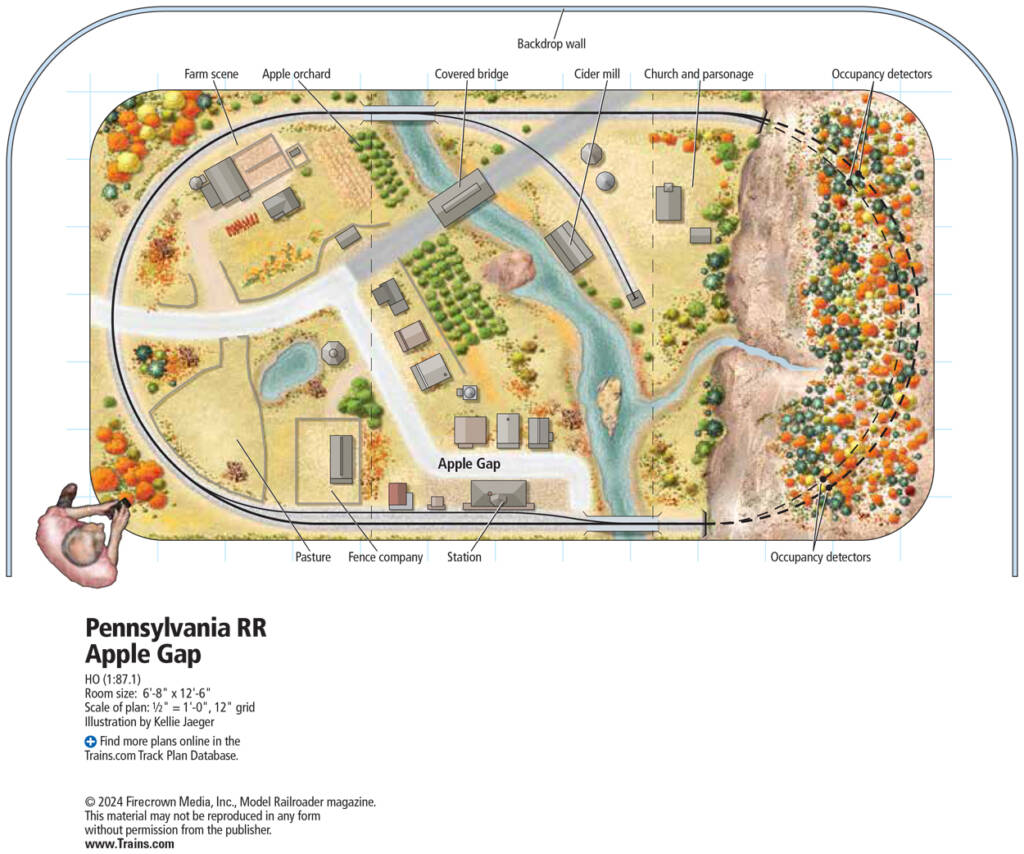
The HO scale Pennsylvania RR Apple Gap layout

A model railroad tracplan with a man standing at the layout at its bottom left corner

Facts and features Name: Pennsylvania RR Scale: HO (1:87)Size: 6′-8″ x 12′-6″Prototype: freelanced, inspired by PRRLocale: northeastern PennsylvaniaEra: changeable between 1870-1915, 1916-1942, and 1943-1959Style: island Mainline run: 31 feetMinimum radius: 36.5″Minimum turnout: No. 6Maximum grade: none (flat)Benchwork: tabletopHeight: 511⁄2“Roadbed: corkTrack: Micro Engineering flexible code 83Scenery: foam board and Kingspan underlayment on 3 ⁄4” medium density […]

Read More…

LCCA announces custom-run Lionel products

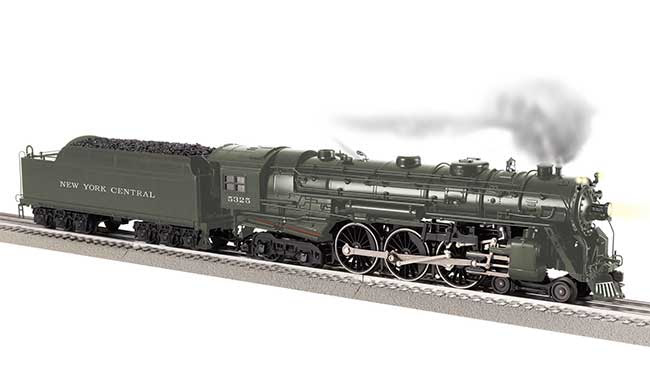
model steam locomotive with smoke

The Lionel Collectors Club of America (LCCA) announces some Lionel custom-run products. To celebrate Lionel Trains’ 125th anniversary, the LCCA is releasing a VisionLine 4-6-4 Hudson locomotive. The engine features operation via Legacy, TMCC, or conventional mode with a standard transformer. It also features Bluetooth control and Lionel Voice Control. Minimum curve requirement is O-54 […]

Read More…

How do mechanical passenger car washers work?

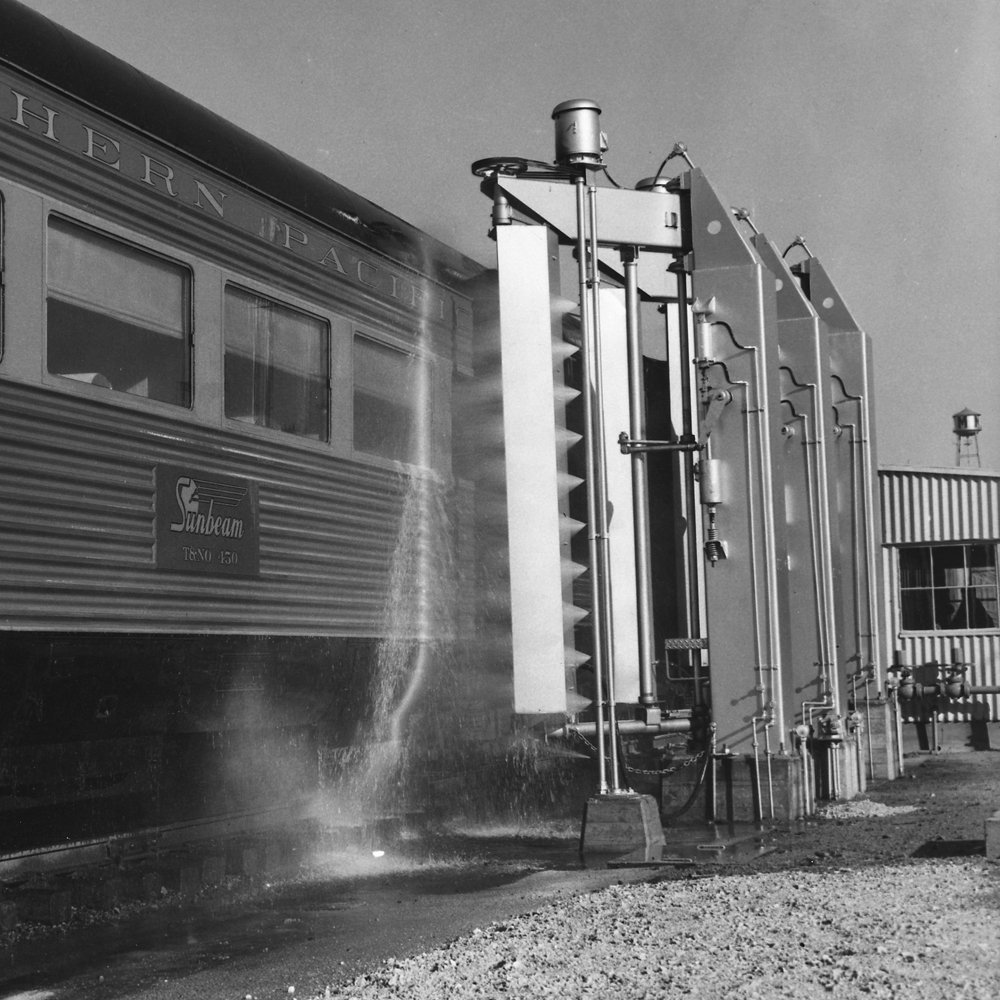
Black-and-white image of streamlined passenger car by trackside mechanical washer.

Q: How do mechanical passenger car washers work? — Steve Moore A: Keeping passenger cars clean is a never-ending battle as they’re subjected to the same dirt, dust, and grime as locomotives and freight cars. While spot cleaning, such as windows, is handled en route, extensive cleaning is handled at coach yards and larger terminals. […]

Read More…

Commentary: How to re-invigorate your love of toy trains

chart with colored lines

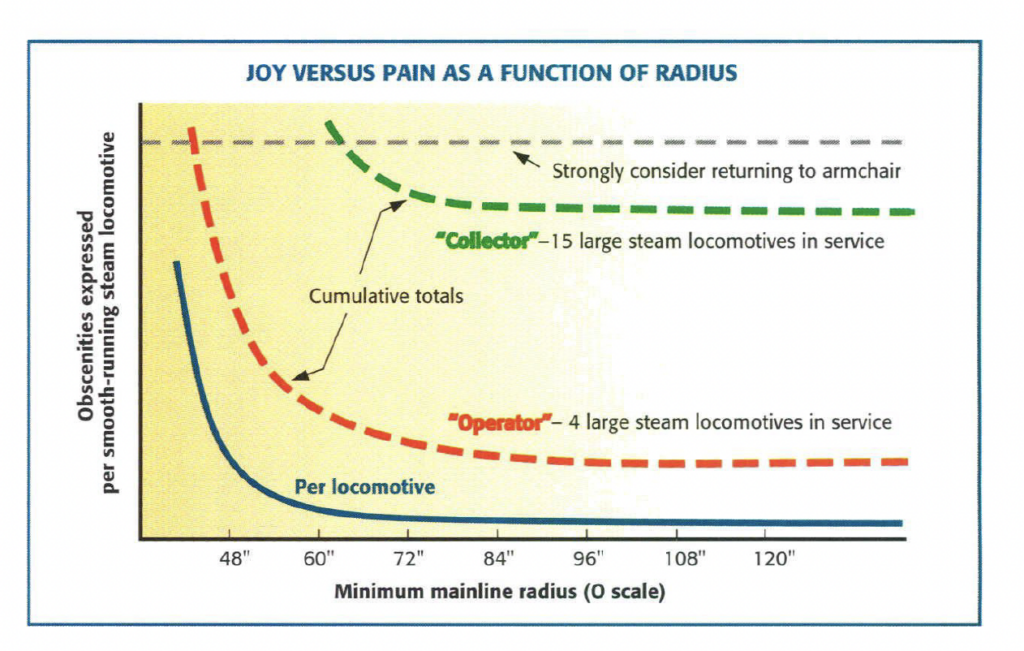
Editor’s note: I’ve found a number of unpublished manuscripts in our file cabinets. This one dates from around 1999. Does it still apply today? Do you think that simplifying or finding a new aspect of the hobby can re-invigorate your love of toy trains? Leave a comment and let us know. As railroad enthusiasts go, […]

Read More…

Why do railroads use signals?

A train passes in front of a large mountain in the background

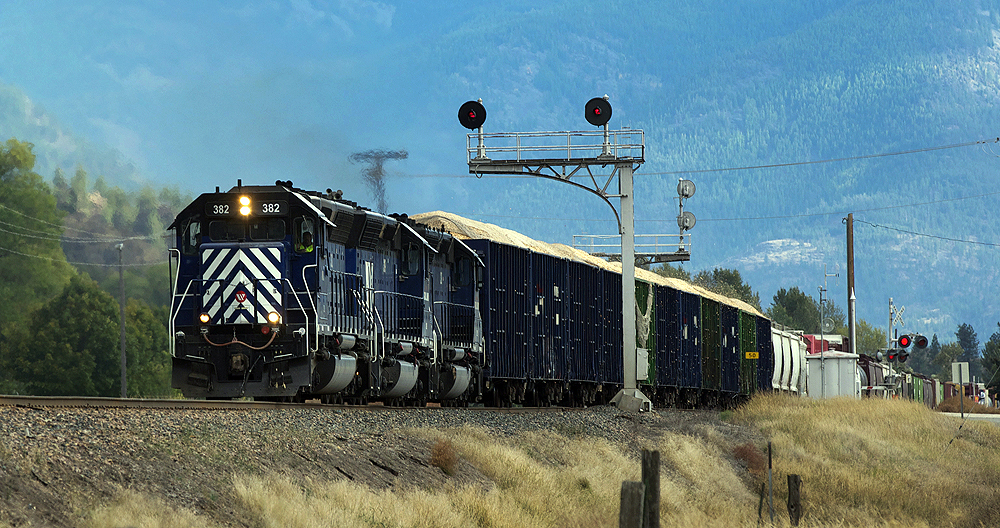
A common question newcomers to model railroading ask is “Why do railroads use signals?” The quick answer is to keep trains moving safely. But the topic of railroad signals deserves more of an explanation. The evolution of railroad signals When trains are running in the same direction on the same line, in opposite directions on […]

Read More…