





Model Railroader Tips & Tricks | Working with suitcase connectors
Working with suitcase connectors | While also known as insulation displacement connectors, the name “suitcase connector” is a more common…
Read moreWorking with suitcase connectors | While also known as insulation displacement connectors, the name “suitcase connector” is a more common…
Read more
Track selection and tracklaying insights | Join David, as he first surveys a wide array of flexible trackwork offerings, and…
Read more
Installing roadbed at turnouts | Watch and learn how to lay cork roadbed material under track switches of any scale…
Read more

Choosing roadbed | While adding track to your subroadbed layout base is an possible, you’ll want to consider installing an…
Read more
Evaluating subroadbed options| When it comes to building a new model railroad, the foundation you use to support your trackwork…
Read more
Determining reasonable reach | David Popp shows you how to establish the most reasonable depth — distance from front edge…
Read more
Building L-girders| Watch and learn as David Popp demonstrates how to assemble one of the most essential and versatile components…
Read more
Adjusting leg height| In instances where the floor isn’t quite as flat as it looks, David Popp shows how to…
Read more
Selecting lumber for your layout| With a wide array of wood grades available at major home improvement centers, it’s important…
Read more
Rotary tool cutoff techniques | Trains.com Director David Popp demonstrates how a rotary motor tool can be used for a…
Read more
Replacing a circular saw blade| In this instance, David Popp shows Bryson Sleppy how installing a new, sharp blade yields…
Read more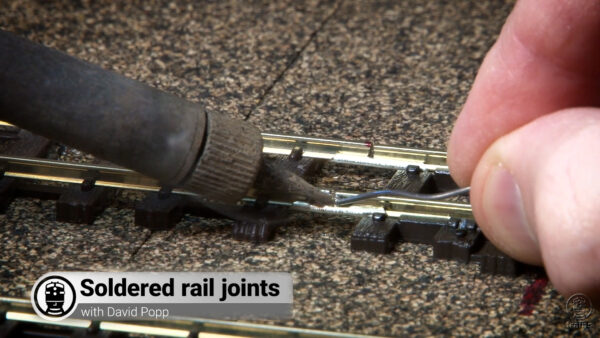
Working with rail joiners is difficult for many model railroaders. Rail joiners are the weakest electrical connection on any given…
Read more