

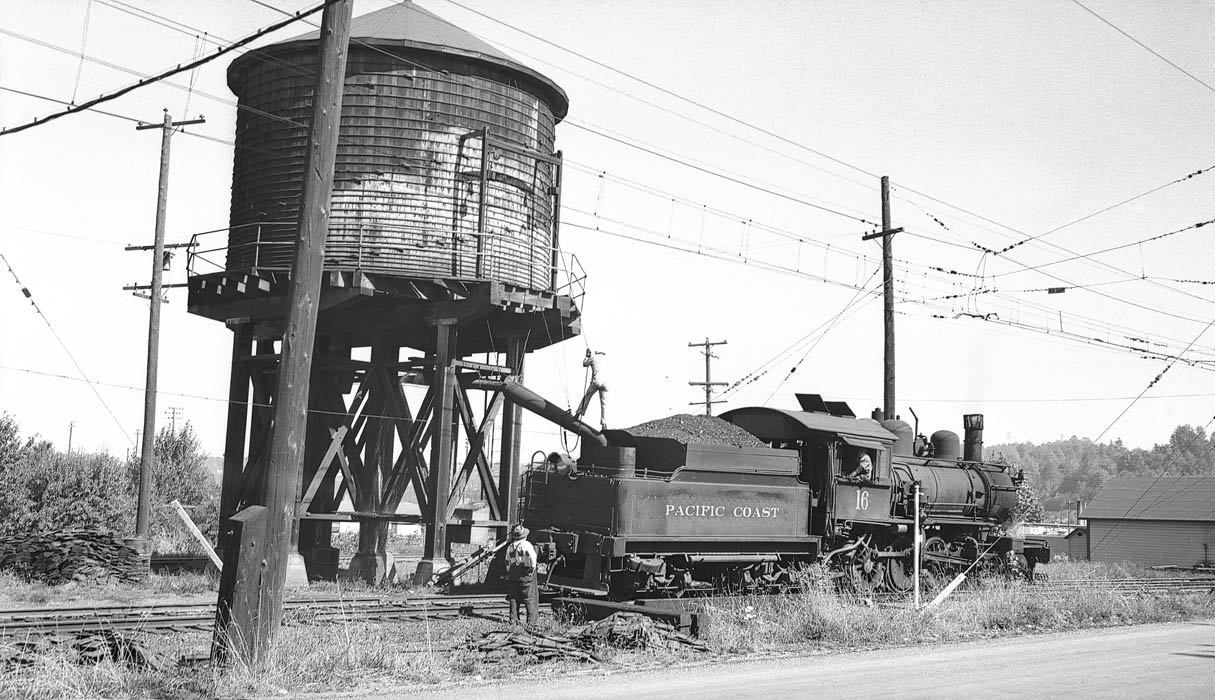
A Water treatment was, and is, an important part of steam locomotive service for both short-term and long-term boiler care. Treatment was added to the tenders when the firemen filled the tanks. Railroads tested water along their routes and issued treatment chemicals to engine crews. Water treatment was necessary to keep unnecessary scale from coating the boiler shell and attaching itself to boiler tubes.
The use of such chemical treatments in the tenders of steam locomotives was meant to remediate and mitigate impurities in the water before it reached the boiler. Some chemicals were designed to break down sludge and scale in the boiler so it could be removed with regular blowdowns.
Boiler water treatment chemicals primarily focus on avoiding scale, corrosion due to oxygen content, and foaming. A number of different chemicals are used to treat each of these conditions. They include sodium sulfites that act as oxygen scavengers, phosphates to combat sludge, and sodium carbonates to prevent scale buildup. All together, they make up a powerful combination for boiler health. – Martin E. Hansen