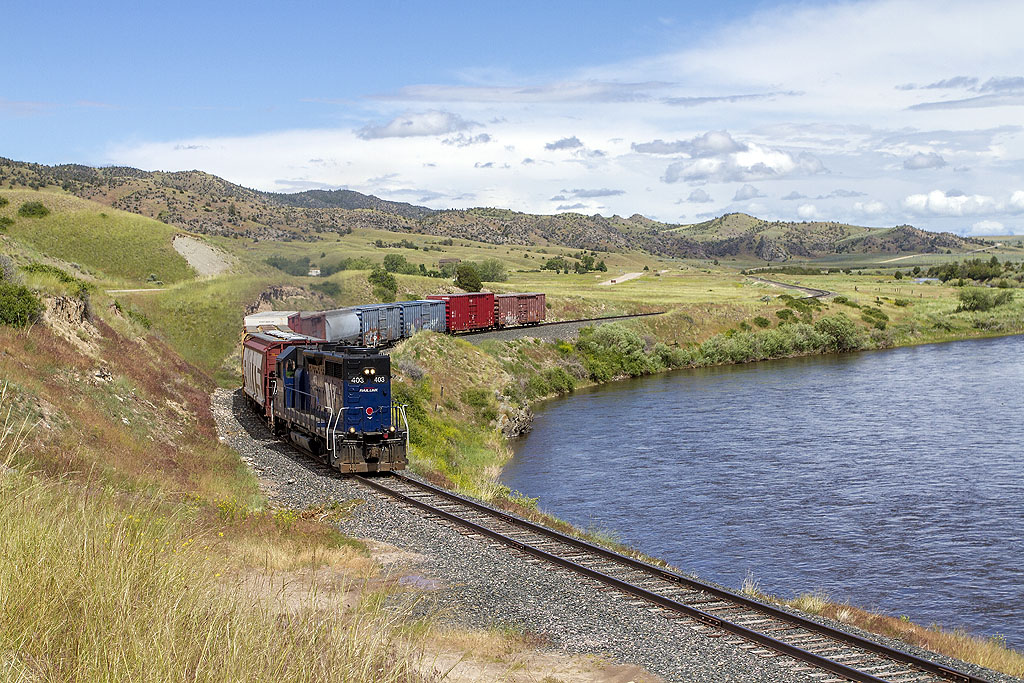
A Since the beginning of railroading, locomotives have been capable of running just as fast and as powerfully going backward as forward. Though modern diesel locomotives can be operated backward if needed, it’s not done often as visibility is poor looking around the 50-foot-plus-long hood on locomotives such as the EMD SD70ACe. When we do operate backward, we use the side mirrors to see where we’re going. Smaller switch engines are much easier to run backward as they are not nearly as long and their long hoods are much easier to see around. Most modern diesel locomotives also have ditch lights on both ends so any locomotive can be operated in either direction over public grade crossings and at more than certain statutory speed limits. – Art Schiller