Train Basics ABCs Of Railroading Understanding brake horsepower in diesel locomotives

Understanding brake horsepower in diesel locomotives

By Chris Guss | January 30, 2024

| Last updated on February 2, 2024


How much power actually makes it to the rail?

Email Newsletter

Get the newest photos, videos, stories, and more from Trains.com brands. Sign-up for email today!

Understanding brake horsepower: Drum-shaped equipment from inside a diesel locomotive
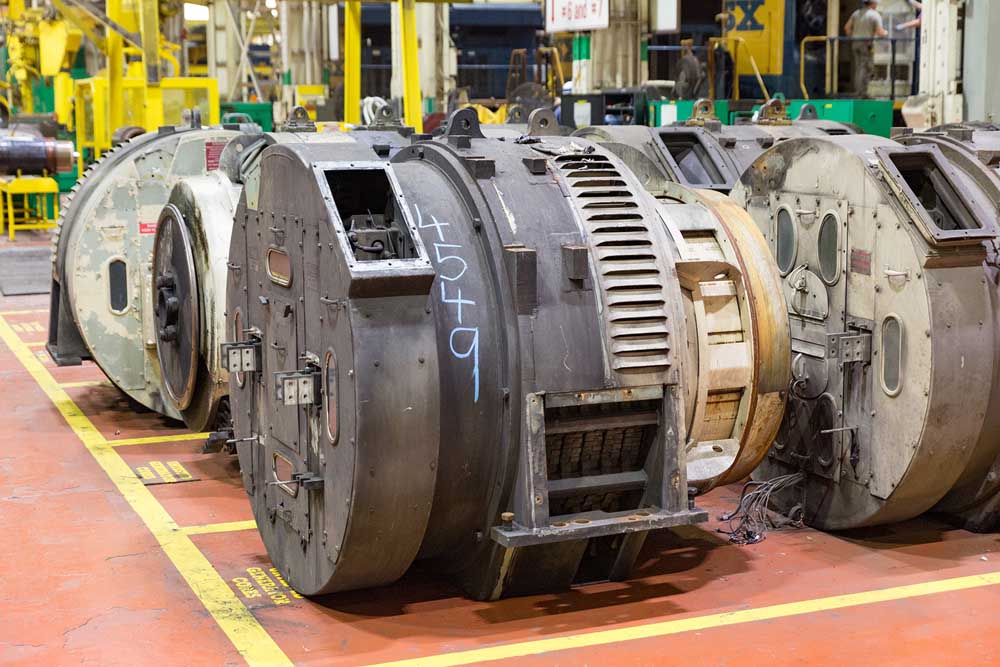
An EMD AR20 alternator from CSX SD70MAC 4549 at the railroad’s Huntington, W.Va., shop. Chris Guss


Understanding brake horsepower: Diesel engines, like all engines, are built to perform a specific function. In a locomotive, that role is to provide power to move freight cars from one place to another. When buying locomotives, one thing management looks at is how much horsepower each locomotive produces. In today’s new, six-axle freight locomotives this typically ranges from 4,300 to 4,400 horsepower. This amount is what actually makes it to the traction motors underneath the locomotive, but the engine produces more power than that. This is where the term brake horsepower comes in.

When a manufacturer designs a new freight locomotive, the diesel engine they select will have the rated horsepower to pull freight plus additional horsepower to support the various systems and subsystems found on every locomotive. When you add up the two figures you get the brake horsepower of the diesel engine. Any horsepower loss that takes away from moving freight cars is called a parasitic loss. These losses can come from such things an auxiliary generator/companion alternator that provides electrical power to run headlights, computer systems and blower fans.

In passenger locomotives, head-end power used to generate electricity for passenger cars can also draw power away from the traction motors. Head-end power can be directly driven from the diesel engine via a drive shaft or in the case of more modern locomotives, electrically powered.

Older locomotives had about 10% loss of horsepower due to parasitic loss, but today’s locomotives use less than that. Typically, only a few hundred horsepower out of the 4,300-4,400 horsepower are redirected to power other equipment on a locomotive.

To learn more about diesel locomotives, read How Diesel and Electric Locomotives Work, written by Jeff Wilson!