

Locomotives and rolling stock: There are a variety of reasons that dictate railroad equipment is better off being transported by truck rather than train.
Locomotives and rolling stock may not meet current railroad interchange standards, which includes being too old, and trucks or couplers that have been deemed unfit. They could be damaged beyond being made serviceable in the field or upon inspection, or deemed just not capable of safe train travel. Then, of course, there could just be no tracks to the final destination.
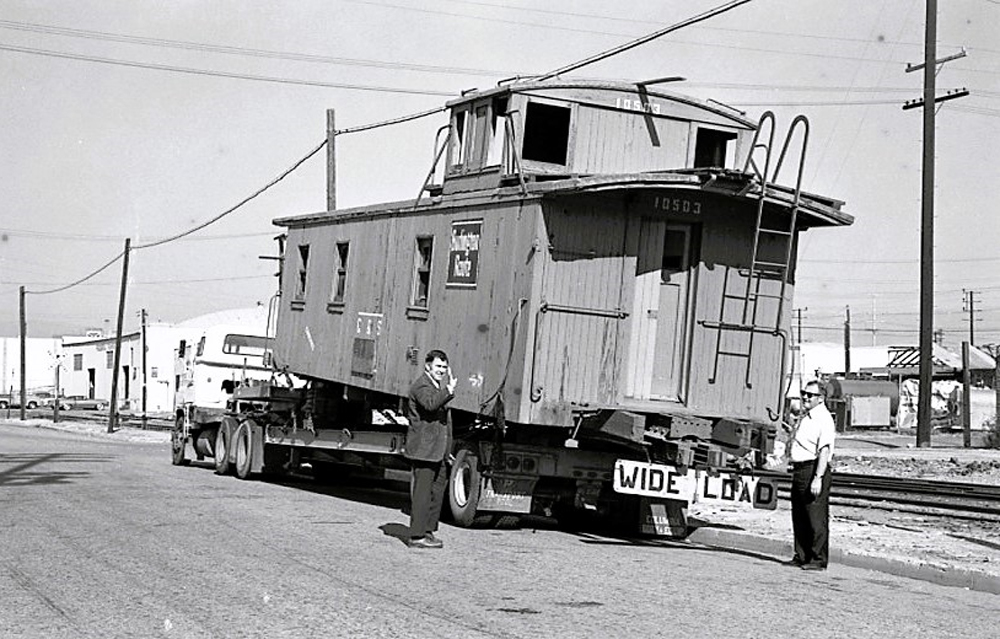
Driving on a Southern California freeway one day in the ’70s, I spotted something ahead of me that was truly out of place; I was sharing the road with a wooden Colorado & Southern cupola caboose! It was apparently moved in train from the Midwest to East Los Angeles, and then loaded onto a truck to its final destination. When the truck left the freeway and the driver pulled over for a moment to check his load, I shot this photo. Unfortunately, I forgot what the final destination was.
Locomotives are trucked, as well
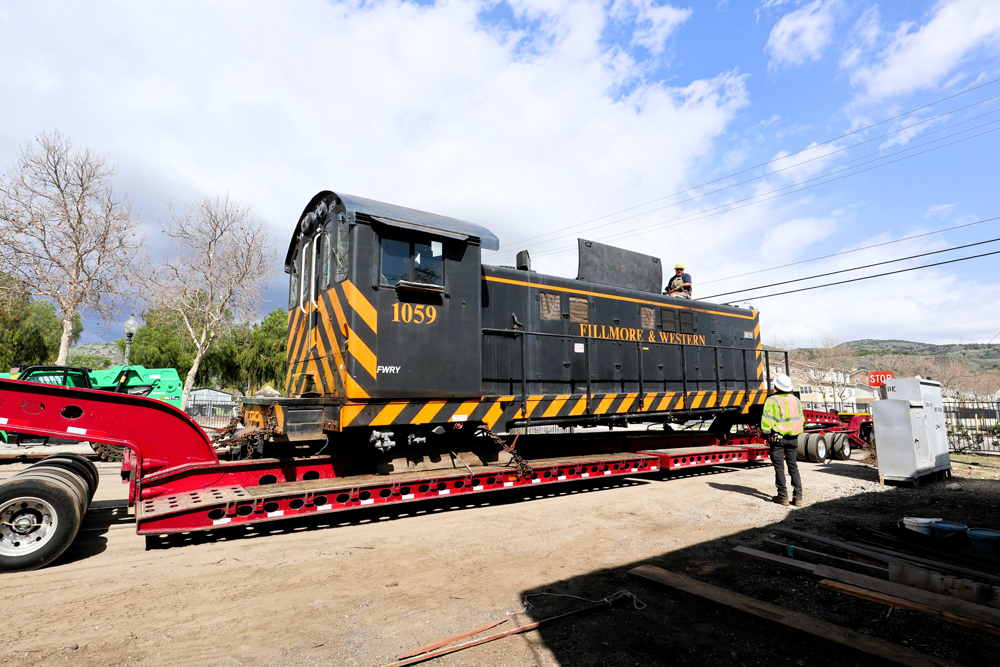
When Sierra Northern Railway picked up the operating lease from the Ventura County Transportation Commission in California to operate its right-of-way from Ventura to Fillmore in 2021, a number of pieces of equipment owned by former lessor Fillmore & Western pieces of equipment were sent elsewhere.
Among them was Alco S6 1059, which was loaded onto a low-boy truck for its new home at the Virginia & Truckee Railroad in Virginia City, Nev. The locomotive, which started life as Southern Pacific No. 1059, was numbered 1229 in that road’s 1965 renumbering before being sold to F&W.
Like the C&S caboose, the unit was detrucked to keep it within highway height clearances. The trucks were loaded separately on another vehicle.
All the same, all different
Looking at such odd loads, you begin to realize that each piece of equipment requires a lot of advanced planning before being hoisted on to a truck bed.
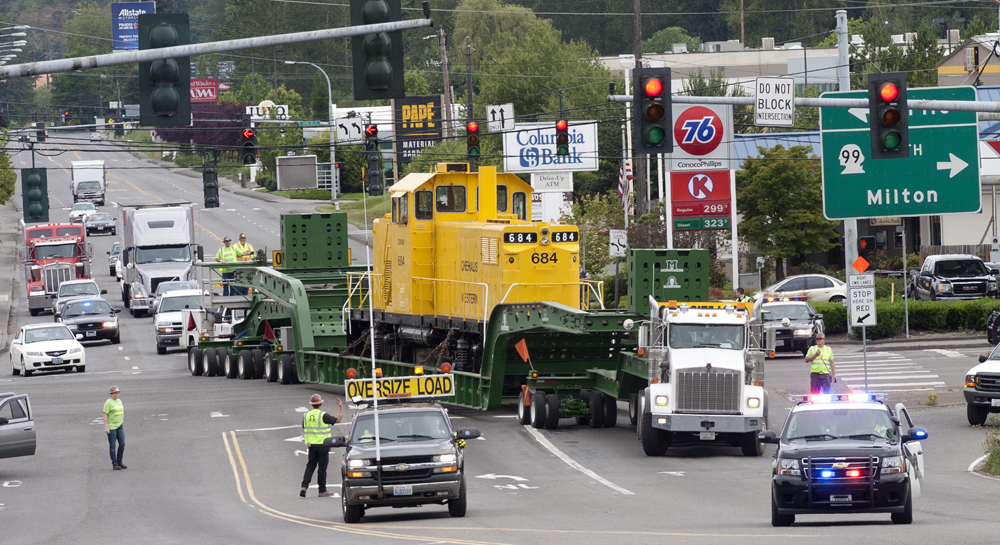
When Chehalis & Western Railroad Alco C415 684 was retired from a career of hauling log trains, owner Weyerhaeuser donated it to the Washington city of Fife in 2009 to be put on display at the Fife History Museum in Dacca Park.
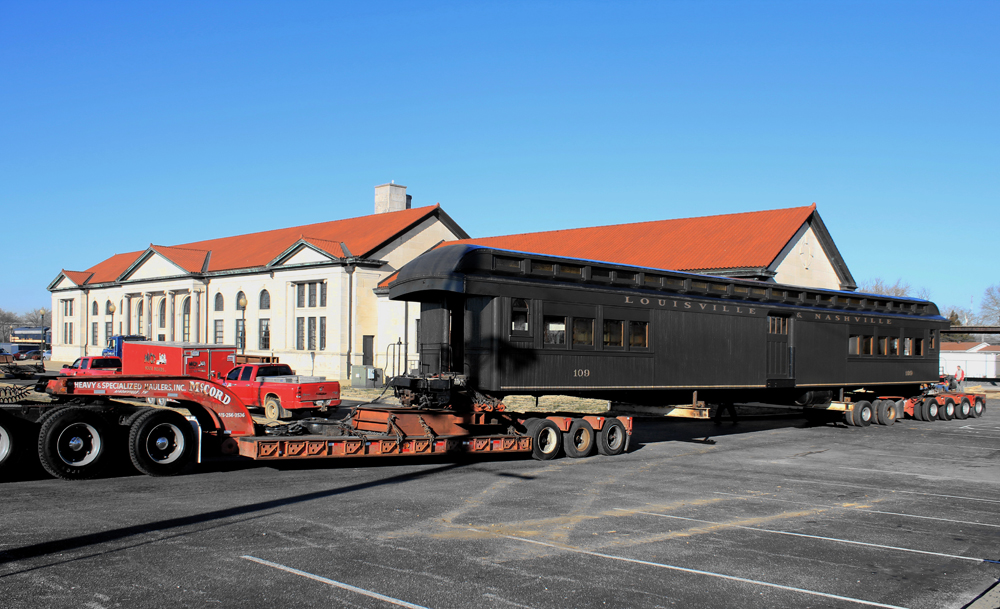
On the other side of the country, in Kentucky, a different truck transport configuration was used to move Louisville & Nashville Railroad 109, a coach built in the 1890s for the Glasgow Railway, that was said to be converted to a segregated “Jim Crow” era car. After its restoration in the 2010s, it was put on display at the Historic RailPark & Train Museum in Bowling Green.
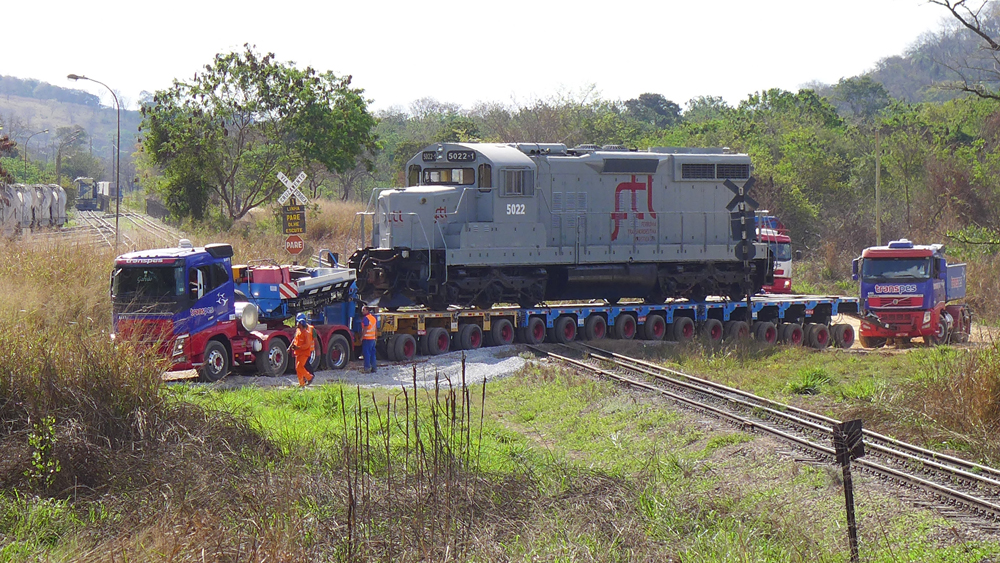
And if you are wondering if this phenomenon exists only in the U.S., look no further than Brazil where Ferrovia Transnordestina Logistica moved a six-axle EMD SD unit via truck when a secure direct rail connection was not available.