Train Basics ABCs Of Railroading Sorting out locomotive headlights and class lights

Sorting out locomotive headlights and class lights

By Chris Guss | May 30, 2023

| Last updated on January 15, 2024


When it came to lighting, railroads had plenty to choose from

Email Newsletter

Get the newest photos, videos, stories, and more from Trains.com brands. Sign-up for email today!

Locomotive headlights and class lights

yellow and orange locomotive closeup of lights
Southern Pacific and Cotton Belt locomotives had the most extensive fleet of locomotives with extra lights, with a single red light in the nose above the headlight and a pair of rotating lights between the number boards of road locomotives. A large majority also received the same setup on the opposite end of the locomotive as well. Many switch engines also received the extra lights on both ends, as seen in the background. Chris Guss

Aside from required ditch lights on most locomotives today, extra lights are essentially gone from freight locomotives, but if you look hard enough you can still find traces of the past when additional lights were ordered by railroads.

Before the era of locomotive standardization, many railroads chose to equip their locomotive with additional lights. Some equipment remained from the days freight railroads were still in the passenger business, while other railroads had safety in mind when installing additional lights on their power. Pyle Gyralite, Mercor Oscitrol, and Mars Lights were some of the most common designs.

Southern Pacific placed multiple sets on a locomotive, with the upper clear lights between the number boards used in daily service and a red Gyralite in the nose that automatically activated in situations such as when the train’s air brakes was placed in emergency. Other railroads had similar setups, though many would simply use a single red or clear bulb, or in a two-headlight case, either two clear bulbs or one clear and one red, using the former in train service and the latter in emergency situations.

closeup of yellow locomotive's lights
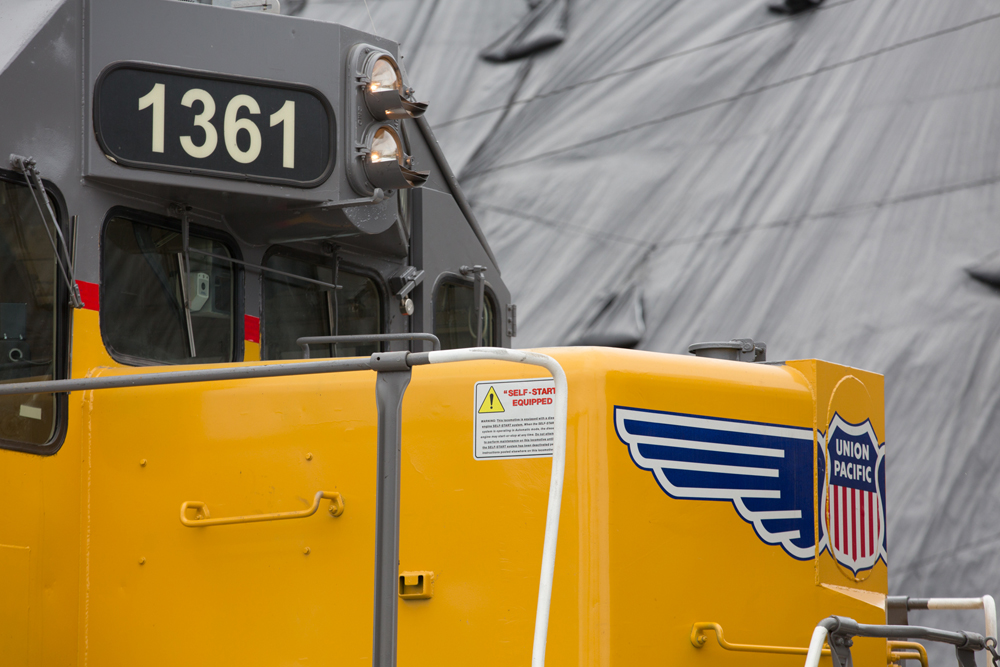
The plated-over area on the nose of this Union Pacific GP40-2 indicates this locomotive was built for Rio Grande. Chris Guss

Class lights on a locomotive are a holdover from an era where scheduled and extra trains were operated across a territory, using different colored marker lights or flags to denote what section the train was operating as. These relics are largely gone from locomotives in the industry, but a handful of U.S., and Canadian units still have them in place, either in operating condition or painted over.

When these class or extra lights are removed from an engine, shops would either simply remove and plate over the existing hole or weld up the area to match the shape of the locomotive. Plated-over light locations on locomotives can still be found today and are often a visual clue to the original owner of the locomotive.

red and white locomotives
Canadian Pacific has been taking class lights out of selected locomotives over the years. Repainted in 2022, CP SD40-2F No. 9010 retains its class lights in the low hood just above the number boards, while CP SD40-2 No. 5790 has had them removed. Note the blank area above the number boards on No. 5790, which were lowered several inches to accommodate the placement of class lights when built. Chris Guss