Railroads & Locomotives Hot Spots Chicago’s “Racetrack”

Chicago’s “Racetrack”

By Angela Cotey | October 19, 2020

| Last updated on November 3, 2020


Get our weekly newsletter delivered to your inbox

Email Newsletter

Get the newest photos, videos, stories, and more from Trains.com brands. Sign-up for email today!

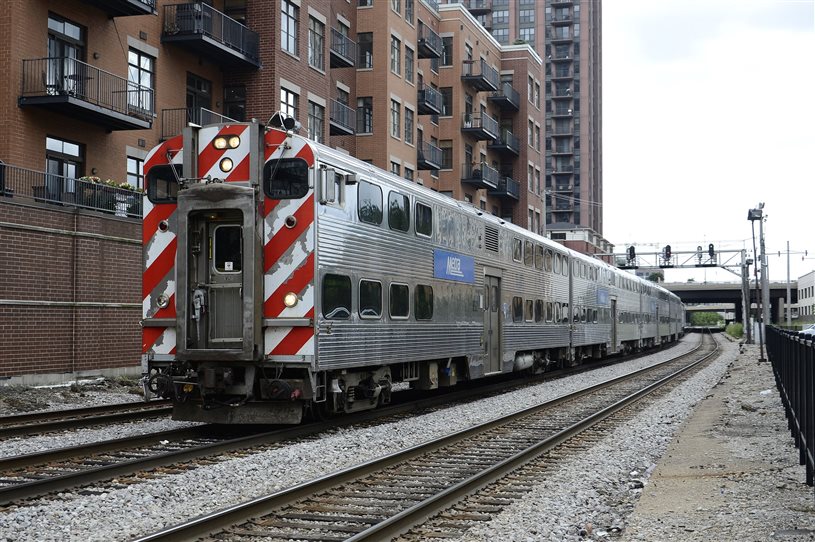
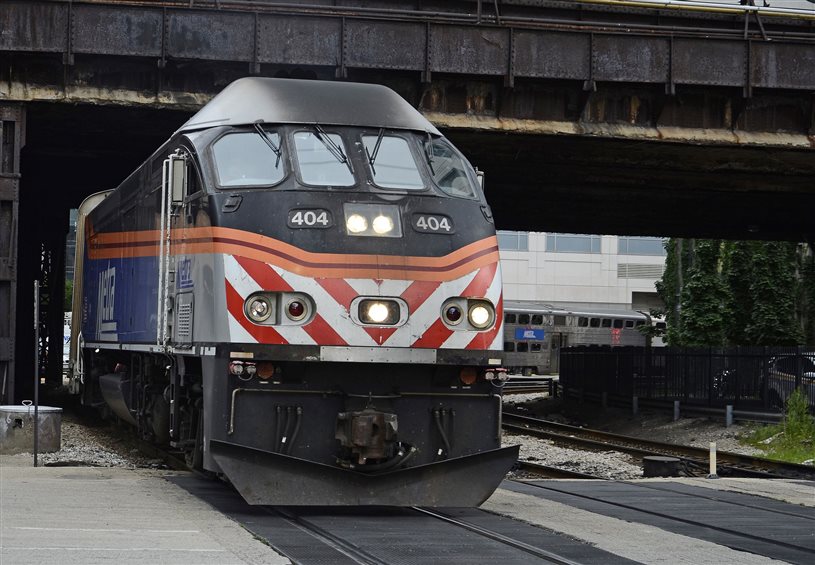
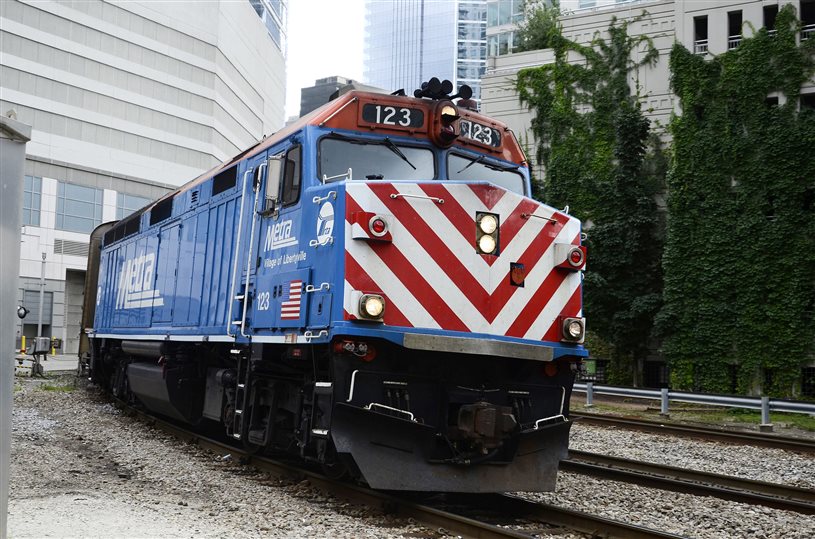
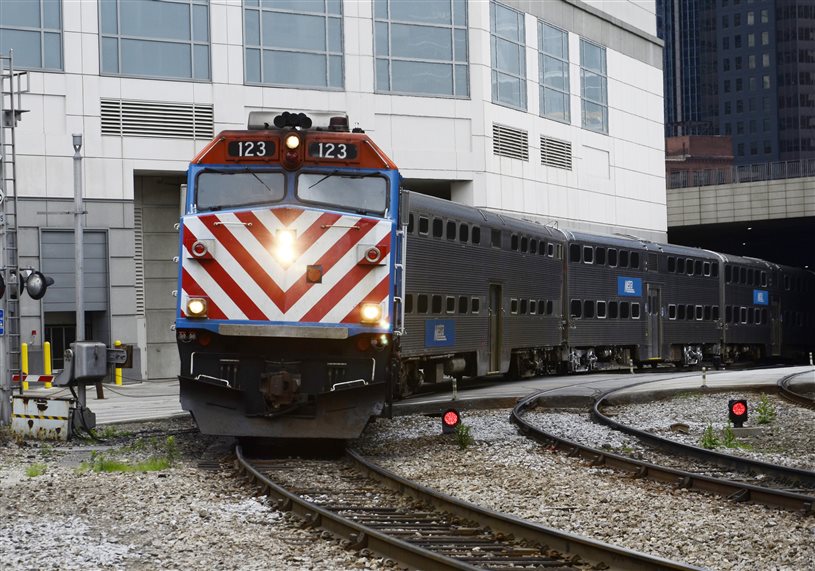
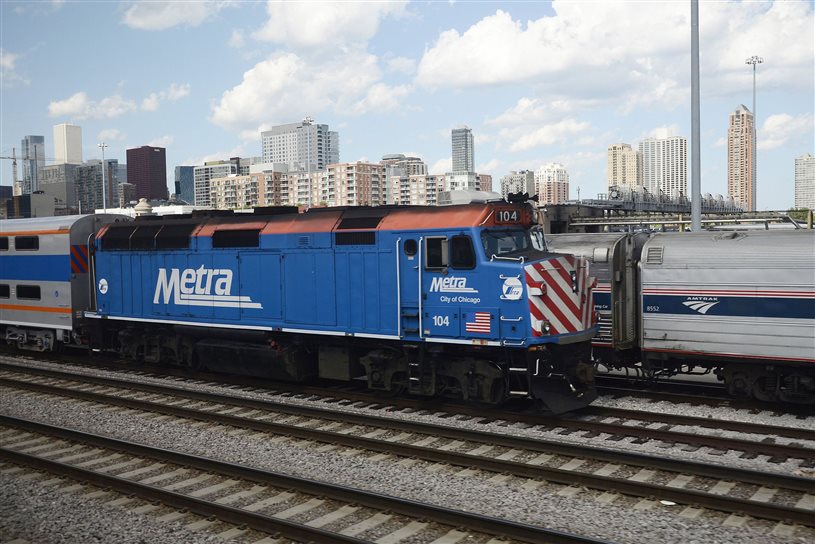
Chicago is still the railroad capital of the country in most people’s opinion. What puts it on top over other cities like Kansas City is the strong passenger-train presence. It’s Amtrak’s midwestern hub (8 routes), and hundreds of Metra commuter trains (11 routes) hustle in and out of the city daily. Much of the railroad action takes place outside the city limits in “Chicagoland,” as the city and suburbs are known. One could spend months or years trying to photograph all the lines. Most people don’t have that much time, so here is a nominee for the first logical destination for a visitor wanting a see a high volume and variety of trains in a short period of time: BNSF’s triple-track Chicago Subdivision, commonly called “The Racetrack.” It begins at the Canal Street wye about a mile south of Union Station and turns west to Aurora. The best train-watching is on weekdays, especially during morning or evening rush hours when Metra runs commuter trains on an almost streetcar-frequent schedule.
ChicagoRacetrackMap
icon_railroad_45TRAIN WATCHING

To avoid Chicagoland’s congested streets and highways, ride Metra to stations on the Racetrack. Metra runs 47 eastbound weekday trains and a like number westbound. However, the schedule is significantly less on weekends and holidays. Consult the Metra timetable to determine which stations local and express trains serve. Many of the suburban stations along the route that survive from the Chicago, Burlington & Quincy era have esthetically pleasing architecture. Metra’s website (metrarail.org) has information about passes that are available.

Amtrak operates four pairs of trains on the Racetrack. The westbound and eastbound California Zephyr and Southwest Chief all converge on the Chicago Subdivision (if they are on time) in mid-afternoon. The two pairs of regional trains, Carl Sandburg (Nos. 381/382) and Illinois Zephyr (Nos. 380/383), which run between Chicago and Quincy, Ill., put in morning (Nos. 380 and 381) and evening (Nos. 382 and 383) appearances. All eight Amtrak trains stop at Naperville, and the four Quincy trains call at La Grange Road as well.

BNSF runs, on average, 50-plus freight trains in a 24-hour period on the Chicago Subdivision, depending on the day of the week, with volume building toward the weekend. BNSF trains include general freight, coal and other unit trains, and intermodals. The Chicago Sub splits west of downtown Aurora into the Mendota Subdivision to Galesburg, Ill., and the Aurora Subdivision to La Crosse, Wis., and the Twin Cities. Cicero’s former freight yard now is an intermodal facility; Eola, east of Aurora, is a general freight yard. A few Union Pacific trackage-rights intermodals also use the Racetrack. 

The Chicago Subdivision goes under Canadian National’s former Elgin, Joliet & Eastern at Eola, over the Indiana Harbor Belt in eastern La Grange, and under the Belt Railway in a rundown part of Cicero.

tracksideicon_frequencyRAILROAD FREQUENCIES

BNSF, 161.100 (Metra and Amtrak); Belt Railway of Chicago, 160.695, 160.500; Canadian National (ex-EJ&E), 161.475; Indiana Harbor Belt, 160.980, 161.070.
tracksideicon_famFOR YOUR FAMILY

The possibilities are almost limitless! Chicago is a vacation destination for people from around the country and world. You may run into fellow railroad enthusiasts visiting from other countries, as well. An obvious choice of a diversion for your family as you observe the Racetrack is the big Brookfield Zoo, where BNSF’s Hollywood station is also labeled as the “Zoo Stop.”