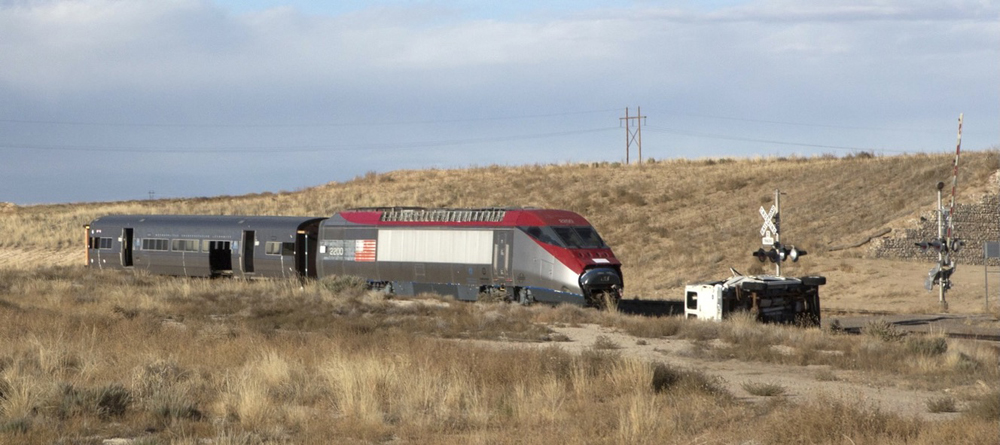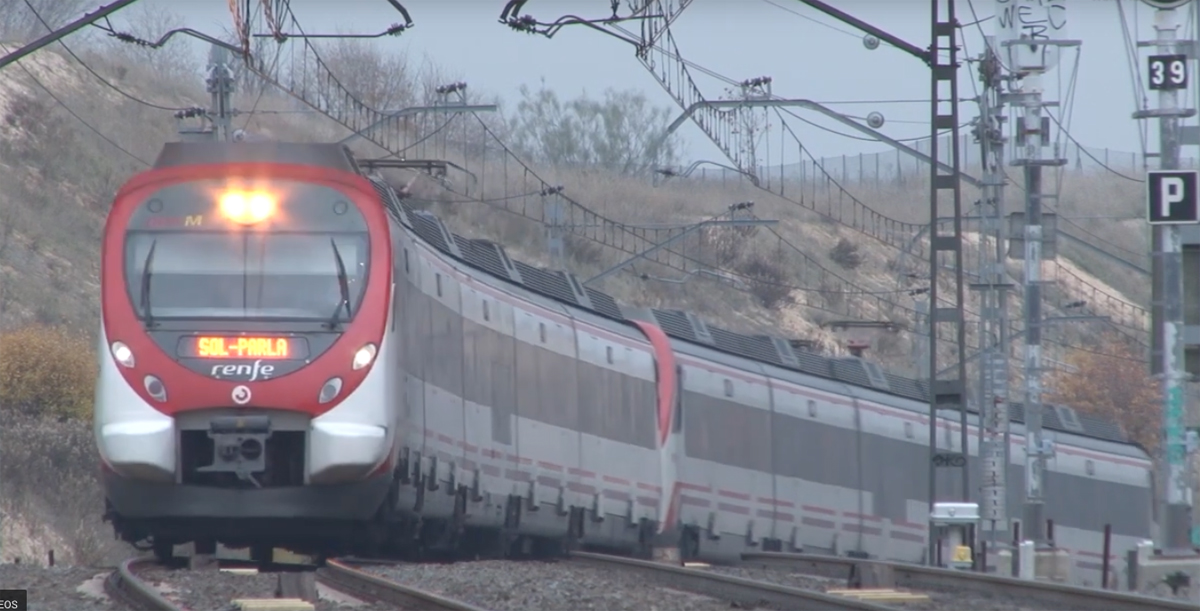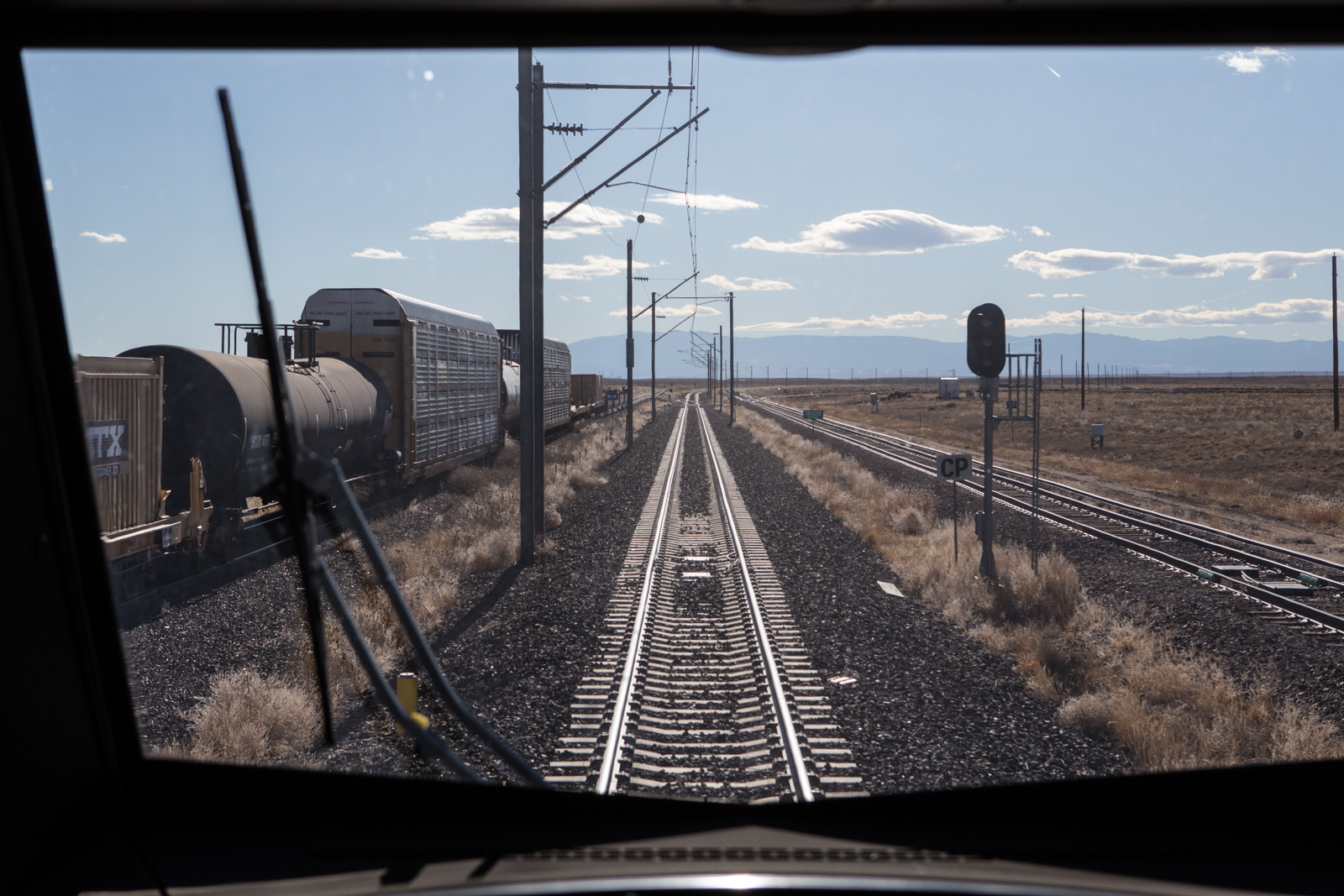
PUEBLO, Colo. — For 50 years the Transportation Technology Center, owned by the Federal Railroad Administration, has been North America’s testing grounds for railroad research, innovation, and development. Built in the 1970s as the High Speed Ground Test Center, it expanded to encompass transit and freight rail. Its 30,000 acre campus includes an array of test equipment and some 50 miles of test tracks, including an electrified high speed loop good for 165 mph.
From 1982 to 2021, the facility was operated under contract by a subsidiary of the Association of American Railroads, a trade group which represents the Class I railroads and many smaller carriers and sets a variety of interchange and communication standards. Under the public-private partnership, created to save the site from closure under budget cuts, the contractor gains full use of the facility alongside the FRA, and the financial responsibility for maintenance.
In March 2021, the site’s operating contract was awarded to technology company ENSCO [see “New operator of Colorado’s Transportation Technology Center …,” Trains News Wire, May 9, 2022]. The former operator, now known as MxV, is building a new test facility just a few miles south of the TTC on a disused Army base [see “MxV Rail begins work on rail test loop,” News Wire, May 23, 2022].
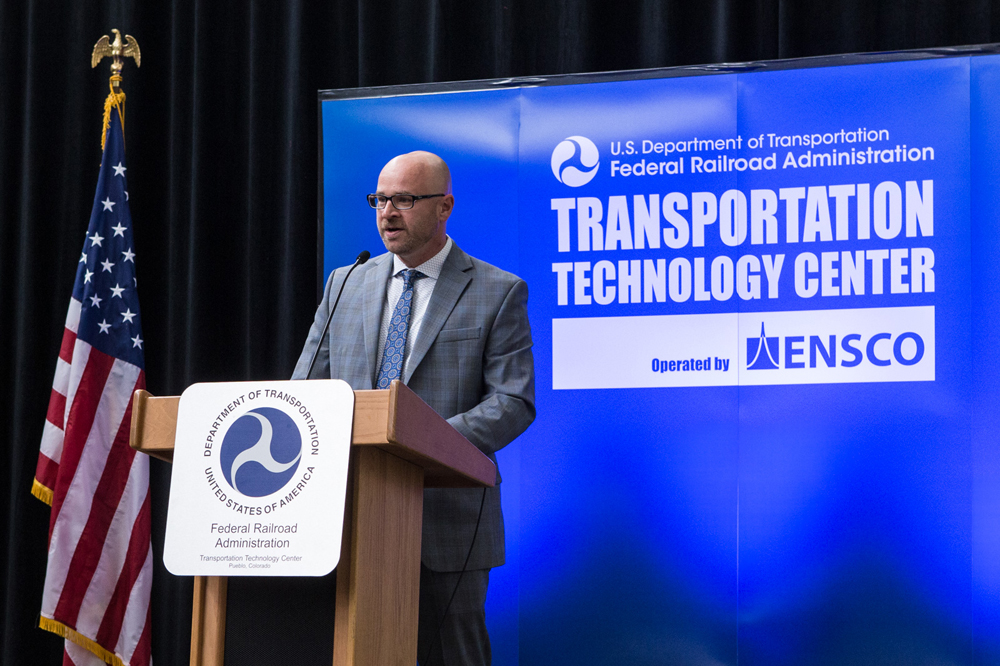
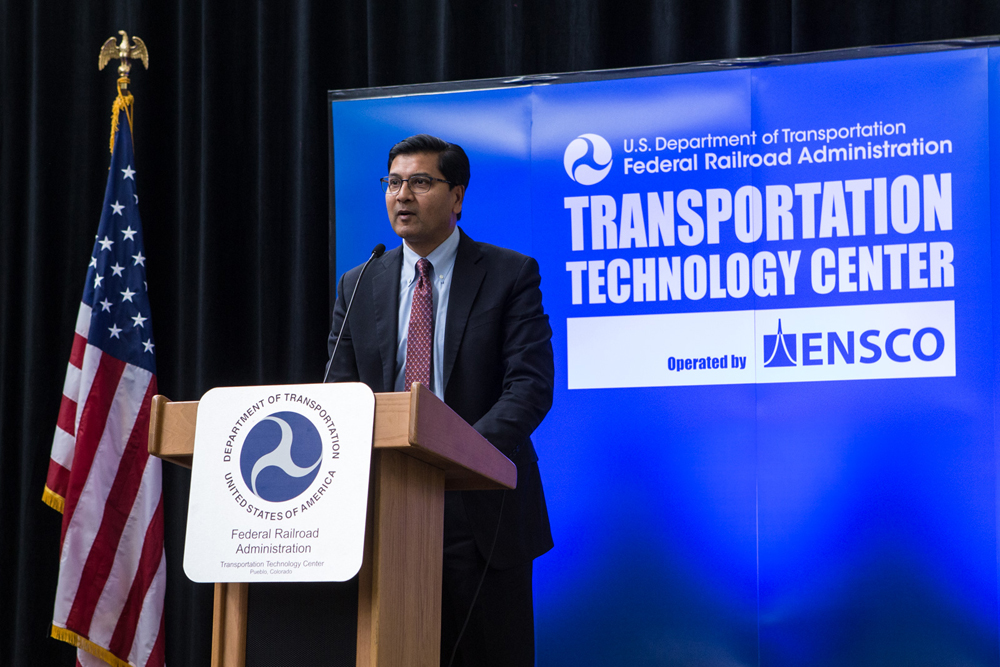
In a Tuesday, Oct. 25, event marking the anniversary, ENSCO and the FRA highlighted plans to modernize the facility. Among those in attendance were FRA Administrator Amit Bose, who reflected on the site’s history, from a 1974 world speed record set by a linear induction motor-driven vehicle known as the LIMRV to crash tests which improved passenger train windows and dining car tables. The facility serves both passenger operators, having certified both generations of Amtrak’s Acela trainsets, and freight. The High Tonnage Loop can stress-test track and railcars to the tune of one million gross tons per day by repeatedly running a 110-car coal train around one of two loop tracks. Bose said that he is excited to expand government use of the facility, including kicking off a new grade crossing safety research project and partnering with other agencies.
One such partner is the Transportation Security Administration, which in addition to its most visible role, airport security, is also responsible for rail and pipeline security. Melvin Carraway, a regional security director at the agency, said the TTC has hosted training for his agency for 12 years in subjects including explosive detection and cybersecurity. Several speakers emphasized that the future of the site isn’t just rail-related. Some of the TSA’s cybersecurity training has been for pipeline operators, a need highlighted by the May 2021 Colonial Pipeline cyberattack, which led to major gasoline shortages in the southeastern U.S.. While many event attendees were associated with railroads, suppliers, or government, ENSCO President Jeff Stevens noted that trucking industry representatives and HyperloopTT were also in attendance.
Another partner at the partnership- and acronym-heavy facility is the Center for Surface Transportation Testing and Academic Research, or C-STTAR. This consortium of eight research universities around the country will use the TTC as the testing grounds for their own research programs, with tests designed and interpreted by each university but carried out by CSU Pueblo students in cooperation with ENSCO.
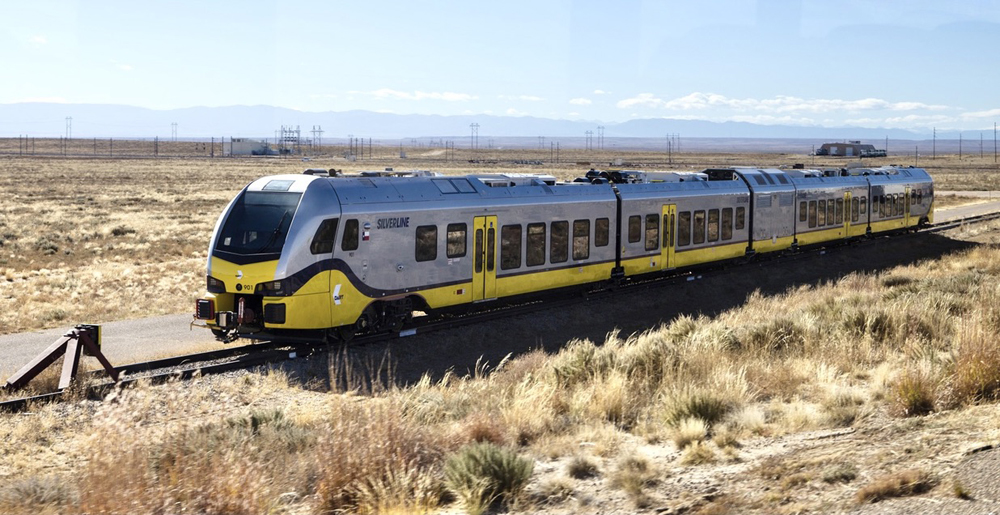
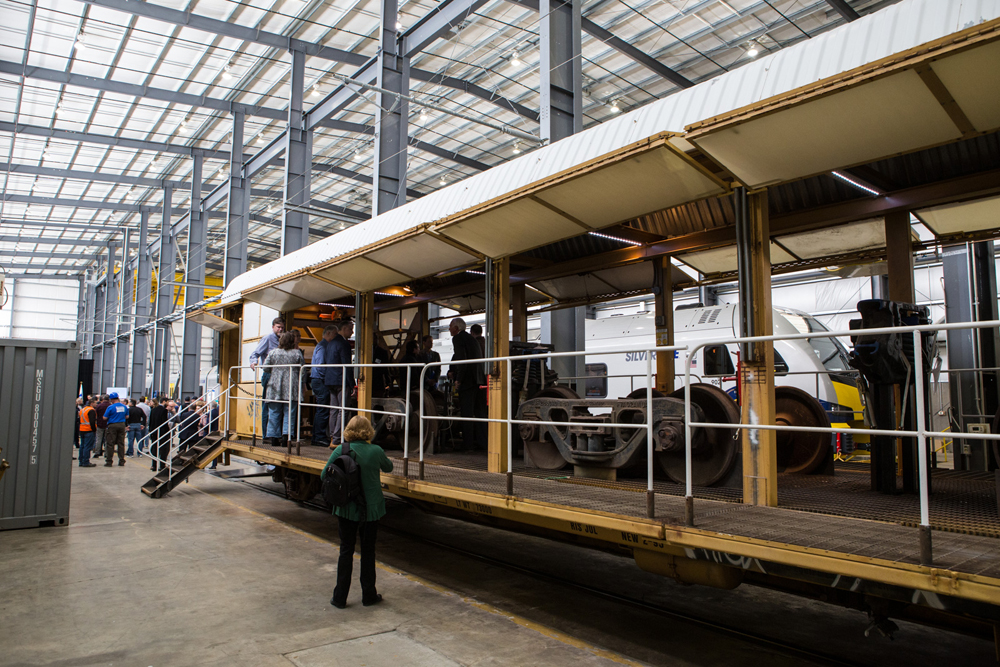
The most visible use of the TTC remains the testing and certification of new trains. The facility is currently testing FLIRT diesel multiple units built by Swiss manufacturer Stadler for Dallas Area Rapid Transit, one of which was parked beside the ceremony stage in the high bay of the Passenger-Rail Services Building. Stadler US CEO Martin Ritter spoke about how research at the center has enabled improvements to equipment like the DART trainset. The 267-foot train uses crash energy management to safely enable lightweight aluminum construction and weighs only as much as a single locomotive. Its center power unit is currently powered by diesel engines but can be swapped in the future to use batteries or hydrogen fuel cells.
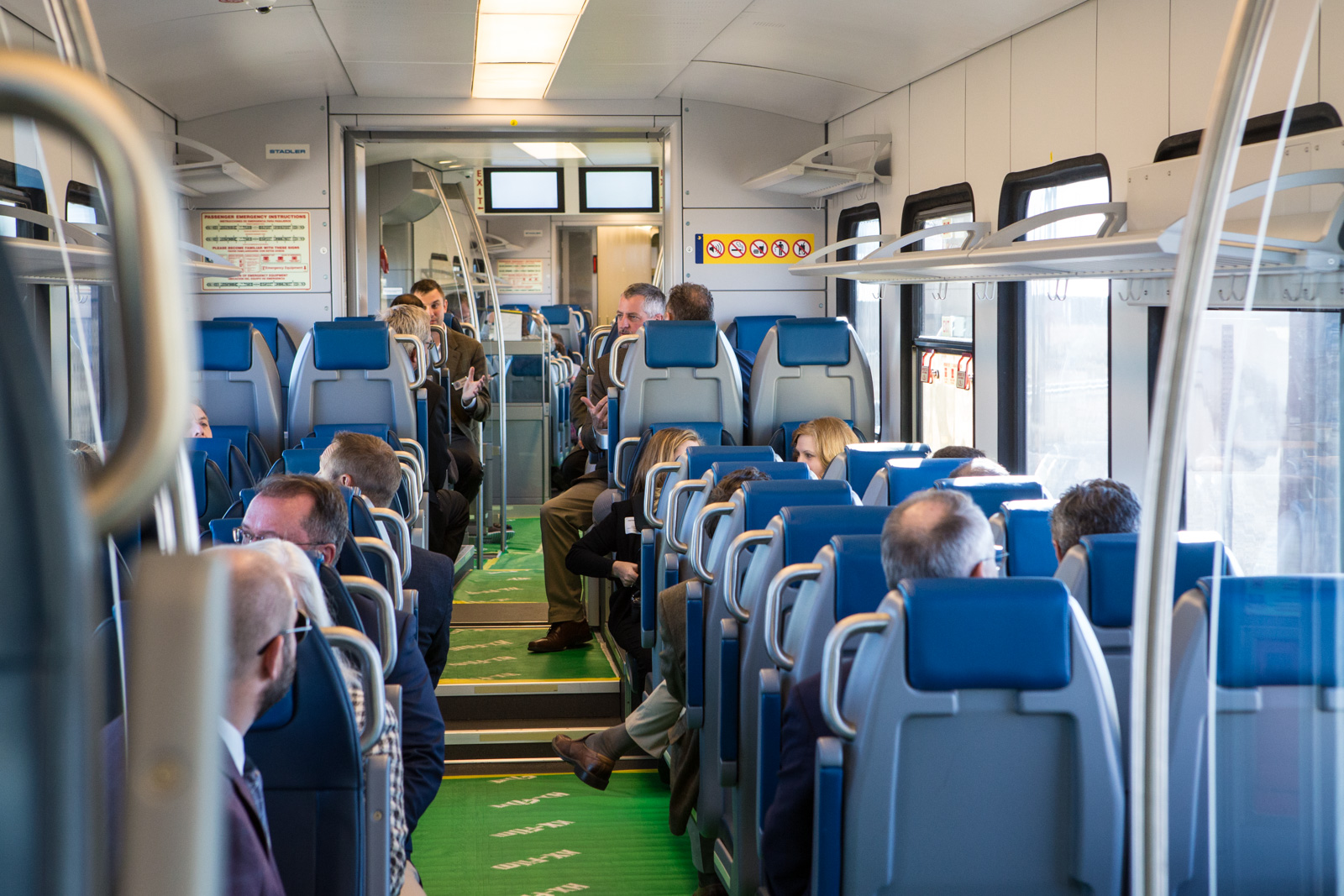
The ceremony concluded with a ride aboard the DART train; ENSCO’s Matt Dick, chief of strategy and development, told Trains it was the first public ride on a test train at the facility since European high speed trains were tested in Pueblo in the 1990s. Crowded with excited attendees, the surprisingly quiet train rapidly accelerated to 79 mph.
Bose spoke about the future of the TTC at a dinner reception that evening in downtown Pueblo, saying Congress was supporting FRA research and development with $66 billion in funding over the next five years. Bose touted a small provision of the Bipartisan Infrastructure Bill which allows the FRA to make improvements to the facility, not just maintain it. “We look forward to another half-century of innovation and transformation,” Bose said.