

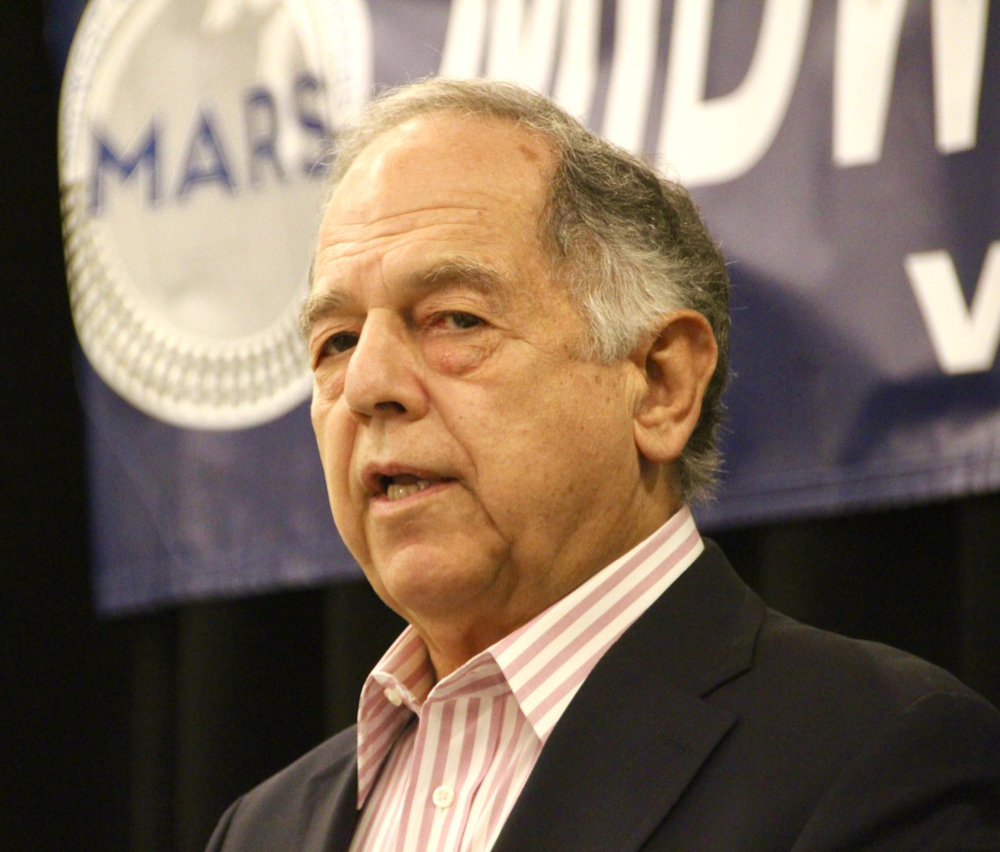
CHICAGO — Surface Transportation Board Chairman Martin J. Oberman stepped up his criticism of Class I railroads on Wednesday, saying the industry’s drive for ever-increasing profits resulted in a loss of market share to trucks over the past 15 years and is restraining growth today.
Rail rates fell by 27% between 1985 and 2004, as railroads’ improved productivity largely benefitted shippers, Oberman told the North American Rail Shippers conference. “But that happy combination came to an end beginning in roughly 2004,” he says, noting that rail traffic peaked in 2006, or in 2002 when coal is excluded from the tally.
“In the last 15 years, since 2006, our economy has grown by more than 50% — nearly $8 trillion of enhanced economic activity,” Oberman says. “And yet railroads are carrying less freight today than they were in 2006 while rates have gone up. There just might be a connection.”
If railroads had simply hung on to their market share since 2002, there would be nearly a million fewer truckloads on highways each year, Oberman says. The shift of freight from rail to truck also resulted in 123 million tons of additional carbon dioxide emissions that cause climate change, he says.
“This pattern simply cannot be allowed to continue,” Oberman says.
Railroads talk about growth and service improvements that make them better competitors against trucks, Oberman says. “The railroads’ emphasis has not been on growth,” he says. “Rather the emphasis has been on cutting in pursuit of the almighty [operating ratio] down to below 60%.”
To satisfy Wall Street demands for lower operating ratios, or O.R.s, the Class I railroads have cut their workforces by 25% in recent years, which Oberman says makes it difficult to provide more reliable service and recover from disruptions like extreme weather events. It’s also led to railroads demarketing certain types of traffic, he contends.
“It is clear that as a whole, railroads have foregone many kinds of carloads that they could carry profitably, only not at O.R.s as low as 55%, and instead have focused only on the most profitable traffic,” Oberman says. “No one is asking the railroads to focus on traffic that would only be carried at a loss. But surely it is not asking too much for railroads to actively seek profitable traffic, even if not as profitable as others.”
Oberman says Wall Street’s influence has put shareholder interests above those of other key railroad stakeholders, including customers, employees, and the public. And he was critical of railroad stock buyback programs and dividends that have put more money in shareholders pockets than into maintaining and expanding the rail network.
In the last decade, Oberman notes, the five U.S.-based Class I railroads have returned $191 billion to their owners while spending $138 billion on capital expenses. “That’s all well and good for the owners,” Oberman says. “But where would rail customers, rail workers, and the public be if a meaningful portion of that $191 billion had been reinvested in expanding service and making service more predictable, reliable and on time? Clearly we would have more freight moved, more quickly, and at lower rates. We would have more employment with better working conditions. And the public would be better served with a boost to the economy, lower consumer prices, and far cleaner air and safer and better conditioned highways.”
All of this could be accomplished, Oberman contends, while still providing good returns for rail investors.
The STB is considering a number of regulatory reforms, including reciprocal switching; making it easier for shippers to challenge rates; asking railroads to provide data on local service; expanding regulation to several commodities that are currently exempt from board review; and Amtrak access to host railroads.
The board must recognize today’s economic trends and respond accordingly to ensure a healthy rail system, Oberman says.
“It bears repeating that 2021 is not 1980,” Oberman says, referring to the year when the rail industry was largely deregulated with the passage of the Staggers Act. “And responding to the STB’s current role in the system by merely invoking the Staggers Act does not advance the discussion. The railroad industry of today is far cry from the railroad industry of 1980.”
Railroads Push Back
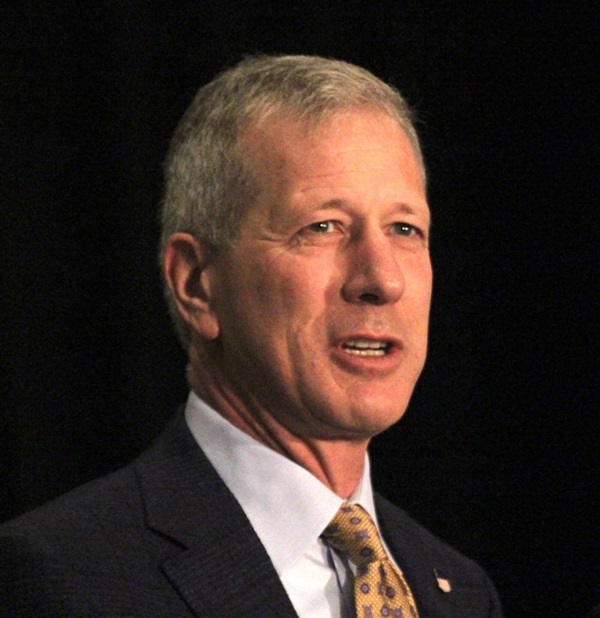
Union Pacific CEO Lance Fritz, who addressed the conference in his role as chairman of the Association of American Railroads, says the regulatory framework of the past four decades has produced a freight rail system that is the envy of the world due to its efficiency, safety, and service.
“The STB really needs to worry about not implementing wholesale changes that would compromise our ability to continue that investment that enables that kind of service,” Fritz says.
The top concern with the STB’s agenda, Fritz says, is calls for reciprocal switching, which allows sole-served shippers to access another nearby railroad if they are not satisfied with their carrier’s service and rates. Reciprocal switching might save a few shippers money, Fritz says, but it would hurt service for all customers by creating congestion. It also would reduce a railroad’s incentive to make capital investments when maintenance and improvements would benefit the competing railroad, he says.
The STB is considering removing regulatory exemptions for several truck-competitive commodities, including rock, scrap metal, and even intermodal traffic. “When the STB starts thinking like they’ve got to do something where competition exists, that becomes problematic for the industry,” Fritz says.
Also a blip on the railroads’ radar: Expanding Amtrak access and holding host railroads accountable for passenger train on-time performance.
“In many of our schedules, there’s portions of the route that we can easily beat the schedule and there’s portions of the route where we don’t have a prayer,” Fritz says. The host railroads are all working with Amtrak to develop schedules that are realistic along a train’s entire route, he says.
“There’s just a lot of opportunity for the STB to get that wrong,” Fritz says.
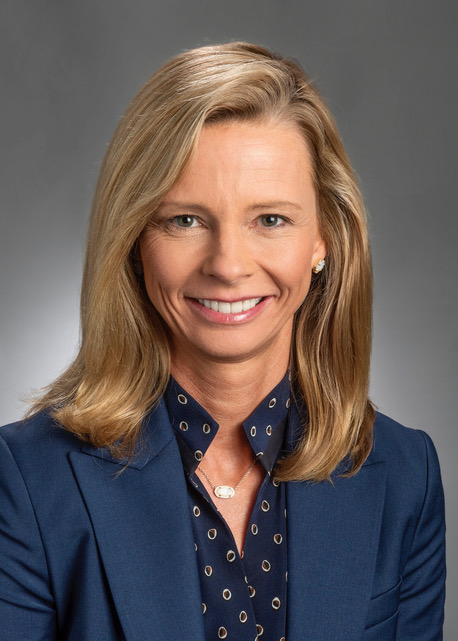
BNSF Railway CEO Katie Farmer took issue with the Biden administration’s July 9 executive order, which largely dovetails with efforts already under way at the STB because it seeks to expand competition across all sectors of the economy.
BNSF, which operates the largest intermodal network in North America, competes every day against trucks, Farmer notes.
And Farmer says there are lessons in the 140 years of railroad regulatory history. “What we have seen when we have overreaching regulation, where we have burdensome regulation, is that it had the impact in the past of constraining capacity, reducing investment, disrupting the supply chain,” Farmer says. “And so none of us should want that under this existing executive order.”
Canadian Pacific CEO defends PSR
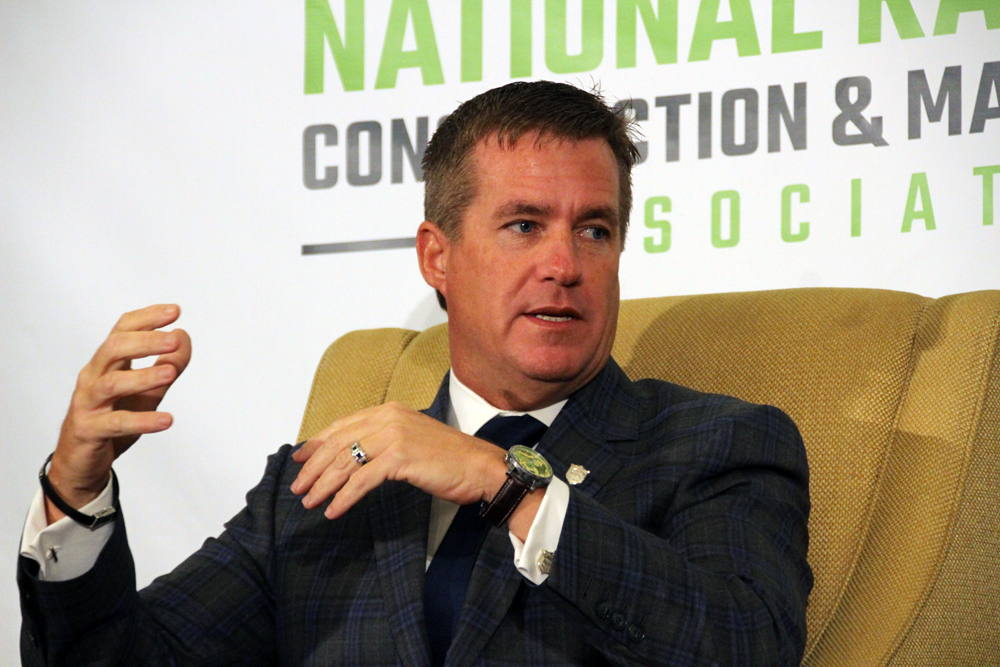
Canadian Pacific CEO Keith Creel defended Precision Scheduled Railroading, which has come under criticism from shippers, Congress, rail labor, and the STB.
Creel says the PSR operating model, which has been adopted by all of the Class I systems with the exception of BNSF, is not about slashing costs to the bone. It’s about ensuring that the railroad’s costs are under control and that it has the right number of people and assets like locomotives and freight cars to move freight efficiently. It’s also about partnering with customers, employees, short lines, and respecting regulators, Creel says.
“It really is the right way to run a business. That’s what it is,” Creel says. “It’s not the bogeyman and the evil empire that people think it is.”
Creel, whose railroad has led the industry in growth since he became chief executive in 2017, also disputed Oberman’s contention that railroads are not interested in growing. CP’s formula, Creel says, is to invest in partnership with customers so both the railroad and shipper can grow together.
CP has been able to haul record amounts of Canadian grain since investing $500 million in a new hopper fleet over the past four years and moving to 134-car unit train service in conjunction with shippers. “It’s not because we’re cutting,” Creel says. “It’s because we’re investing for growth.”
CP’s domestic intermodal service is taking trucks off the highway and is the fastest-growing in the industry, Creel says. In Vancouver, Creel noted that CP and ocean shipping line Maersk are partnering on a new transload center that will take thousands of trucks off city streets each year while reducing greenhouse gas emissions and improving service for customers.
And for carload traffic, CP has increased sales staff commissions for new business they bring in, Creel says. Last year, the railway’s sales team drummed up $75 million in new traffic by making thousands of cold calls to potential customers.
“That’s growth. That’s singles and doubles. That’s not bulk business … it’s a boxcar here, a boxcar there,” Creel says.
Share this article