

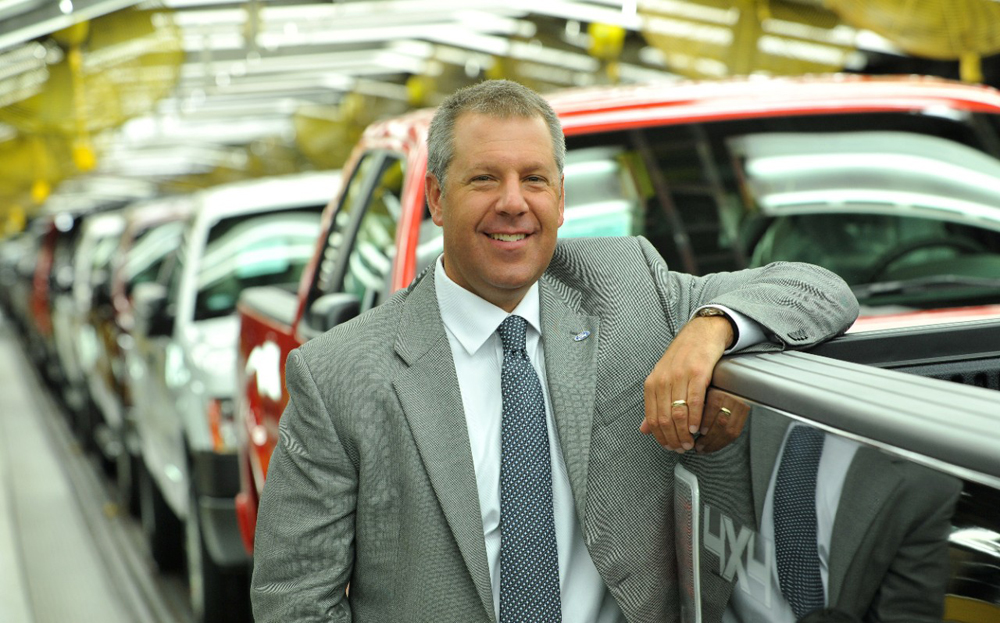
Trains spoke with incoming CSX Transportation CEO Joseph R. Hinrichs today about his goals for the railroad that he’ll begin leading on Sept. 26. Hinrichs, 55, is an outsider who comes to CSX after a 30-year career in the auto industry. He previously served as president of Ford Motor Co.’s automotive business. The question-and-answer session is edited for brevity and clarity.
Ford is a railroad customer. What was your view of railroad service while you were at Ford? And how will that experience shape how you run CSX?
Great question. One of the things I get to bring into this role is that customer view. I actually years ago ran the transportation logistics supply chain group inside Ford, so I got to know the rail companies pretty well. My view was first and foremost that rail is critically important to us for shipping finished vehicles. Also the view was that the service levels could be improved, the transparency and visibility of what was going on could be improved. So we’ve had those conversations already in the last 48 hours with some of the team here. We have a great team that has really done an excellent job in putting in an operating model that delivers very good results. One of our main focuses is how do we improve customer service? A big part of that, of course, is what the team is doing already, which is getting manpower levels where they need to be. But we’re definitely going to have a lot of conversations around, from the shipper’s point of view or the customer’s point of view, what does great service mean for a rail company? And we’re going to have a lot of conversations about how we can do a better job.
What parallels do you see between auto manufacturing and railroading? Lean manufacturing principles aren’t that different from Precision Scheduled Railroading principles.
You’re exactly right. What’s rewarding to me is that I’ve been studying PSR, and I’ve read all of Hunter Harrison’s books, and talked to people. At its highest levels the principles are the same. It’s about lean thinking and lean implementation to eliminate waste and overcapacity and idle time. And all these things are waste in manufacturing and they’re also waste in the rail industry. So the principles are very translatable and applicable. Obviously the terminology and some of the processes are different, so I have a lot to learn in that regard.
The Big Three automakers have been losing market share for years. Railroads have been losing market share to trucks for years. How do you turn that around?
Well it starts with the customer, serving them better, increasing our capacity. There are a number of factors that are weighing in favor of the rail industry, as you well know. First and foremost, we’re a lower-cost solution for transportation, especially over longer distances. There’s a lot of challenges in the trucking industry, from driver shortages to congestion on the roads to wear and tear on the infrastructure of the U.S. highway system. And of course there’s ESG [environmental, social, and corporate governance], the environmental piece. We’re three or four times more fuel efficient than trucking, and by using rail you can reduce emissions dramatically. So if you look at the environment we’re in today, with a lot of cost pressure and inflation pressure on companies, they should be looking at rail as a lower-cost solution. And with the pressures that are on us around ESG and carbon footprint and emissions, we’re a much better solution in that regard. You combine those together, and when we can provide the service to our customers and increase our capacity, there are a number of factors that weigh in our favor to gain more business. We need to execute better on the service side and demonstrate to customers they can count on us.
You were credited with smoothing over relations with the United Auto Workers while you were at Ford. CSX CEO Jim Foote has said railroads need to improve relations with their unionized workers and reset the relationship. Do you agree? And how do you go about it?
Jim and I have had a lot of conversations about it. There’s definitely an opportunity in the rail industry for us to improve the working relationship with our labor leader partners. I think of it as a partnership. From my experience, 30 years in the auto industry, I was fortunate to have very strong relationships with many presidents of the UAW and work through a lot of tough issues together. At the core, I respect, appreciate, and love the workers who do the work for us every day. It’s just in my value system. I grew up in a small town in Ohio and so I have a lot of respect for the people who represent workers. And I believe that if you can develop a relationship and build some trust you can have conversations that are open about the challenges we face and we can find solutions together. So I am looking forward to that challenge. It’s more complicated in the rail industry because there’s 12 unions as opposed to one in the auto industry. Nevertheless, I think my experience on labor is going to help us here.
After you left Ford in 2020 you said you’d be open to new opportunities if they were the right fit. What made you want to come out of retirement to lead a railroad in general and CSX in particular?
From the day I started talking to CSX, which was a while ago, just something connected with me about this opportunity, and how exciting it was. Having spent 10 years at General Motors and 19 years at Ford — two historic, important companies to the U.S. economy — here’s the railroad industry, which is the backbone of transportation in the history of America. What an exciting opportunity to be part of another industry that’s so impactful to the economy and our history. And then there’s the combination of the things we’re looking to do at CSX: continue to evolve the culture and how we work together as one CSX team. I have a lot of experience doing that in the auto industry. The labor component of this, the operational focus, the great operating model, they have already established here at CSX. All those things just got me more and more excited. And then, look, it’s a well-performing company operationally, with tremendous growth opportunities. We need to evolve to serve our customers better and engage our employees to do that, and that’s what excited me.
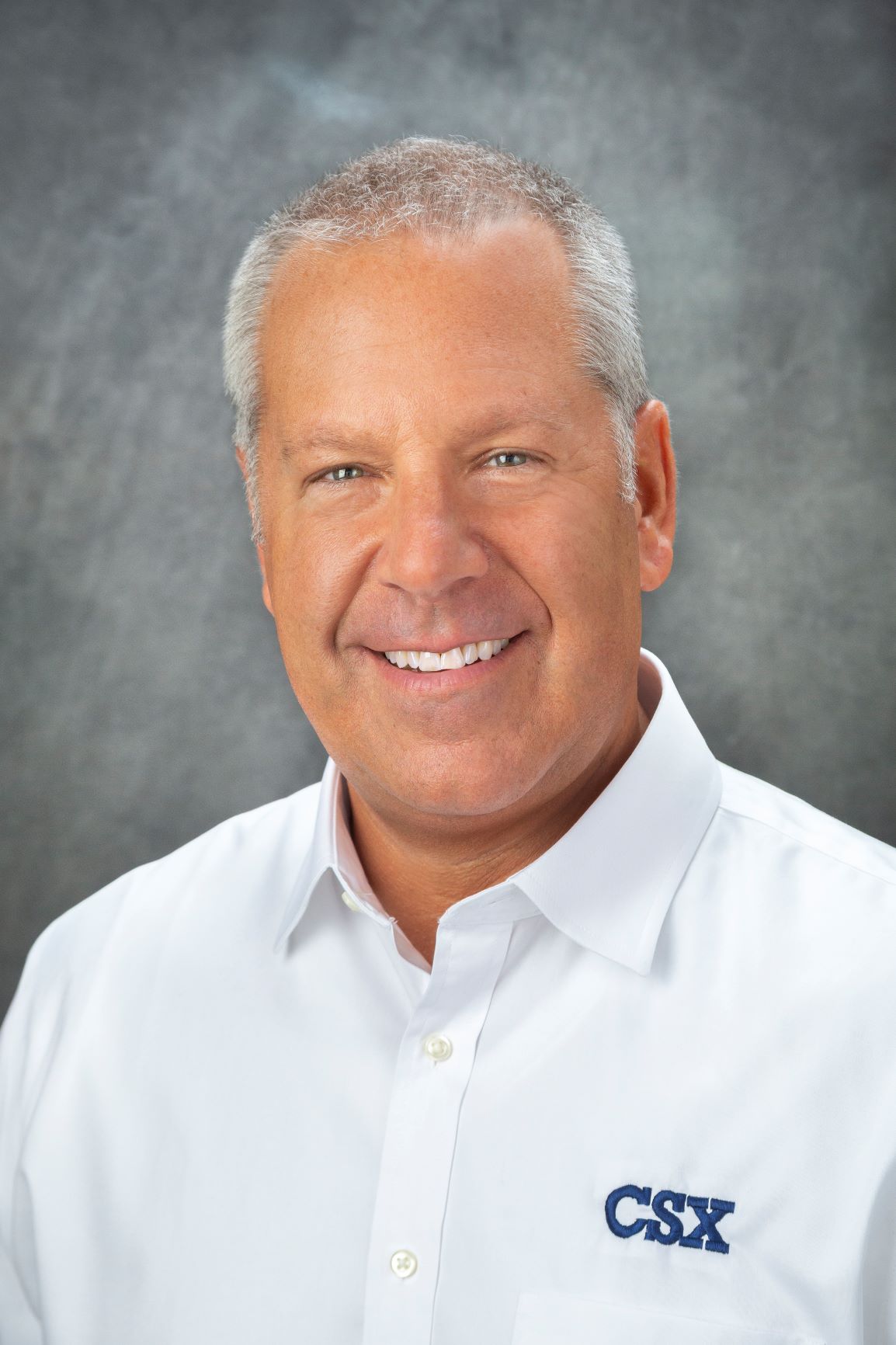
In your official CSX photo, you’re wearing a shirt with a CSX logo on the chest. That’s not traditional railroad CEO garb. There’s usually at least a coat and maybe a tie. Should we take anything away from that?
I believe we’re all on the same team. And I like to wear the attire that shows that. The CSX logo is right next to my heart. It is intentional. It’s all about getting everyone to work together. We’re all valuable, we’re all important to the company and to our customers. Every employee is valuable. Let’s build this teamwork around a culture of how we work together.
Share this article