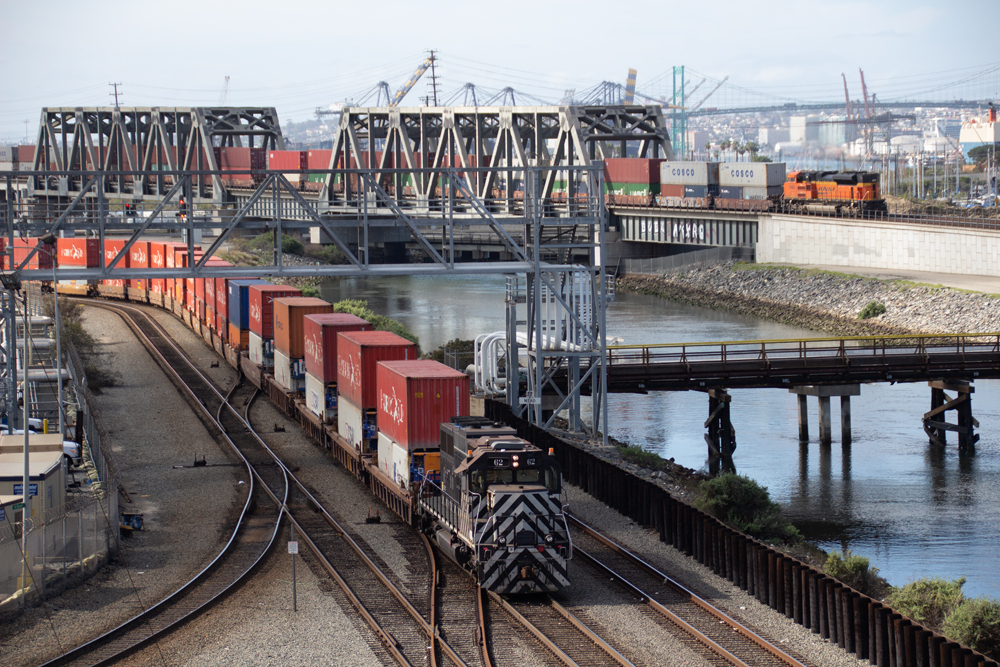
WASHINGTON — With a dockworkers strike looming at East Coast and Gulf Coast ports, Surface Transportation Board Chairman Robert E. Primus has asked BNSF Railway and Union Pacific to provide regulators with information on how they will handle the anticipated surge in container traffic at West Coast ports.
“While I understand that a pivot to address these increased volumes is not without strain on the supply chain, including your railroad, it is essential that rail not become a choke point in this critical time,” Primus wrote in letters dated Sept. 24. “To that end, as soon as possible please provide me with information on your preparedness to handle the volume shifts.”
Specifically, Primus asked the railroads for their plans to provide reliable service, how they will allocate resources to West Coast ports, and how the railroads are sharing information with port officials.
The International Longshoremen’s Association and the United States Maritime Alliance, which represents ports from Maine to Texas, are at an impasse in their contract talks. The union says it’s prepared to walk out on Oct. 1. President Joe Biden has said he will not invoke the Taft-Hartley Act to end a strike.
Importers have been adjusting their plans this year due to a series of global disruptions that include threats to shipping in the Red Sea, low water levels in the Panama Canal, and potential rail strikes in Canada and at ports on the U.S. East Coast and Gulf Coast.
As a result, retailers have in some cases accelerated their holiday season imports to arrive before a labor disruption. In other cases, they have shifted cargo to the West Coast.
The biggest ports, at Los Angeles and Long Beach, have seen a surge in containers that’s on par with the levels seen during the pandemic-related boom in imports in late 2020 and 2021. The Port of Long Beach set an August record for container volume.
Primus said it is imperative that BNSF and UP are positioned to handle current volume shifts as well as the potential boost in container volume if there’s a dockworkers strike on the East Coast.
UP handled record container tonnage from West Coast ports in August and likely will set a record this month, Kari Kirchhoefer, senior vice president of the railroad’s premium traffic segment, said during the railroad’s investor day last week.
She also said that the railroad was working closely with the ports of Los Angeles and Long Beach in anticipation of a further shift in container volume back to the West Coast.
Share this article