





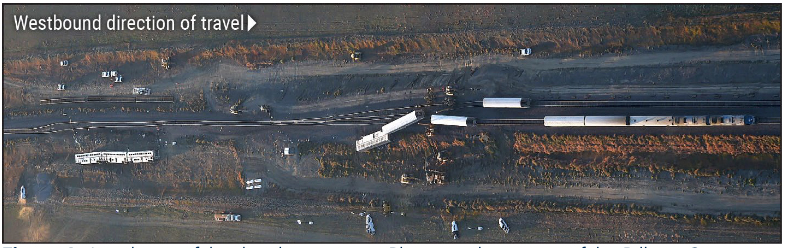
WASHINGTON — Track conditions led to the fatal derailment of Amtrak’s Empire Builder in Joplin, Mont., in September 2021, the National Transportation Safety Board said in its final accident report released today (July 27)
Three passengers were killed and 49 other people were injured in the derailment of the westbound train on BNSF’s Hi Line 50 miles west of Havre, Mont., about 3:56 p.m. on Sept. 25, 2021.
“This tragedy is a powerful reminder that there’s no substitute for robust track inspection practices, which can prevent derailments by identifying track conditions that may deteriorate over time,” NTSB Chair Jennifer Homendy said in a press release accompanying release of the report. “I implore track owners, who are responsible for the safety of their routes, to ensure inspectors have the time, support, and resources needed to do their work, which is essential to rail safety.”
Among the report’s recommendations is a call for all trains to be equipped with autonomous track geometry systems to detect defects.
In its report summary, the NTSB says factors including worn rail, vertical track deflection (the up-and-down movement of track as a train passes) at a four-bolt rail joint, subgrade instability, and track misalignment led to the derailment. It also said that, had a locomotive equipped with automated track geometry inspection traveled the route earlier in the day, the “deteriorating track condition” could have been identified, giving BNSF the opportunity to address the problem.
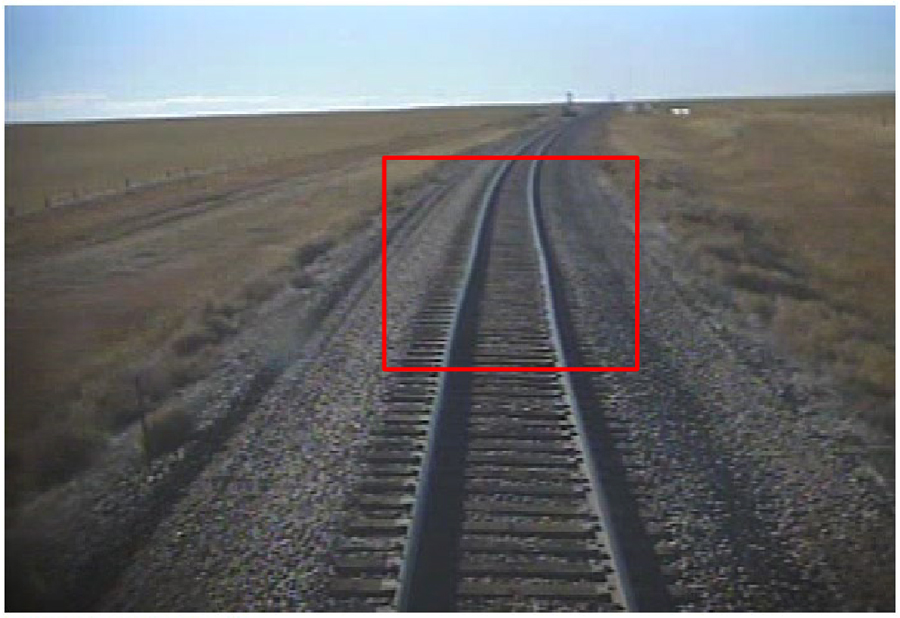
The track misalignment — a kink in a curve the train hit at 81.5 mph — was one of the key items revealed when the NTSB released the accident document earlier this year [see “Empire Builder encounter track defect …,” Trains News Wire, Feb. 22, 2023].
Specifically, investigators found that a wheel-climb derailment occurred through a combination of worn rail allowing the wheel flange to make contact with the joint bar at the point of the rail joint; the vertical track deflection that caused the train to rock and sway; a track misalignment in the curve of 2 to 4 inches; and the subgrade instability which contributed to track movement.
The board also said the fact some windows did not stay in place when the Superliner cars rolled over contributed to the severity of injuries, and renewed a call for performance standards for window retention systems to prevent passenger ejections. Investigators also found the cars’ compartmentalization did not adequately protect passengers from injury.
The call for autonomous track geometry systems on all trains is just one of the new recommendations from the board. Others call on the Federal Railroad Administration to set a limit for maximum acceptable rail wear; to establish requirements among railroads in which predetermined alerts from track inspection systems would require an immediate slow order until a walking inspection is performed and repairs are completed, if needed; and to expand an existing regulation on welded rail to all welded rail joints. Other recommendations call on BNSF to address and repair the subgrade instability at the derailment site.
Along with reiterating its call for window-retention standards, the NTSB also called on the FRA to study causes of passenger injuries in derailments and consider potential mitigating measures such as seat belts.
Amtrak said in a statement that it “appreciates the opportunity to participate in the investigation and we will review the recommendations. Amtrak will continue to work with all stakeholders to improve rail safety for the traveling public.”
The full report is available here, and the accident docket is available here.
— Updated at 4:55 p.m. CDT with Amtrak statement.
Share this article


