


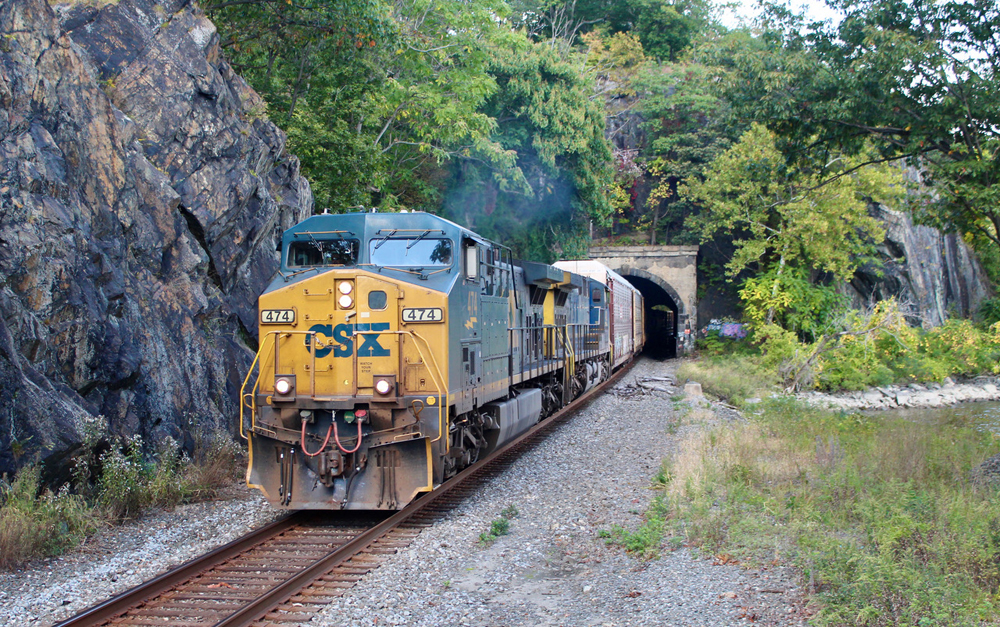
JACKSONVILLE, Fla. – Record on-time performance for carload shipments helped CSX Transportation gain merchandise traffic that contributed to higher first quarter revenue and profits.
“With sufficient resources in place, we are able to use the benefits of our scheduled railroading model to deliver improvements in our customer service performance that are driving real, tangible financial results,” CEO Joe Hinrichs told investors and analysts on the railroad’s Thursday afternoon earnings call. “Our network is running well. And we intend to do even better and show that CSX can sustain reliable service over time, which is essential for us to profitably grow our railroad.”
Quarterly operating income rose 14%, to $1.4 billion, as revenue grew 9%, to $3.7 billion. Earnings per share increased 23% to 48 cents. CSX’s operating ratio improved 1.9 points to 60.5%.
CSX’s total volume was down by 1% for the quarter thanks to a 9% decline in intermodal traffic. But merchandise traffic was up 4% and coal increased 19%.
Service improvements were the key to helping merchandise volume grow, says Kevin Boone, executive vice president of marketing and sales.
For the quarter, merchandise trip-plan compliance was a record 86%, up from 64% last year when widespread crew shortages hurt service. Intermodal trip-plan compliance was 96%, which tied a record and was up from 87% a year ago.
“While the team is pleased with these results, we’ll keep improving,” says Jamie Boychuk, executive vice president of operations.
Boychuk says the railroad is close to its goal of having 7,400 train and engine crew members in service by peak vacation season in summer. “We’re in a good place with people,” he says.
CSX was the first railroad to experience crew shortages in 2021 – which eventually spread to BNSF Railway, Norfolk Southern, and Union Pacific – and is the first railroad to return service to pre-pandemic levels.
One analyst noted that the low-cost Precision Scheduled Railroading operating model has been dragged through the mud due to service and safety problems at the big U.S. railroads, which have deeply cut their payrolls since 2017. What’s the difference now at CSX?
Hinrichs said it’s important to keep the five guiding principles – safety, customer service, cost control, asset utilization, and valuing and developing employees – in balance.
“The results that we’re seeing throughout our network being delivered by our great one CSX team is the result of that and focusing on our employees and the customer service specifically,” he says. “I believe that the principles of scheduled railroading are just as valid today as they were five years ago. Obviously it’s how you keep things in balance … and we’re trying to lead by example in that regard.”
CSX reduced its volume outlook for the year in light of the slowdown in intermodal traffic. International intermodal has slumped due to reduced import levels, while domestic is down because of slowing consumer spending and high retail inventory levels.
The railroad now expects revenue ton-miles to grow in the low single-digit percentage range this year. CSX previously anticipated volume would grow faster than overall economic growth.
Share this article