

NEW YORK — Canadian Pacific Kansas City CEO Keith Creel is not the least bit surprised at how rival Class I railroads have responded to the CP-KCS merger by launching new and faster cross-border intermodal service.
“We’re creating competition and this industry is getting stronger as a result,” Creel told the RailTrends conference on Thursday.
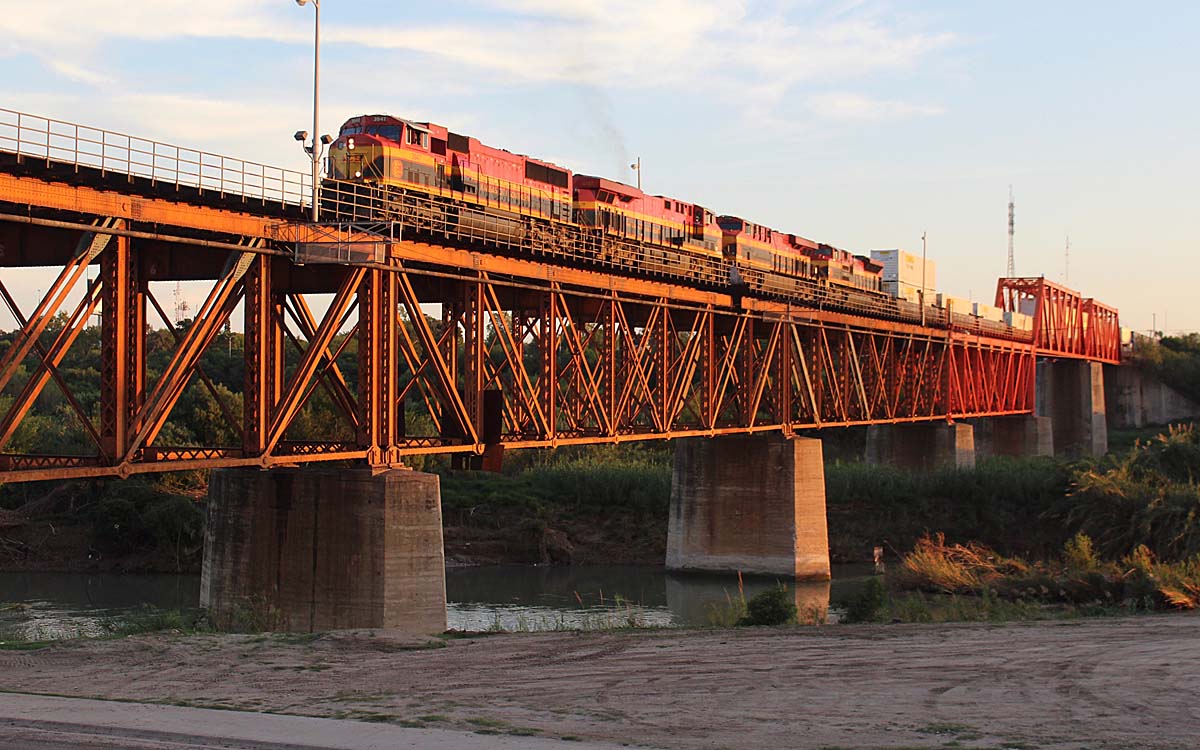
CPKC’s flagship Mexico Midwest Express intermodal service, which began in May, is taking trucks off the highway and has created the first cross-border intermodal perishables moves using the railway’s 1,000 new reefer containers.
“I knew that we needed a proof point. I knew that we needed something that showed the power of this single-line network … from Chicago deep into Mexico,” Creel says.
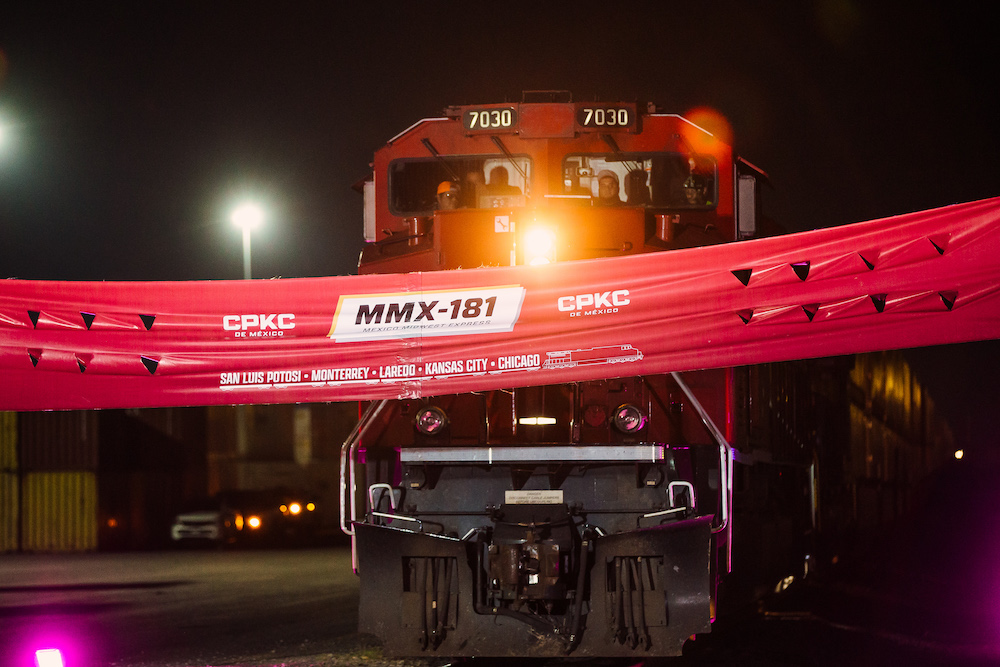
“So we introduced the MMX with a mandate and an objective to make it truck-like reliable, best in class, truck-competitive service,” he says. Trains 180 and 181 are providing 95% on-time reliability with a transit time of just under four days between Chicago and Monterrey, Mexico.
The MMX service prompted Canadian National, Union Pacific, and Ferromex to team up for Falcon Premium service that links CN’s terminals in Canada and Detroit with points in Mexico. Like MMX, the service was launched in May. New UP CEO Jim Vena subsequently took 24 hours out of the schedule after he rejoined the railroad in August.
BNSF Railway and intermodal partner J.B. Hunt this week announced that on Jan. 1 they’re shifting their cross-border service away from CPKC and the Laredo, Texas, gateway to a Ferromex routing via the Eagle Pass, Texas, gateway.
The service via Eagle Pass will be 24 hours faster than the current Chicago-Monterrey route, BNSF and J.B. Hunt say. The route is 5% shorter between Monterrey and BNSF’s terminal in Alliance, Texas, where traffic can be routed to various destinations on the BNSF system. CPKC will continue to handle J.B. Hunt traffic bound to and from the Southeast via the Meridian Speedway and Norfolk Southern.
“The UP, they’ve introduced their service. They’ve always had the best route to the border, but they never had the best transit time. Now they’re inspired to compete and are matching, with their combined three-line move, similar transit times,” Creel says. “And then … BNSF and J.B. Hunt got into the fray, too. And they are shaving time off their existing transit times. So you’ve got three railroads that are motivated, that are inspired.”
Creel says Class I railroads got complacent after the last round of mergers two decades ago.
“When you’re not challenged — and this is human nature, this is railroading nature, this is any business nature, this is competitive sport nature, this is just a fact of life — sometimes complacency can set in,” Creel says. “And this industry is in a place where we needed to be better. We need to be better for all stakeholders, not just our own, but for this nation.”
The rail competition will extend to automotive and merchandise traffic, as well, Creel says.
With 10,000 trucks crossing the U.S.-Mexico border at Laredo every day, Creel says there is plenty of business to go around for CPKC, UP, and BNSF to all be successful.
The RailTrends conference is sponsored by trade publication Progressive Railroading and independent analyst Anthony B. Hatch.
Share this article