


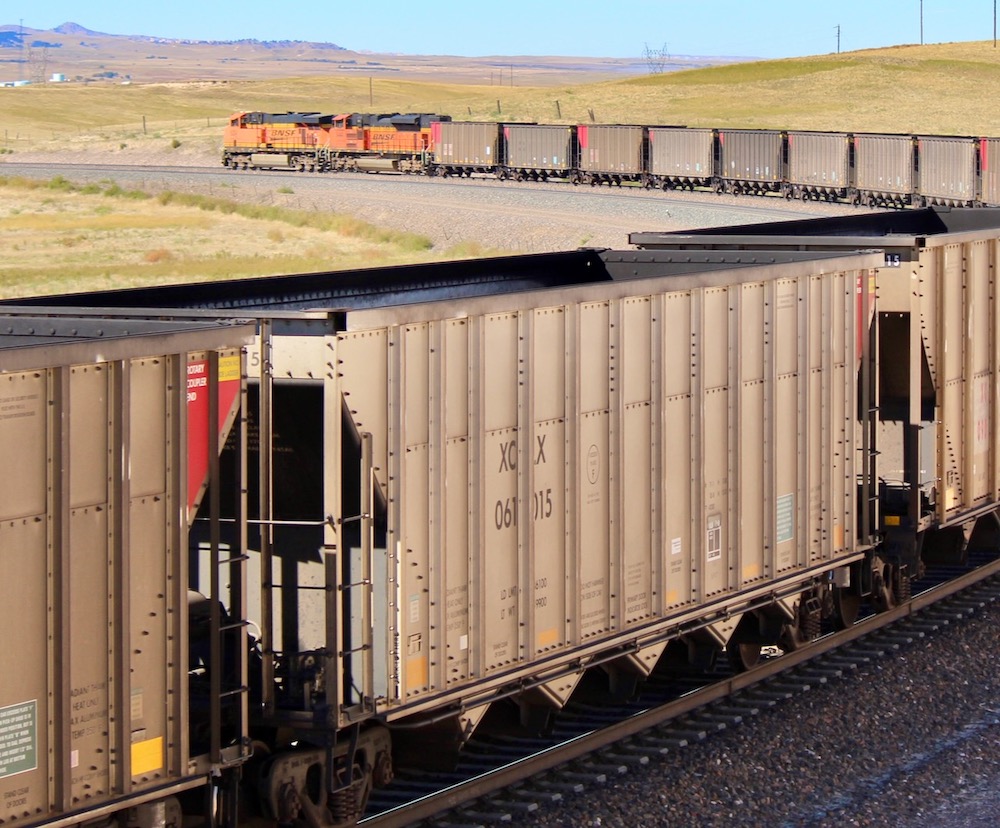
WASHINGTON — Navajo Transitional Energy Co.’s request for an emergency service order that would force BNSF Railway to handle more of its export coal would jeopardize service for other Powder River Basin coal producers, a mining company and the Crow Tribe have told federal regulators.
NTEC, in a complaint filed with the Surface Transportation Board last month, says BNSF has failed to provide adequate service from the Spring Creek Mine in Montana to the Westshore Terminals at Roberts Bank in Delta, British Columbia. The coal company, in a separate filing, also seeks an emergency service order from the STB that would require BNSF to handle 29 loaded trains per month beginning May 1.
BNSF handled 17 NTEC trains in February and 22 in March, which NTEC says was below the 24 to 30 trains per month that the coal company sought as part of a Nov. 1, 2022, service request. The coal is exported to customers in Japan and South Korea.
But Global Coal Sales Group, which arranges the sale and transportation of coal produced at the Signal Peak Mine in Roundup, Mont., told the STB in a May 5 filing that an emergency service order for NTEC “would have significant economic, operational, and safety impacts for Global.”
The Crow Tribe, in a May 5 regulatory filing, told the STB that it would be affected by an emergency service order because it’s been seeking BNSF service to export coal. “I write to express our deep concern that an emergency service order entered by the Board could significantly impact our plans to begin exporting coal as early as 2Q 2023 as well as our ability to trade in the export coal market. As such, I urge the Board to carefully consider such competitive impacts in evaluating NTEC’s request for an emergency service order and to take no action that would limit our ability to export Crow coal,” wrote Conrad Stewart, energy director for the tribe.
BNSF and NTEC filed supplemental briefs with the STB on Friday in advance of their May 10 oral arguments before the board.
BNSF has urged federal regulators to reject NTEC’s request for an emergency service order, arguing that its desire to take advantage of the hot export coal market does not constitute an emergency.
BNSF also says it’s still experiencing capacity constraints in the Pacific Northwest, and that ordering BNSF to increase service to Spring Creek mine would require the railroad to reduce service to other Powder River Basin customers. BNSF argues that it is entitled to prioritize coal moving under contracts when capacity constraints began to limit the total amount of coal that could be transported to Westshore.
NTEC has asked the board to determine that BNSF has failed to provide adequate service, to define the scope of BNSF’s common carrier obligation, the restoration of adequate service, and unspecified monetary damages.
In a supplemental brief filed on May 5, NTEC said BNSF has agreed to increase its June coal train allocation to 22 trains, up from the 16 it previously forecast. NTEC says that still falls well below its needs.
Share this article