

FORT WORTH, Texas — BNSF Railway’s first-quarter earnings and revenue declined despite a 7% increase in freight volume.
Quarterly operating income declined 7%, to $1.72 billion, as revenue declined 6%, to $5.66 billion, BNSF and its parent company, Berkshire Hathaway, reported on Saturday. The railway’s operating ratio was 69.5%, up 1.1 points from a year ago.
The results were “primarily due to a 10% decrease in average revenue per car/unit resulting from lower fuel surcharge revenue and unfavorable business mix, partially offset by a 7% increase in unit volume,” BNSF said in a regulatory filing.
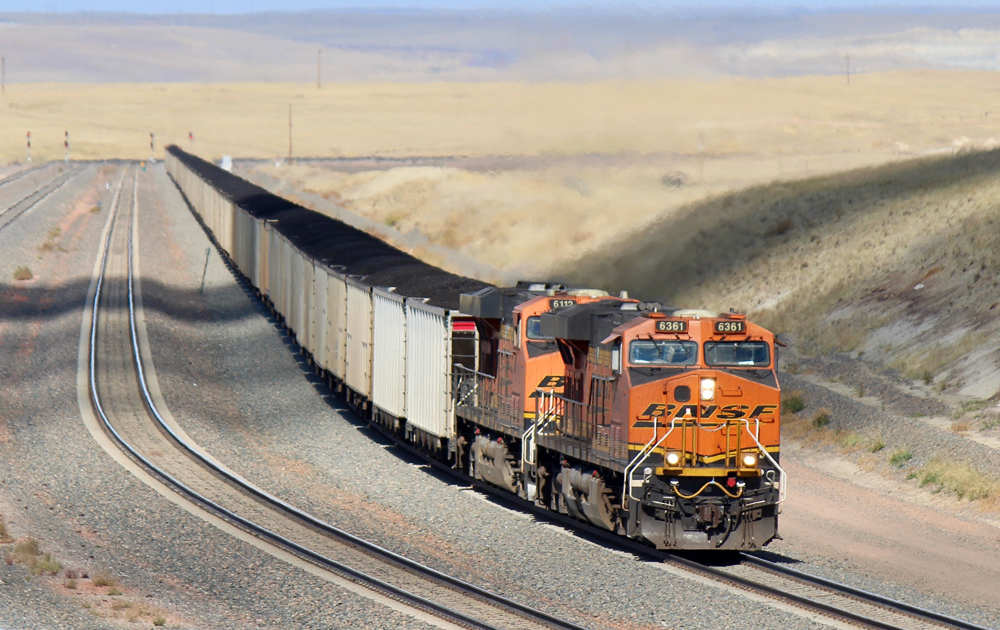
The unfavorable business mix was attributable to a 19% increase in consumer products traffic — which includes intermodal and automotive — and a 21% decline in coal volume due to a combination of high utility stockpiles and record low natural gas prices.
The railway’s consumer products volume grew due to higher intermodal shipments that arose from an increase in West Coast imports as well as the addition of a new international intermodal customer. Automotive volume also was up due to higher vehicle production.
Agricultural products volume was up 3.7%, primarily due to higher grain exports and fertilizer shipments.
Industrial products carloads declined by 0.3% due to lower mineral and aggregate shipments, which was mostly offset by higher volumes of petroleum products, plastics, and taconite shipments.
Berkshire Hathaway Vice Chairman Greg Abel — who likely will succeed 93-year-old Chairman Warren Buffett — told investors at the company’s annual meeting on Saturday that BNSF’s financial results were disappointing last year and in the first quarter.
Overall freight volume is expected to be flat, Abel says, so the railway must bring its cost structure in line with demand in order to effectively compete with other railroads and trucks.
BNSF is “100% committed” to reducing costs through examining the way its yards, locomotives, and employees are used, Abel says.
Share this article