WASHINGTON — Eighteen major projects in 11 states have been recommended for some $4.45 billion in construction funding as part of President Joe Biden’s fiscal 2024 Budget Request to Congress, the Federal Transit Administration has announced. This includes nine projects that would receive federal funding for the first time.
Two rail projects are among those projected first-time recipients: The Chicago Transit Authority would receive $350 million for its Red Line Extension project, to add 5.6 miles of heavy rail on the city’s Far South Side, and the Utah Department of Transportation would receive $316.8 million for the FrontRunner Strategic Double Track project, as well as 10 new trainsets.
Other rail projects recommended for funding include:
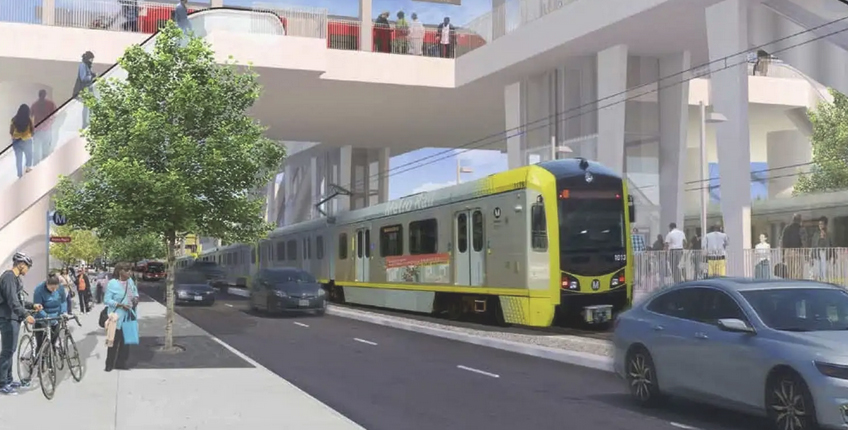
— In California, two segments of LA Metro’s Westside Subway project; Metro’s San Fernando Valley Transit Corridor light rail project; and the BART Silicon Valley Phase II extension between San Jose and Santa Clara.
— In Minnesota, the 14.5 mile Minneapolis Southwest Light Rail Transit project.
— In Washington state, Sound Transit’s Lynwood Link light rail extension.
— In New York and New Jersey, $700 million for the proposed Hudson Tunnel project, and $496.8 million for the second phase of the Metropolitan Transportation Authority’s Second Avenue Subway.
The full list of projects, and more details on each, is available here.
The Washington Post reports the budget proposes about $6.9 trillion in spending next year, while seeking to reduce the budget deficit with a $4.5 trillion increase in new revenue, mostly through tax hikes on high earners and large corporations, and by controlling federal spending on prescription drugs. Republicans in the House of Representatives have already said they will not pass the President’s budget.
Share this article