

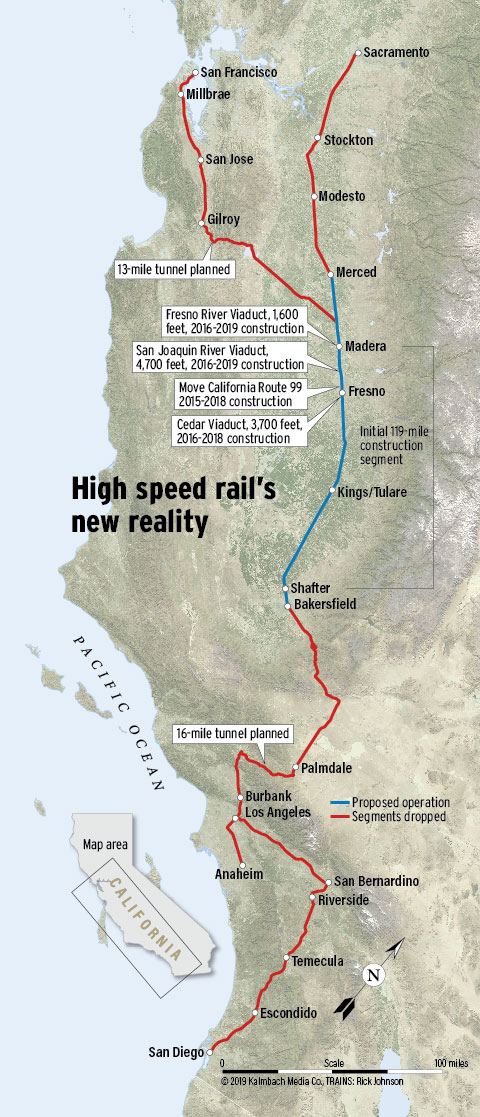
Newsom argues he’s not “abandoning high speed rail” entirely for two reasons. First, the state will complete about 160 miles of track, some capable of 200 mph speeds, and second, it will complete environmental assessments on the entire route between the Los Angeles Basin and the Bay Area.
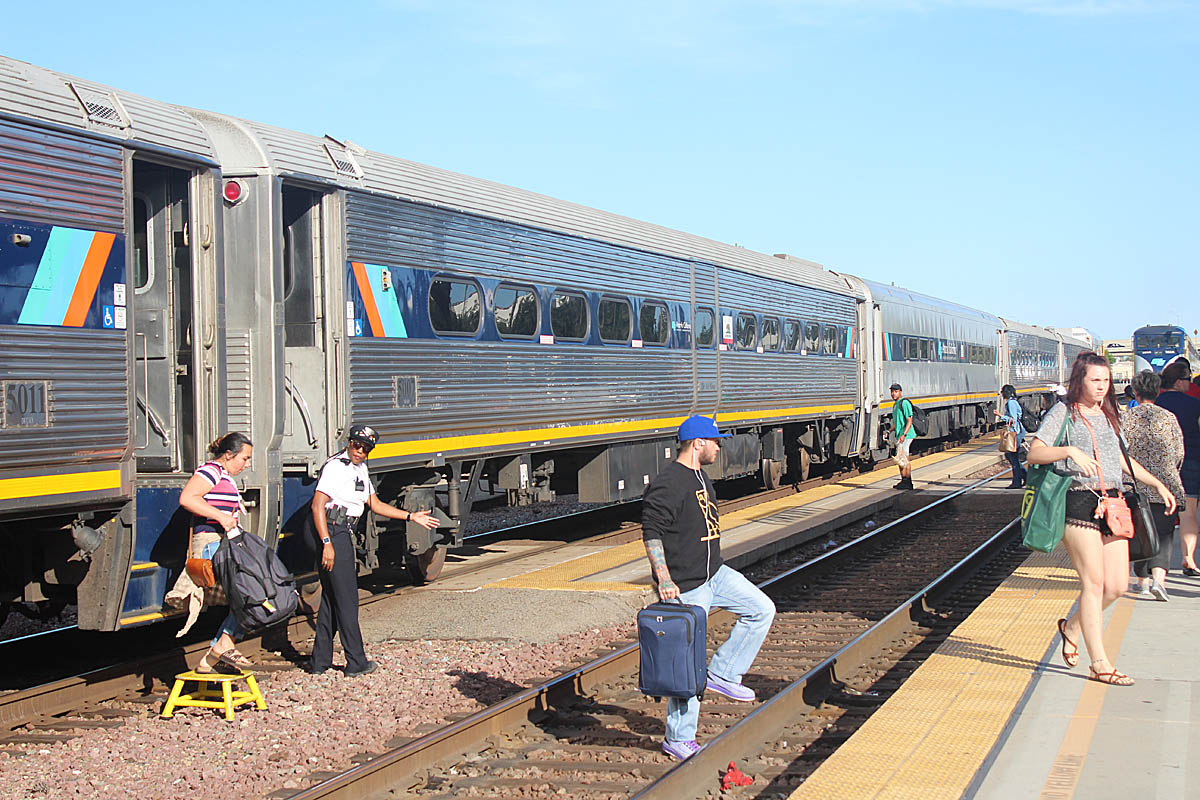
Unexplained is how Newsom intends to “connect the Central Valley to other parts of the state” other than moving Amtrak’s San Joaquin service off of BNSF Railway trackage through Fresno and other communities. That equipment is capable of 110 mph running, but already serves downtowns.
Injecting politics into a following tweet, Newsom states, “I’m not interested in sending $3.5 billion in federal funding—exclusively allocated for HSR—back to the White House.”
The source of most of that money is the American Recovery and Reinvestment Act of 2009, a $787 billion initiative sponsored by President Obama in response to the financial crisis at the time. The California investment was selected based on the match supplied by the 2008 passage of a $9.9 billion state high speed rail bond issue that was approved by voters who thought they were helping to finance a 450-mile system. In no way does Newsom’s scaled-down project fulfill that goal.
Democratic Assembly Speaker Anthony Rendon tells the Los Angeles Times, “The extent to which (the new proposal) does not link two of the three largest areas in the state seems problematic.”
Another reality: environmental reviews don’t have an indefinite shelf life. Simply spending the money to complete the study over the entire route now doesn’t ensure that plans will translate into actual construction when there is enough political will to invest in infrastructure.
To be sure, the Caltrain electrification and capacity improvement project now underway between downtown San Francisco and San Jose has benefited from California High Speed Rail Authority’s involvement since its intercity trains would also utilize the route. Trains News Wire has asked the agency to detail the extent of the funding it has supplied to this and associated Southern California projects so far.
Newsom’s assessment of the heavy lifting required of his administration in the years ahead was that it likely would not result in trains running before he was up again for reelection. Yet it also means his decision to pull the plug on predecessor Jerry Brown’s vision ensures a governing legacy which makes no serious attempt to avoid the inevitable mobility gridlock in the state’s transportation future that Brown warned about.
The nation’s collective political unwillingness to view and fund passenger rail investments on an equal footing with highway and transit projects means priorities are free to change with state administrations; this was the case when both Wisconsin and Florida Republican governors rejected President Obama’s federal high speed rail money. However, California’s about-face occurred within the same political party.