

Nationally, transit ridership is down. Through the third quarter of 2018, transit ridership slipped by about 3 percent, driven largely by a steady drop in bus ridership and low gas prices, according to transit officials. So why did the Twin Cities see an increase?
One reason is that a fare increase in October 2017 drove down ridership, a common result as riders resist reaching deeper in their pockets to ride. Over time, the effect of the fare increase faded as riders grew accustomed to higher fares and returned to transit.
A bigger reason is the Twin Cities metro area’s changing demographics. As baby boomers age, the number of seniors in the metro area age 65 and older continues to balloon, growing from more than 280,000 in 2010 (11 percent of the population) to nearly 380,000 in 2017 (13.4 percent of the population). As they age rather than driving many of the boomers turned to bus and rail service.
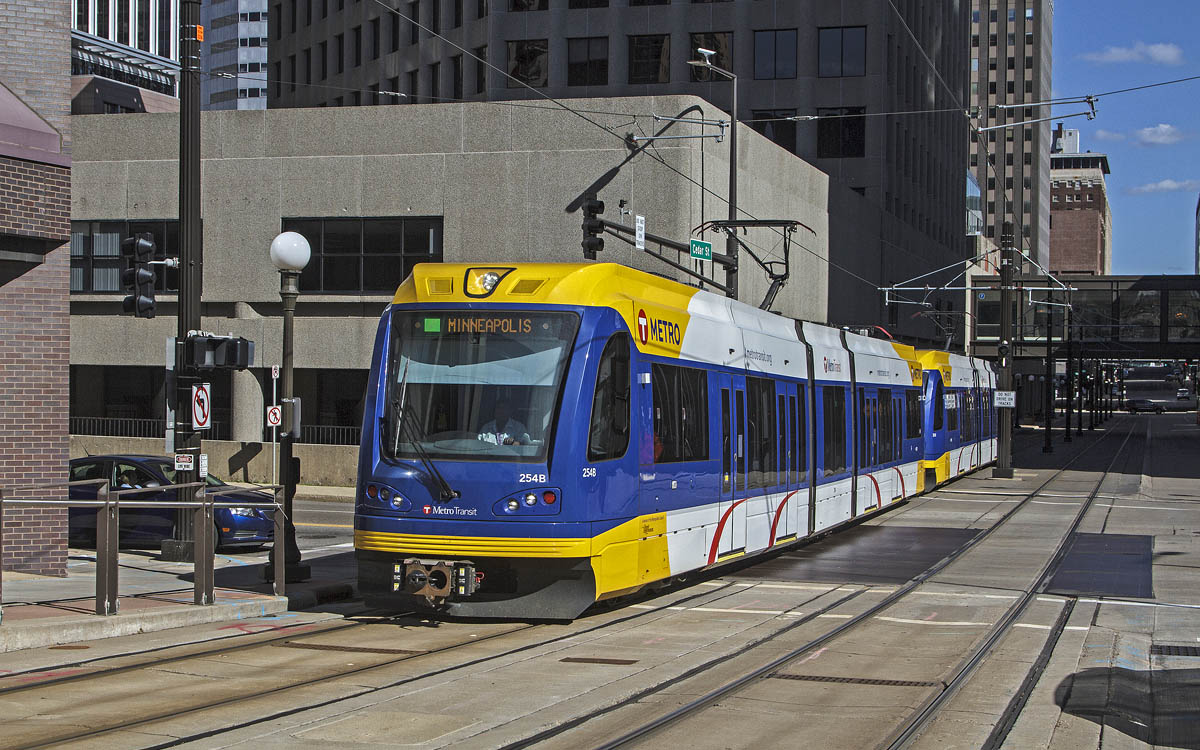
Metro area transit users will have another light rail line to ride in the next few years. A 14.5-mile extension of the Green Line is under construction that will extend the line from Minneapolis to the southwest connecting suburban St. Louis Park, Hopkins, Minnetonka, and Eden Prairie. It is expected to open in 2023.
Both the Blue and Green lines connect to the Northstar commuter rail line at Target Field Station in downtown Minneapolis adjacent to the Minnesota Twins baseball stadium. The 40-mile Northstar line operates over BNSF Railway between Minneapolis and Big Lake and opened for service in 2009.