

DURANGO, Colo. — A federal judge in Colorado has recommended the Durango & Silverton Narrow Gauge Railroad’s motion to dismiss a lawsuit seeking costs associated with a 2018 wildfire be thrown out.
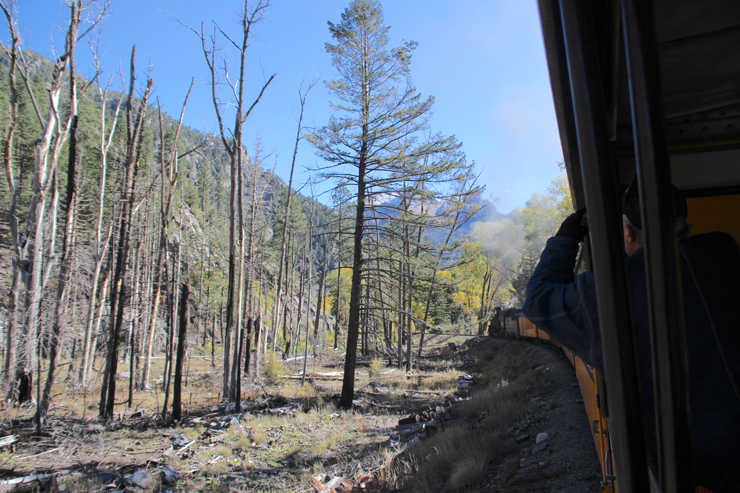
In July 2019, attorneys for the federal government filed a lawsuit demanding the narrow gauge railroad pay $25 million to compensate the U.S. Forest Service for resources used to douse the 53,000-acre 416 Fire that began on June 1, 2018, near Hermosa, Colo. Fire investigators stated that the fire was the result of a cinder from a passing steam train. Two months later, attorneys for the railroad moved to have the case thrown out of court, arguing that state and federal law only allows the government to sue for damages caused by a wildfire but not suppression costs [See: “Durango & Silverton says wildfire lawsuit should be dismissed,” Trains News Wire, Sept. 12, 2019].
The presiding judge asked for the opinion of another federal judge and, on Dec. 27, that judge recommended that the D&SNG’s motion be dismissed and that the case move forward.
“The United States (government) is entitled to whatever protection is afforded to other landowners in Colorado — including entitlement to recovery of fire suppression costs,” wrote U.S. Magistrate Judge N. Reid Neureiter.
As of Dec. 31, presiding judge Robert E. Blackburn had not formally dismissed the motion.
The 416 Fire forced the evacuation of thousands of people near Hermosa and closed the railroad for well over a month. Train service resumed in July after rain helped reduce the fire danger, but it was disrupted again a few weeks later by a series of mudslides in the recently burned area, again forcing the railroad to significantly alter its operations until fall.
Almost as soon as the fire began, local residents were blaming the railroad for the blaze. Multiple eyewitnesses told local news outlets that they saw the fire start after the train passed by.
Although the railroad has not taken responsibility for the 416 Fire, it has vowed to do more to prevent locomotive-caused fires in the future. Soon after the fire began, the railroad began work on converting K-37 locomotive No. 493 to burn oil and it announced that it would be purchasing two new diesel locomotives.
The trial is currently set to take place in November and December 2020. According to court records, prosecutors and the defense expect the trial to last 10 days.