
My dream 4-by-8 model railroad layout
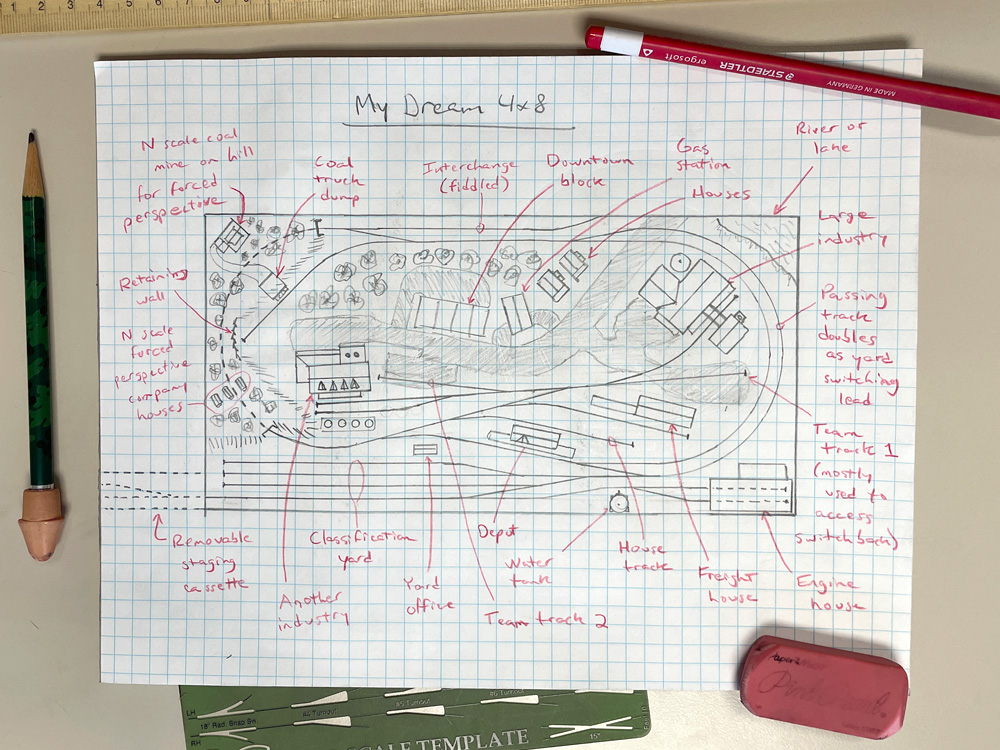
A pencil sketch of an HO scale 4x8 track plan on graph paper

What’s in my dream 4-by-8 model railroad? A yard, continuous operation, and lots of places to switch. Just because you don’t have a lot of room for your model railroad doesn’t necessarily mean you need to give up on your dream layout. You might just need to scale your dreams back a bit. While that […]

Read More…

Olympia & Sand Creek, Episode 5 | Updates and wiring

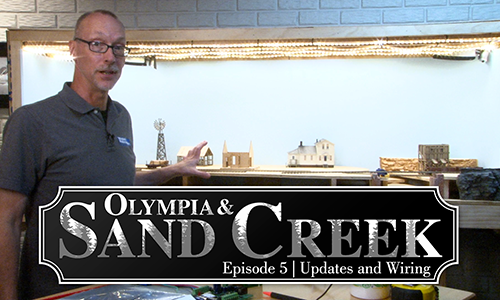
This time around, our intrepid host lets anxious viewers see all the progress he’s made to prepare the O scale (1:48) Olympia Logging Co. On30 layout for the next big step! From backdrop to tabletop to trackwork to scenery, David shares the extent of his off-camera efforts — all to get things into place for […]

Read More…

Olympia & Sand Creek, Episode 5 | Updates and wiring

This time around, our intrepid host lets anxious viewers see all the progress he’s made to prepare the O scale (1:48) Olympia Logging Co. On30 layout for the next big step! From backdrop to tabletop to trackwork to scenery, David shares the extent of his off-camera efforts — all to get things into place for […]

Read More…

What article talked about modeling a cereal plant?

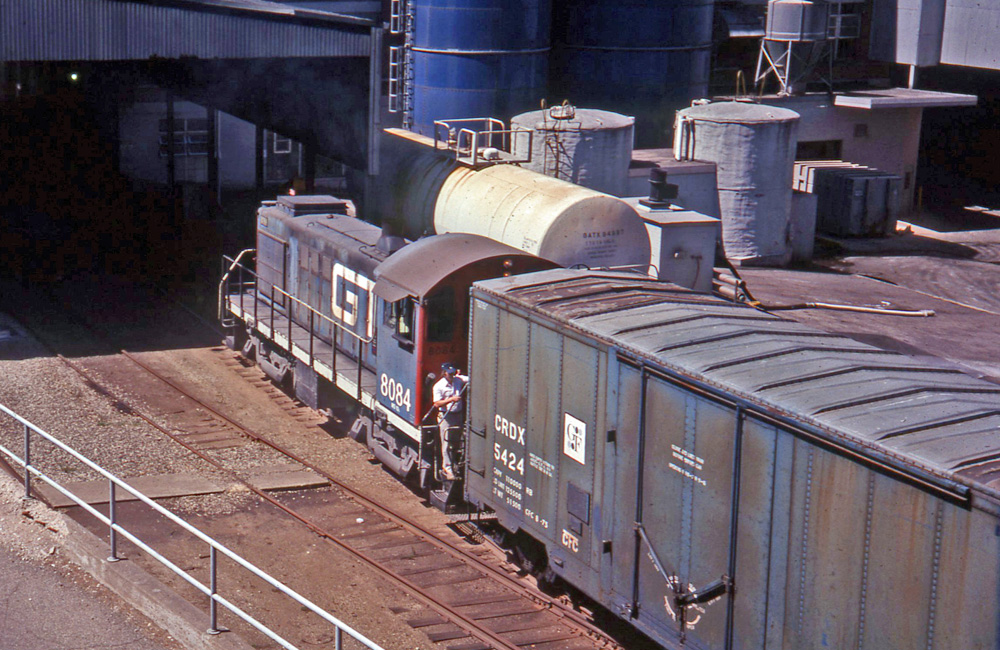
A dark blue switch engine pulls a boxcar past a cluster of tanks and silos

Q: Has Model Railroader ever done a feature on modeling a cereal plant such as Kellogg’s or Post? I’m building a 12″ by 10′-6″ shelf layout which will be entirely that one industry. But I’m not sure how best to lay out the various structures and car spots for covered hoppers, boxcars, food-grade tank cars, […]

Read More…

Olympia & Sand Creek, Episode 4 | Cutting curves and building backdrops

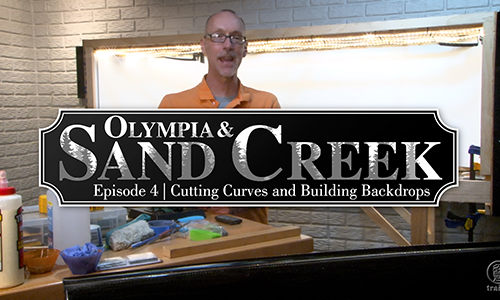
David has cleared the deck and marked his track configuration on the plywood, so he’s ready to cut things to pieces! No fears! In this video, he’ll show you how to make accurate measurements, so you can make equally precise cuts. Once those cut parts are assembled, David also shares how to install the styrene […]

Read More…

Olympia & Sand Creek, Episode 4 | Cutting curves and building backdrops

David has cleared the deck and marked his track configuration on the plywood, so he’s ready to cut things to pieces! No fears! In this video, he’ll show you how to make accurate measurements, so you can make equally precise cuts. Once those cut parts are assembled, David also shares how to install the styrene […]

Read More…

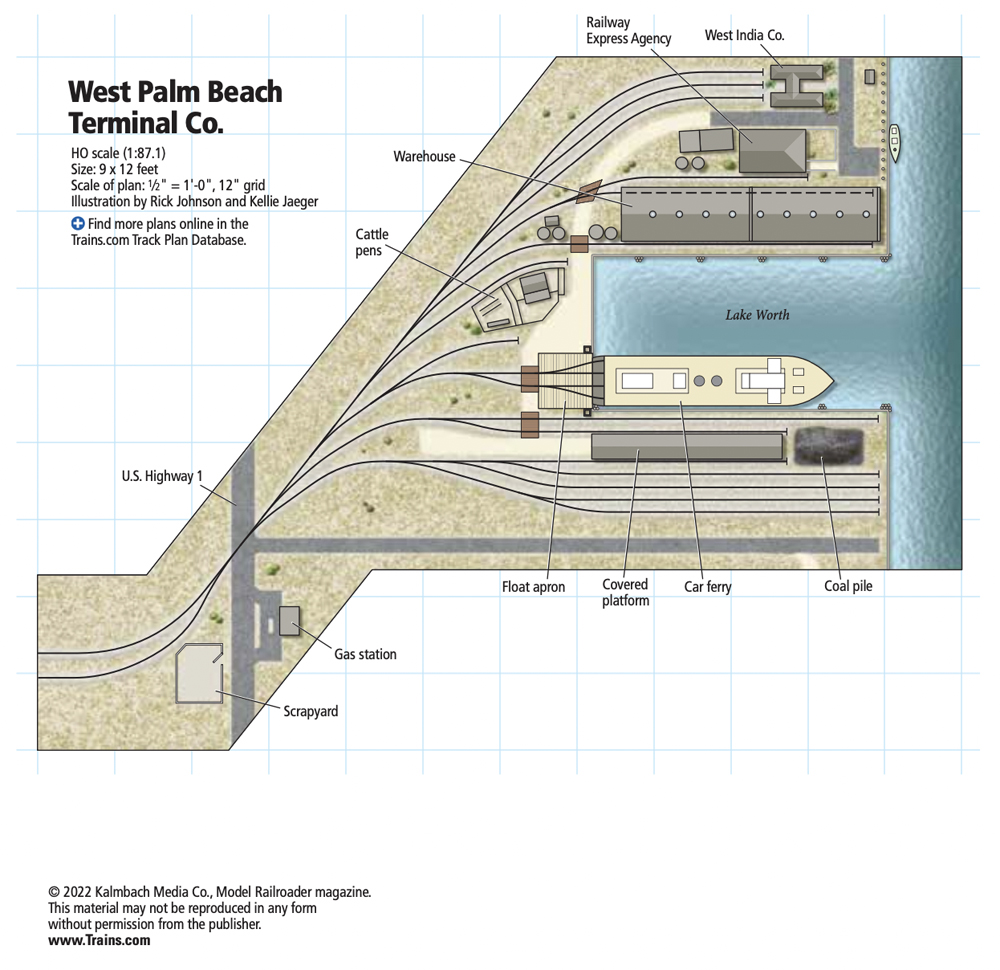
The West Palm Beach Terminal Co. layout in HO scale

The HO scal West Palm Terminal Co. layout

Facts & features Name: West Palm Beach Terminal Co. Scale: HO (1:87) Size: 9-0′ x 12-0′ Prototypes:  West Palm Beach Terminal Co. Locale: East coast of Florida Era: Late 1950s Style: Module Mainline run: None Minimum radius: 1821″ Minimum turnout: no. 5 Maximum grade: None Benchwork: Hollow-core doors Height: 45″ Roadbed: Cork sheet Track: Micro engineering […]

Read More…

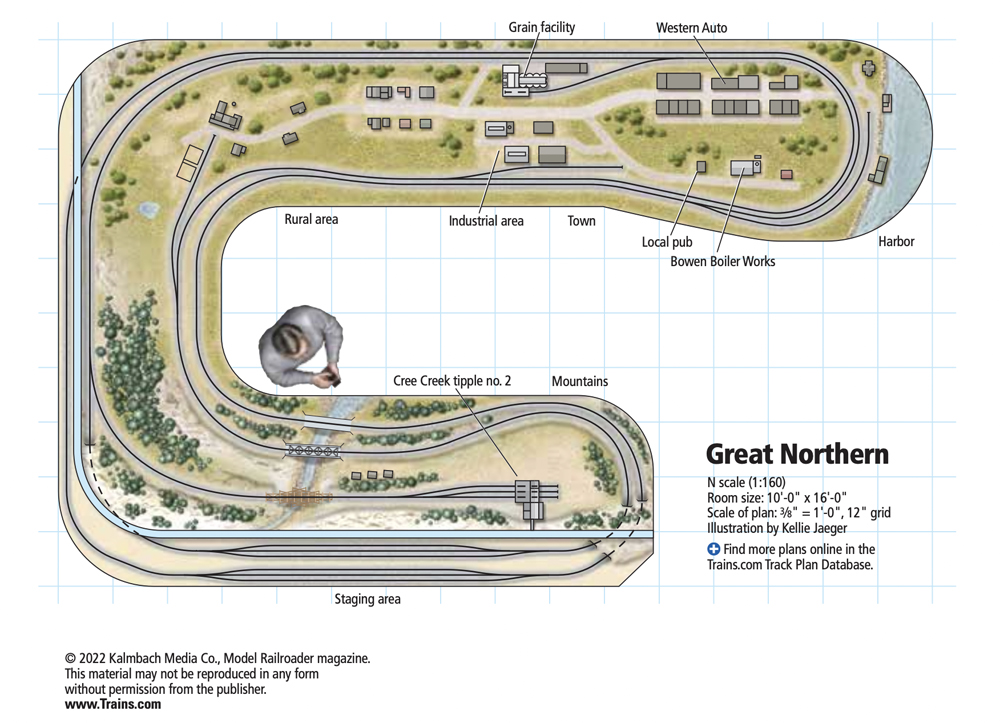
The Great Northern layout in N scale

The Great Northern layout in N scale

Facts & features Name: Great Northern Scale: N (1:160) Size: 10-0′ x 16-0′ Prototypes:  Freelanced Locale: Pacific Northwest Era: Mid-1960s Style: Walk-in Mainline run: 86 feet Minimum radius: 15″ Minimum turnout: no. 6 Benchwork: Modified L-girder Height: 46″ Roadbed: Commercial foam roadbed Track: Micro Engineering code 55 (main), Peco code 80 (staging) Scenery: Extruded-foam insulation […]

Read More…

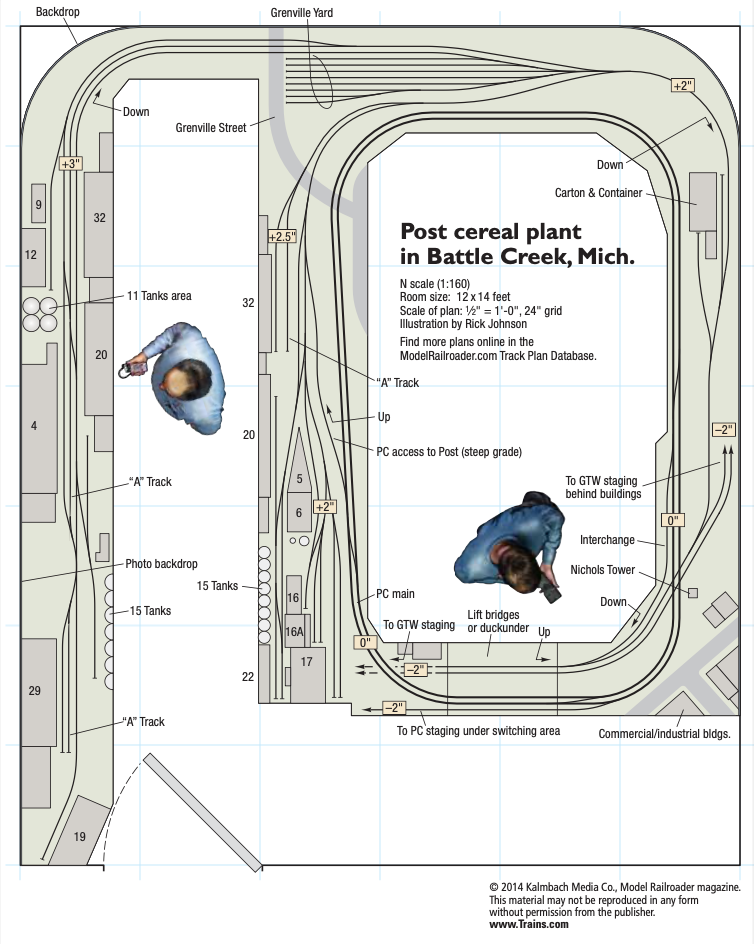
The Post cereal plant in Battle Creek, Michigan layout in N scale

The N scale Post cereal plant layout

Facts & features Name: Post cereal plant in Battle Creek, Michigan Scale: N (1:160) Size: 12-0′ x 14-0′ Prototypes:  Grand Trunk Western and Penn Central Locale: Battle Creek, Michigan Era: 1970s Style: Single deck Mainline run: Not applicable Minimum radius: 18″ Minimum turnout: no. 6 Maximum grade: 3 percent Benchwork: L-girder with risers and open-grid […]

Read More…

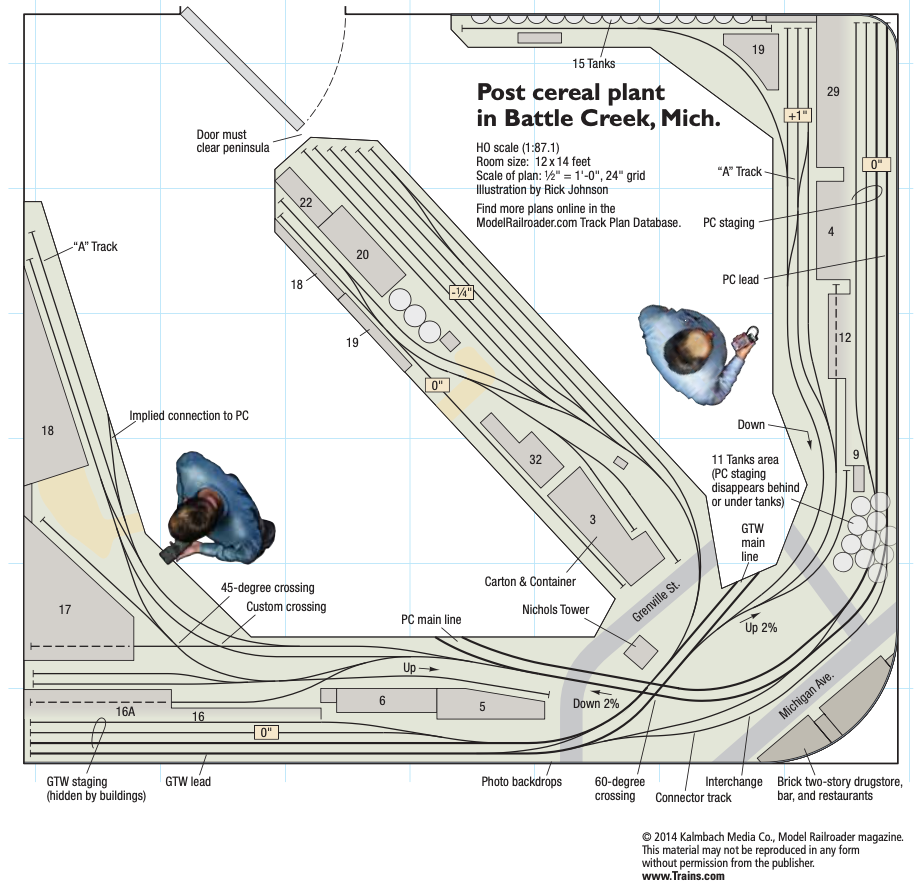
The HO scale Post cereal plant in Battle Creek, Michigan layout

The track plan for the HO scale Post cereal plant in BattleCreek, Michigan

Facts & features Name: Post cereal plant in Battle Creek, Michigan Scale: HO (1:87) Size: 12-0′ x 14-0′ Prototypes:  Grand Trunk Western and Penn Central Locale: Battle Creek, Michigan Era: 1970s Style: Single deck Mainline run: Not applicable Minimum radius: 30″ Minimum turnout: no. 6 Maximum grade: 2 percent Benchwork: L-girder with risers and open-grid […]

Read More…

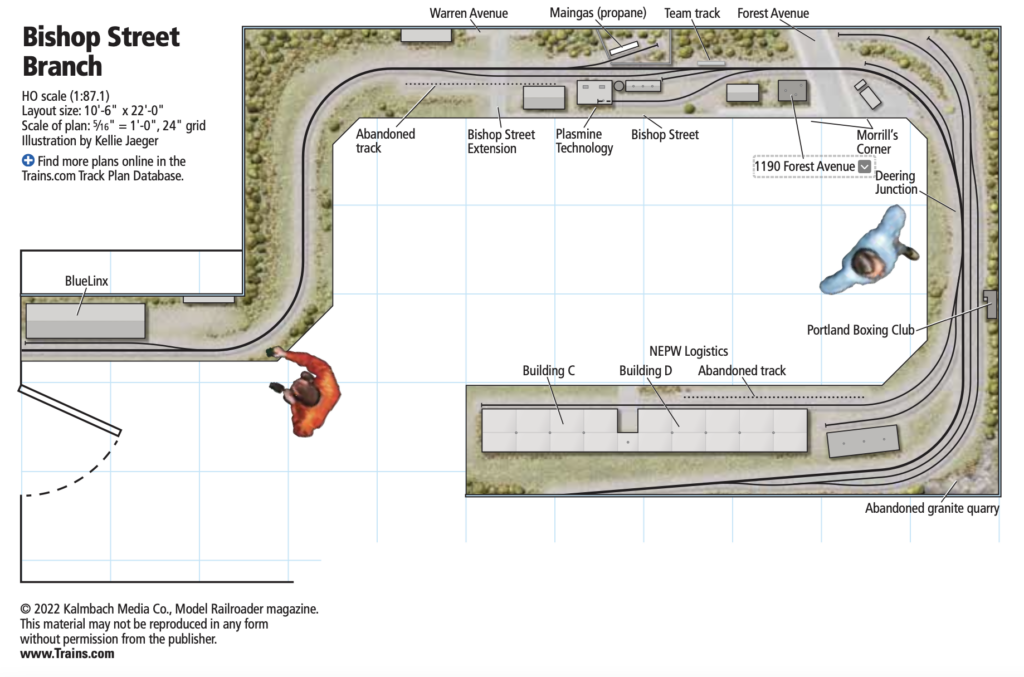
The HO scale Bishop Street Branch layout

The Bishop Street Branch layout track plan

Facts & features Name: Bishop Street Branch Scale: HO (1:87.1) Size: 10′-6″ x 22′-0″ Prototypes:  Guilford/Pan Am Railways Locale: Portland, Maine Era: Late 1980s through the 1990s Style: Walk-in Mainline run: None Minimum radius: 24” Minimum turnout: no. 6 Maximum grade: None Benchwork: Open grid Height: 51″ Roadbed: 1⁄2″ birch plywood with N scale cork […]

Read More…

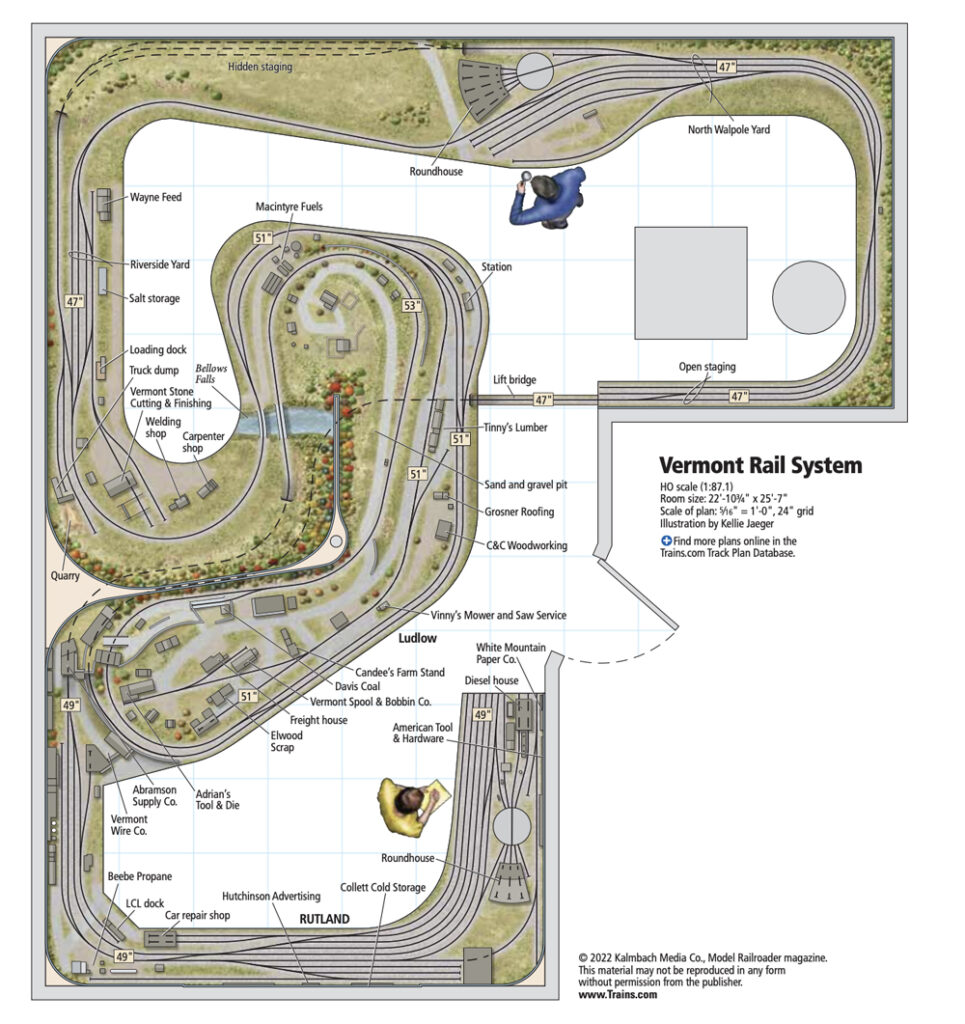
Bob Cochran’s HO scale Vermont Rail System layout

An image of the Vermont rail trackplan

Facts & features Name: Vermont Rail System Scale: HO (1:87) in standard, narrow (3-foot), and dual gauges Size: 22’-103⁄4” x 25’-7” Prototypes:  Vermont Rail System, Rutland Railroad Locale: Vermont Era: 1960s to present Style: Walk-in Mainline run: 96 feet point-to-point, 106 feet loop Minimum radius: 24” Minimum turnout: no. 4 (yards), no. 6 (main) Maximum […]

Read More…