
Views from a Colorado narrow gauge garden railroad
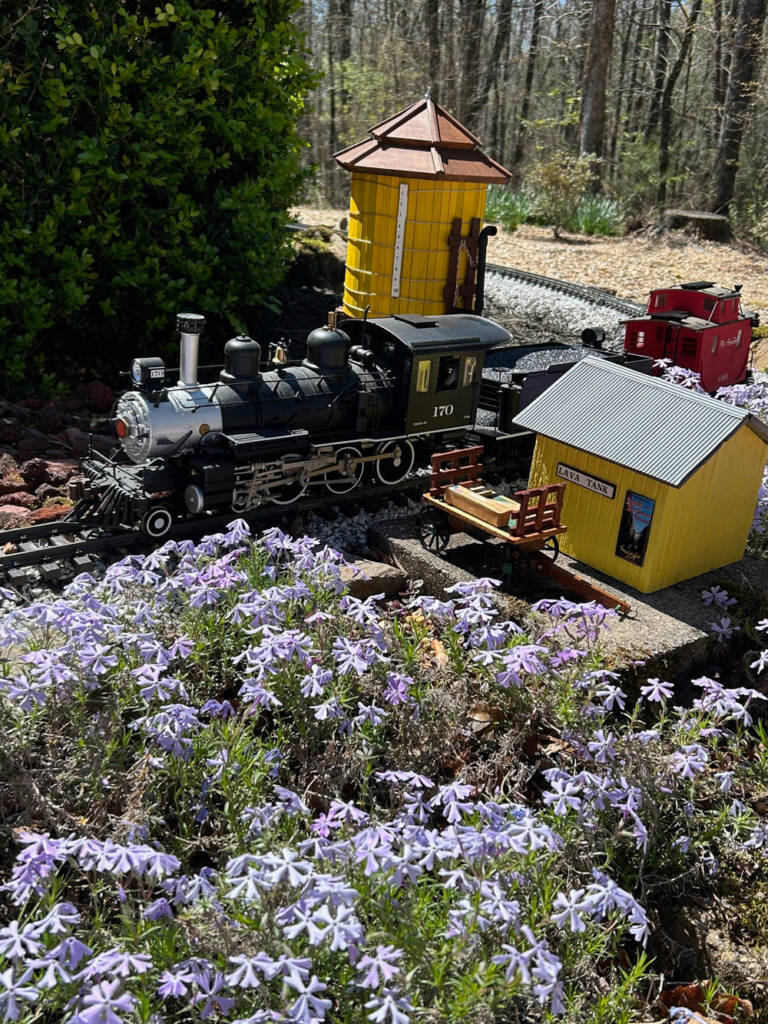
model steam engine next to yellow structure on garden railway

I model Colorado narrow gauge, specifically the Denver & Rio Grande Western and Rio Grande Southern. I own two separate garden railroads (not connected and about 8 feet apart). Trains run around approximately 250 feet of mainline tracks with a couple of short lines for logging and running the Galloping Goose. I can run five […]

Read More…

Paul Dolkos photo tribute

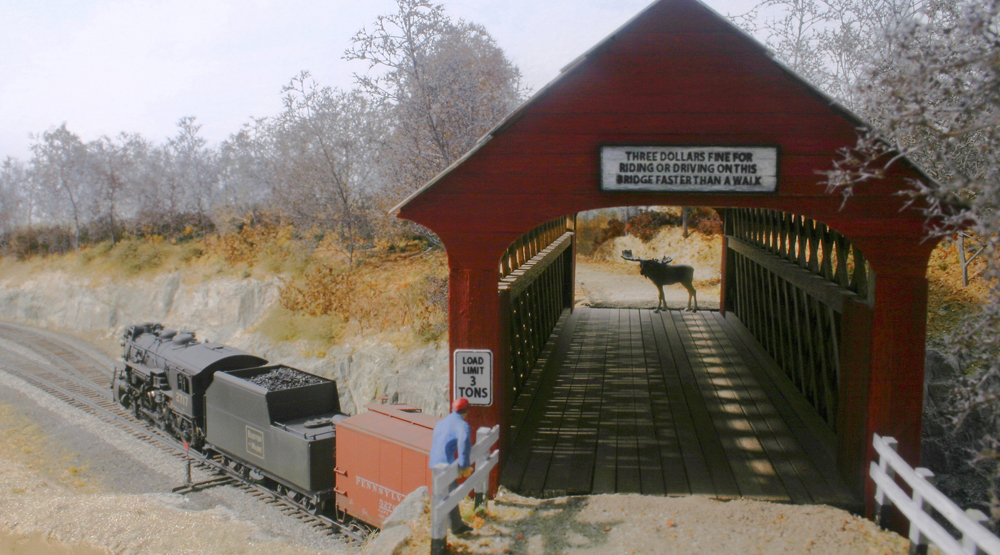
A red covered bridge on a model railroad layout with a man on one end and a moose on the other with a train passing under the bridge

Longtime Model Railroader author and photographer Paul Dolkos passed away on August 9, 2024. You can read his obituary here. In this photo gallery, we’ll take a look back at Paul’s home layouts, as well as his photography work published throughout his 50-year association with the magazine. The staff at Model Railroader extends its sympathy […]

Read More…

How to fine-tune wobbly rolling stock

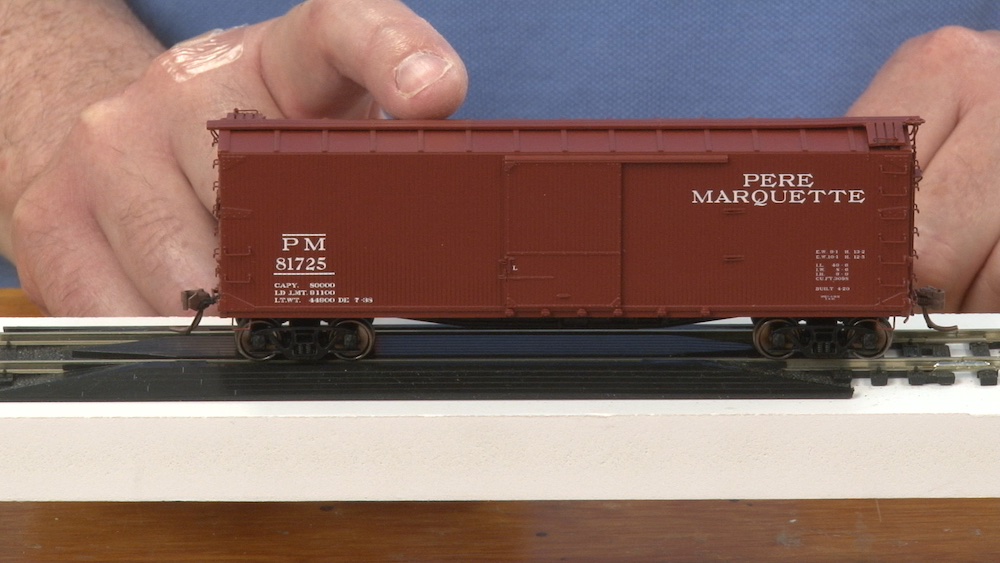
HO scale boxcar being tipped from side to side

Sometimes, rolling stock needs a little fine tuning before it can be considered ready to run on a layout. One common quirk? Wobbling. Before you jump in and start making fixes, be sure to do some testing. Here’s how: With the model sitting on the track, lightly tip the body from side to side. If […]

Read More…

Restoration and painting tips

two gray locomotive shells

You might recognize my name as a restorer of Lionel trains, this having been my livelihood for more than 50 years. Some people may question my sanity in giving up “secret” painting tips that I have used for decades; I don’t mind at all. If I can make the hobby more enjoyable to my fellow […]

Read More…

Replacing roadbed on my garden railway

yellow vehicle on track

In my January 3, 2022, Garden Railways article, I detailed how I used landscaping timbers as the roadbed for my garden railway. The railway was built in the summer of 2013. Now, 11 years later, after successfully operating trains without any track or roadbed problems, I’m ready to do a much-needed maintenance service of this […]

Read More…

Celebrating “Flyer Fest”

vintage photo of train on track

Editor’s note: This manuscript was purchased in December 1990 for Model Railroader magazine. Over the years, it made its way around the office and finally landed in my hands last fall. Dave Ingles was a friend of mine, and with his passing and my becoming editor of CTT, it seemed fitting to finally share his […]

Read More…

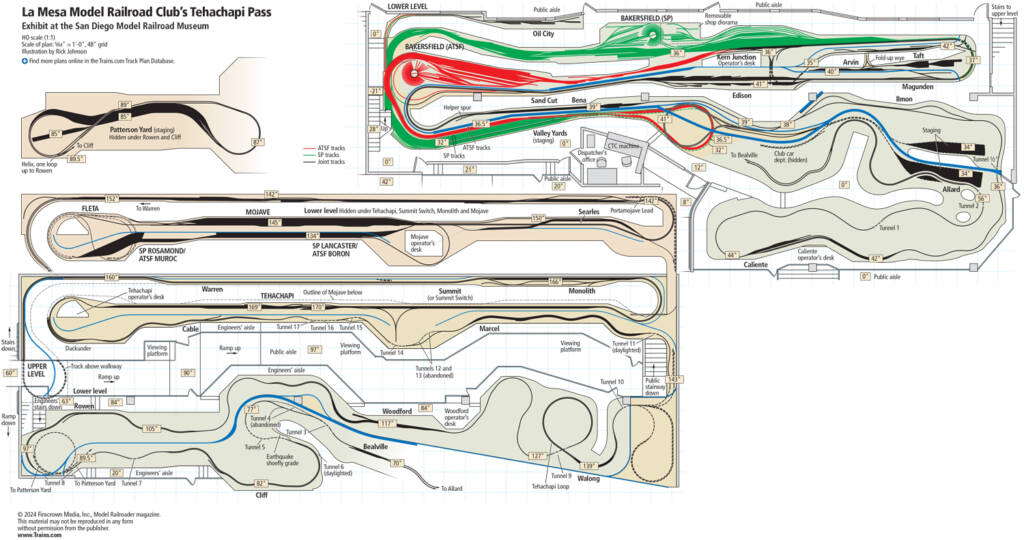
The HO scale Southern Pacific Tehachapi Subdivision layout

A model railroad track plan

Facts and features Name: Southern Pacific Tehachapi SubdivisionScale: HOSize: 72 x 128 feetPrototype: Southern Pacific Tehachapi SubdivisionLocale: Bakersfield to Mojave, CaliforniaEra: 1950s-1960sStyle: Multi-level walkaroundMainline run: Bakersfield to Mojave: 1,500 feet; between staging yards, Goshen Jct. to Lancaster: 1,800 feetMinimum radius: main tracks, sidings and yards: 48″; branch lines and industry tracks: 36″Minimum turnout: main tracks, […]

Read More…

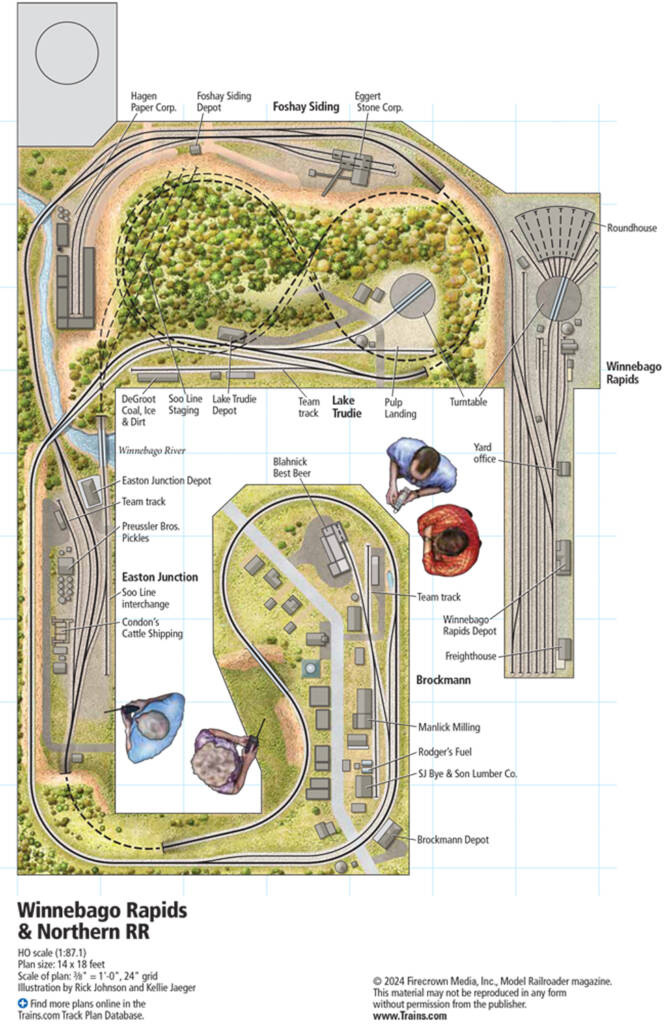
The HO scale Winnebago Rapids & Northern RR

A model railroad track plan

Facts and features Name: Winnebago Rapids & Northern RRScale: HO (1:87.1)Size: 14 x 18 feetPrototype: freelancedLocale: WisconsinEra: 1956Style: walk-inMainline run: 120 feetMinimum radius: 24″Minimum turnout: No. 6Maximum grade: 31⁄2%Benchwork: L-girderHeight: 41″ to 49″Roadbed: HomabedTrack: code 83 (handlaid in visible locations, extrack in hidden areas)Scenery: extruded-foam insulation board and clothshellBackdrop: painted drywallControl: NCE ProCab Click the […]

Read More…

Porter upgrades using computerized and old-school techniques

model steam locomotive

Early model railroaders used wood, wire, and paper to create rolling stock. Today’s scratchbuilders can choose from myriad detail parts and use sophisticated laser cutters and 3-D printers. Sometimes it’s fun to explore old-school materials and techniques. To make this little G scale tender, I used a hybrid approach — mixing the old and the […]

Read More…

Beginner’s guide to airbrushing

Photo of man painting HO scale diesel locomotive in spray booth.

In my 20-plus years with Model Railroader magazine, I’ve written several how-to articles on airbrushing. Some have focused on using the tool to re-create models you can’t find on the shelf, such as “How to paint multi-color locomotives” in the September 2013 issue. Others, including “How to weather coal hoppers” in December 2012, have demonstrated […]

Read More…

Why do railroads use catenary?

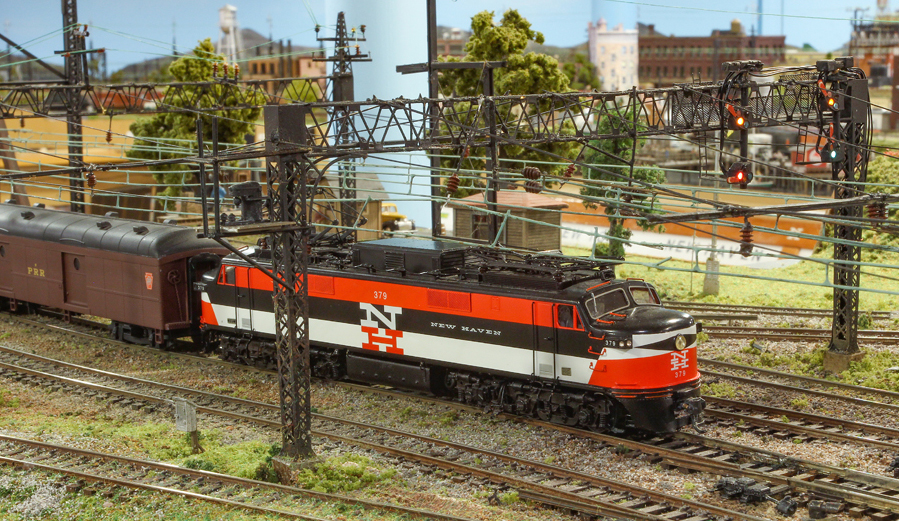
Orange, black, and white model electric locomotive running under catenary.

When you think about electrified rail lines today, the first thing that probably comes to mind is Amtrak’s Northeast Corridor. But in the first half of the 1900s, before the start of the diesel era, railroads used electrified lines to move freight and passengers. Examples in the east included the New York, New Haven & […]

Read More…

A real-world industry you can model

A freight crane is posed above multiple freight shipping containers in various colors

While on a recent trip to the National Model Railroad Association’s Southeast Regional Convention in Decatur, Ala., I was fortunate enough to go on a trip to Huntsville’s International Intermodal Center. Right when our van arrived in the parking lot, I knew that this would be a perfect real-world industry that anyone can model on […]

Read More…