




Having trouble viewing this video? Please visit our Video FAQ page Model Railroader managing editor David Popp shows how to make a Plexiglass safety fence for your train layout. […]
Making Plexiglas safety fence
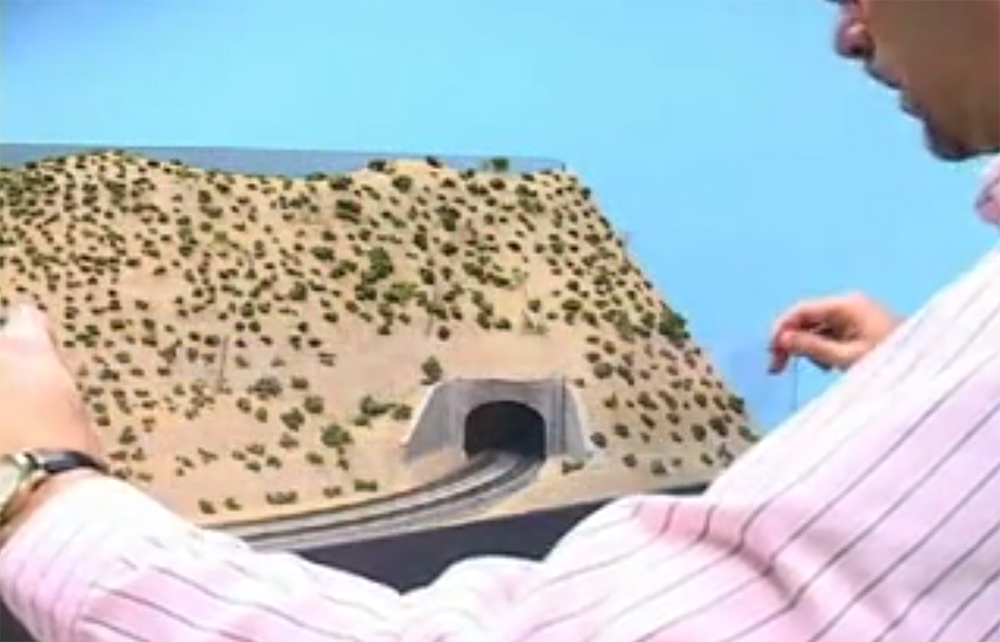
Having trouble viewing this video? Please visit our Video FAQ page Model Railroader managing editor David Popp shows how to make a Plexiglass safety fence for your train layout. […]
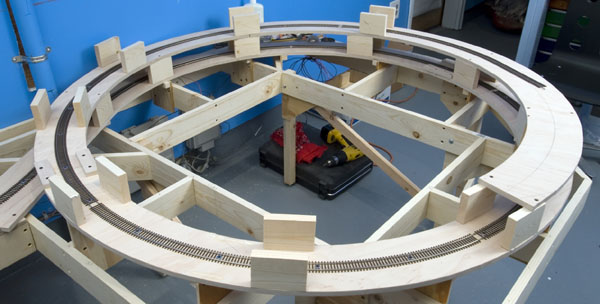
A house, a car, and a layout all have something in common: they turn out better when they’re built on a solid framework. This is especially true of a helix. A helix – a spiral ramp meant to lift a model train from one level of a layout to another – may not be prototypical, […]
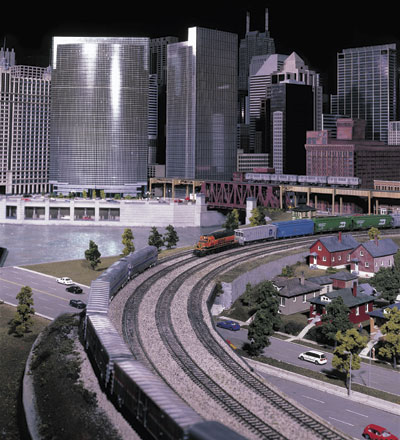
What can you build with $3.5 million in donations, two professional model-building companies, and thousands of hours put in by more than 40 artists and modelers, and a score of volunteers? How about The Great Train Story, a 3,500-square-foot HO scale model railroad that includes key features of Chicago, Seattle, and an impressive representation of […]
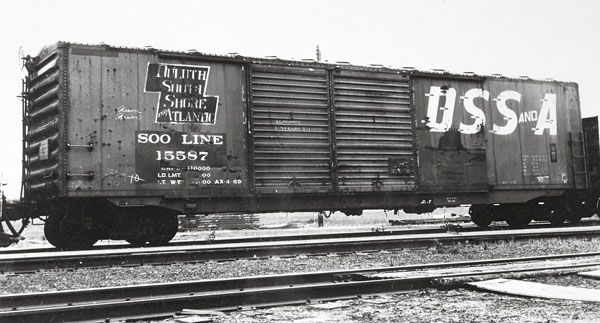
A great prototype photo can often be a wonderful source of inspiration for a model. This was the case for my Duluth, South Shore & Atlantic 50-foot double-door boxcar. When I saw the black-and-white inset photo of a well-worn DSS&A boxcar, I immediately decided to paint the car’s discolorations and markings on an HO model. […]
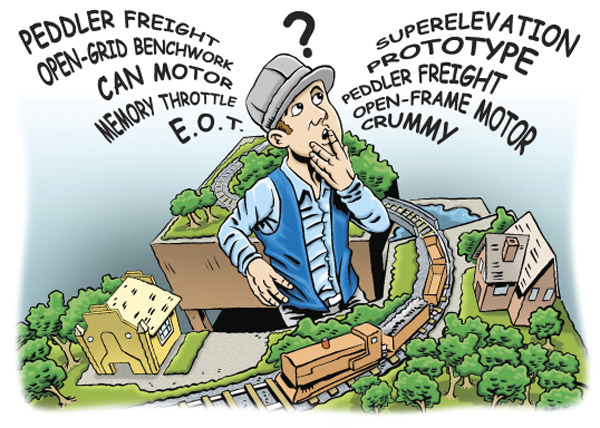
Learn the basics of the hobby of model railroading Illustration by Theo Cobb If you’re new to model railroading, a hobby shop is probably where you’d get your first crash course in hobby terminology. However, spending an afternoon staring at trains in display cases trying to get answers to basic questions can be frustrating. Having […]
Model railroading scales are described by letters such as N, HO, S, and O. This alphabet soup may seem confusing at first, but the letters are simply shorthand to describe the ratio of the model’s size to its prototype, which is what model railroaders call the real thing a model is based on. The chart […]
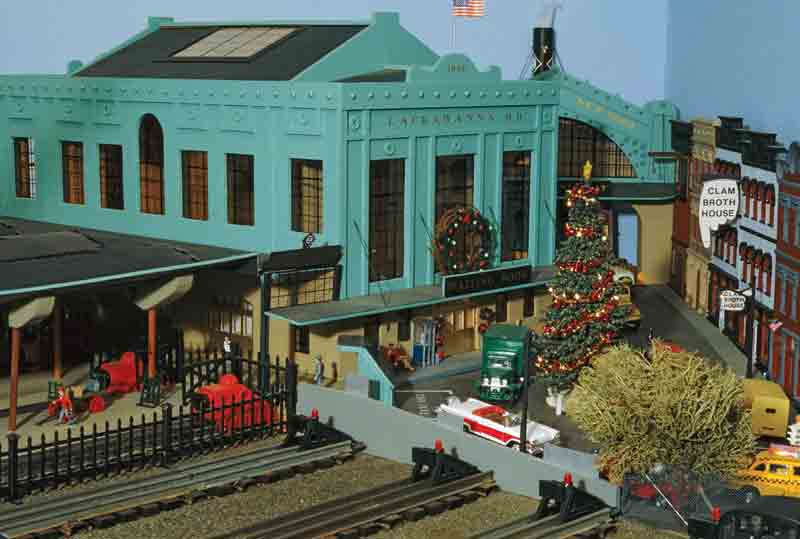
Bill Hildebrand used scale drawings and inexpensive hardboard material to construct an O gauge model of the famous Hoboken Terminal. Ornate architecture, magnificent concourses, and a seemingly endless parade of people and trains are just a few of the characteristics that make large passenger train terminals just as captivating on toy train layouts as they […]
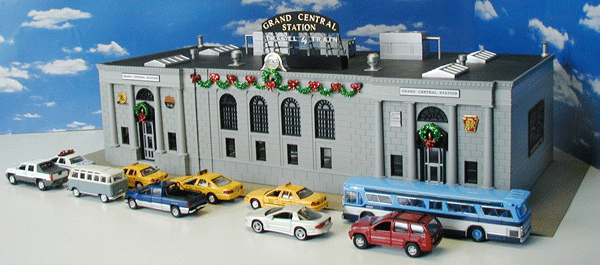
Richard Van de Kieft formed an impressive O gauge passenger terminal out of two MTH structures. Photos by Michael Raynor 2. A motor tool with a cutting disk quickly removes a tapered support along the interior ledge. 3. Use a razor saw to cut the ledge and separate the walls. 1. Use a Phillips-head screwdriver […]
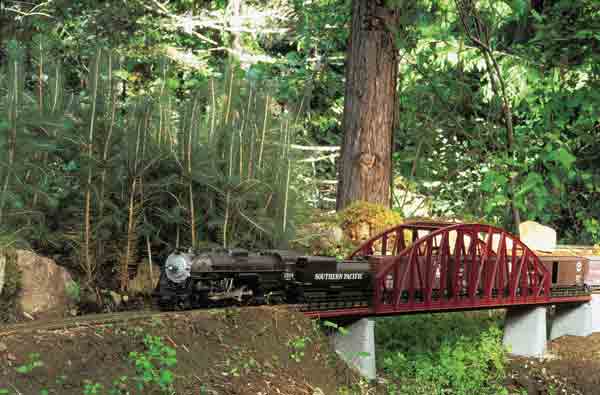
1. A Southern Pacific 2-8-4 Berkshire with a Vanderbilt tender takes a freight train over the bridge. Nothing in the picture suggests that this garden line is actually built up on benchwork. Bill Hook 2. Full-size trees and the lake in the background can be seen in this dramatic view from behind the railroad. The […]
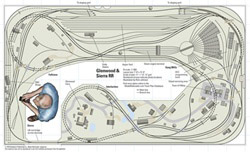
Name: Glenwood & Sierra RR. Layout designer: Sy Diamond Scale: N (1:160) Size: 7′-6″ x 13′-0″ feet Theme: freelanced Locale: various locations across North America Era: 1950s (steam to diesel transition) Style: around the walls with aisle Mainline run: 75 feet Minimum radius: 17″ Minimum turnout: no. 4 Maximum grade: 2.5 percent Click on the […]
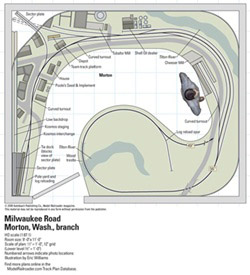
Name: Milwaukee Road, Morton Branch Layout designer: Eric Williams Scale: HO (1:87.1) Size: 9 x 11 feet Prototype: Milwaukee Road Locale: Morton, Wash. Era: 1945 to 1950 Style: Around-the-walls Mainline run: 34 feet Minimum radius: 32″ (visible), 24″ (staging) Minimum turnout: Peco medium radius Maximum grade: 4 percent Click on the link to download the […]
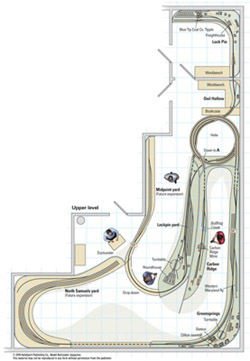
Name: Shadowton Ridge NorthernLayout designer: Matt HewittScale: HO (1:87.1)Size: 30 x 45 feetTheme: freelanced subsidiary of the Norfolk & Western Ry.Locale: West VirginiaEra: 1956Style: multilevel walkaroundMainline run: 325 feetMinimum radius: 32″Minimum turnout: no. 6Maximum grade: 1.6 percent (in helix) Click on the link to download the PDF of this track plan. […]
