



In the August 2014 issue, David Bodnar shows us how to program a Picaxe to make realistic signal lights. Cut-and-paste the code here for six different projects. Program 1: A simple crossing signal #TERMINAL 4800 ‘set the speed of the terminal SYMBOL LED1 = b.2 ‘pin 11 SYMBOL LED2 = b.4 ‘pin 9 SERTXD (13,10,”Crossing […]
Tag: How To
Make some signs for your buildings
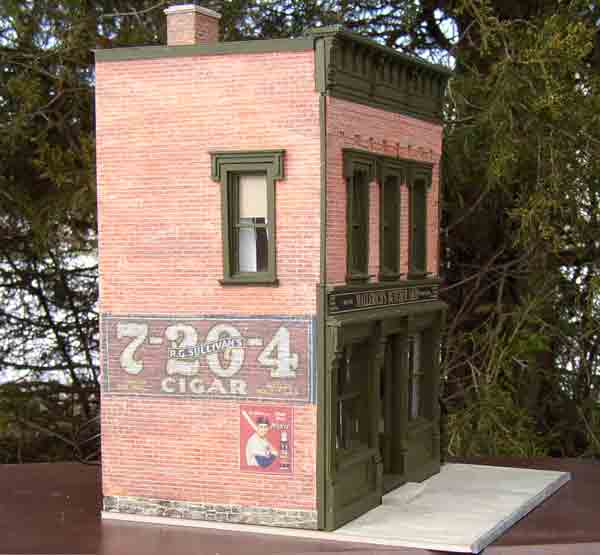
In the August 2014 issue, Bob Santos shows us an easy way to make signs for your buildings using decals. Bob has compiled a sheet of sample signs for you to download! […]
Access into your ground-level garden railway

To elevate or not to elevate? That is the question we address while deciding on a style for our garden railway. Proponents of the “box” style like to raise the trains closer to view and say they don’t have to bend over so much, but it may surprise you to know that plenty of folks […]
HO scale AHM helium car decals
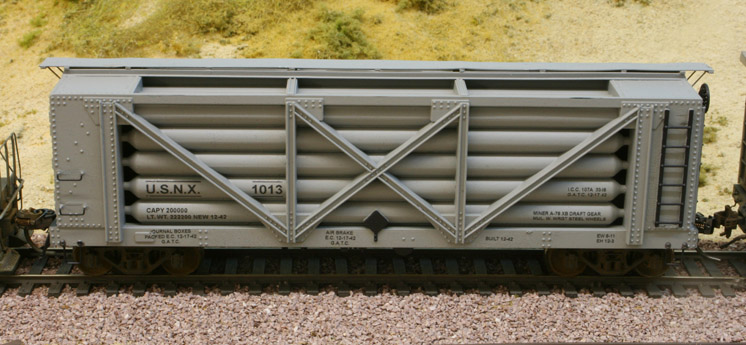
AHM helium tank car The unusual-looking helium tank car might seem like a fantasy model to some, but it’s based on a real prototype. General American, American Car & Foundry, and Magor built about 200 helium cars from 1930 to 1962. The early cars were lettered for the U.S. Navy (with USNX reporting marks), then […]
HO scale Cincinnati, New Orleans & Texas Pacific Division of the Southern Ry.
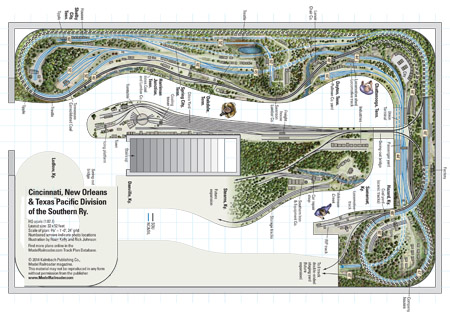
Name: Southern Ry. RatholeDivision Layout designer: Bob Lawson Scale: HO (1:87.1) Size: 32 x 52 feet Prototype: Southern Ry. Cincinnati, New Orleans & Texas Pacific Division Locale: Cincinnati, central Kentucky, and eastern Tennessee Era: 1945 to early 1950s Style: around-the-walls with attached center island Mainline run: 200 feet (Southern) Minimum radius: 48″ Minimum turnout: no. […]
HO scale Hudson Delaware Lehigh RR
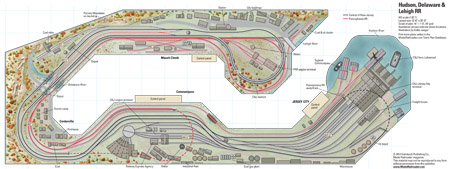
Name: Hudson, Delaware & Lehigh Layout designer: Gary Schaff Scale: HO (1:87.1) Size: 13′-6″ x 35′-0″ Prototype: Central of New Jersey and Pennsylvania RR Locale: Jersey City, N.J., to Mauch Chunk, Pa. Era: early 1950s Style: walk-in Mainline run: CNJ, 170 feet; PRR, 108 feet Minimum radius: 27″ Minimum turnout: no. 5 Maximum grade: 3.5 […]
Olympia Logging Series: Part 10 – painting trackwork
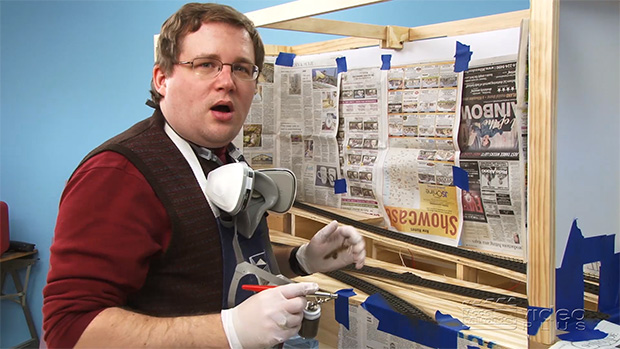
Having trouble viewing this video? Please visit our Video FAQ page Adding weathering effects to the trackwork of MRVP’s On30 Olympia Logging Co. layout can be just as beneficial as adding them to locomotives, rolling stock and structures. In this video, Cody Grivno walks through the steps for giving the rails and ties a […]
Olympia Logging Series: Part 9 – laying track
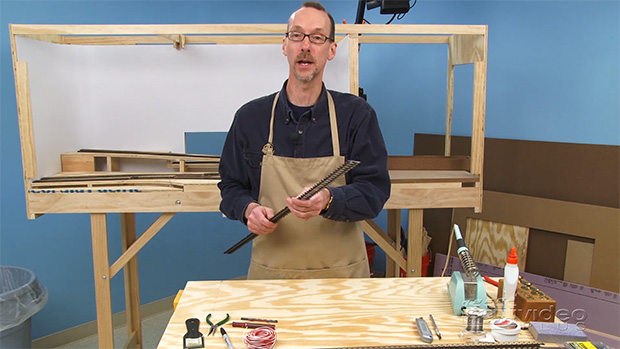
Having trouble viewing this video? Please visit our Video FAQ page All the prep work is done, so now David can get down to the task of installing flexible On30 track and turnouts on MRVP’s Olympia Logging Co. layout. David demonstrates all of the essential tracklaying steps, including how to cut and trim the […]
Olympia Logging Series: Part 8 – installing cork roadbed
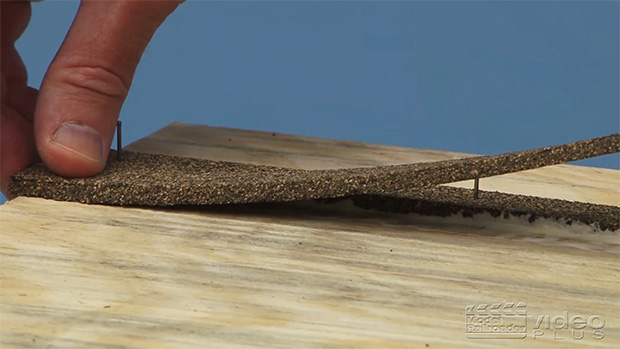
Installing cork roadbed is the first step to laying reliable trackwork on MRVP’s On30 Olympia Logging Co. display-style layout. In this video, David shows you basic techniques for preparing, cutting, fitting, and securing the HO scale roadbed along the main line, sidings, and on the sector plate. Plus, David also demonstrates how one specific product […]
Simplify operation with train sequence lists
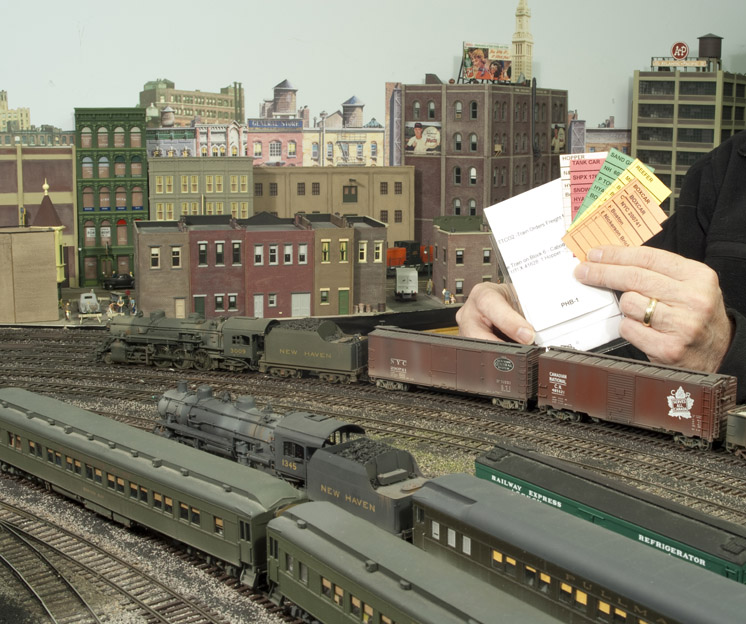
The hybrid sequence lists John Pryke uses on his HO scale New Haven Cape Cod branch specify the switching work to be done and provide authority for trains to move between stations. Here the Boston yard operator is placing outbound waybills and the train’s sequence list into the train pouch. Most modelers build their first […]
Adding DCC power districts to a model train layout
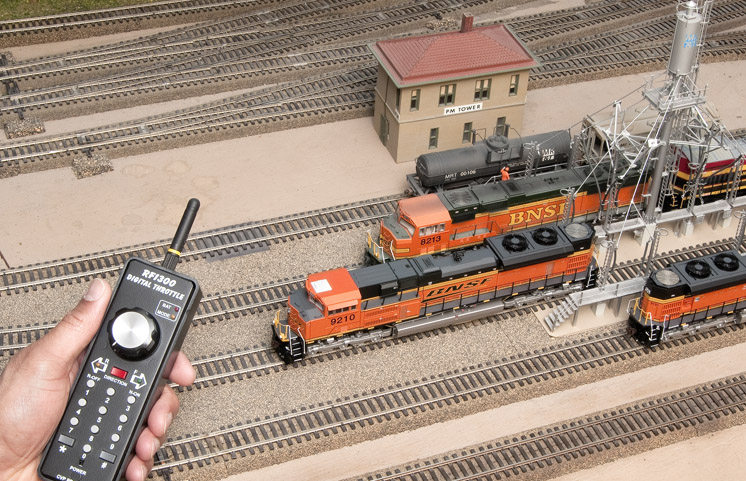
Too many sound-equipped locomotives in one place, like those shown here on the MR&T, can spell trouble for a DCC layout. Paul Dolkos takes you through the steps he used to set up power districts on his HO model railroad. Imagine you’ve just begun running trains on a layout equipped for Digital Command Control (DCC) […]
How to wire a layout for two-train operation
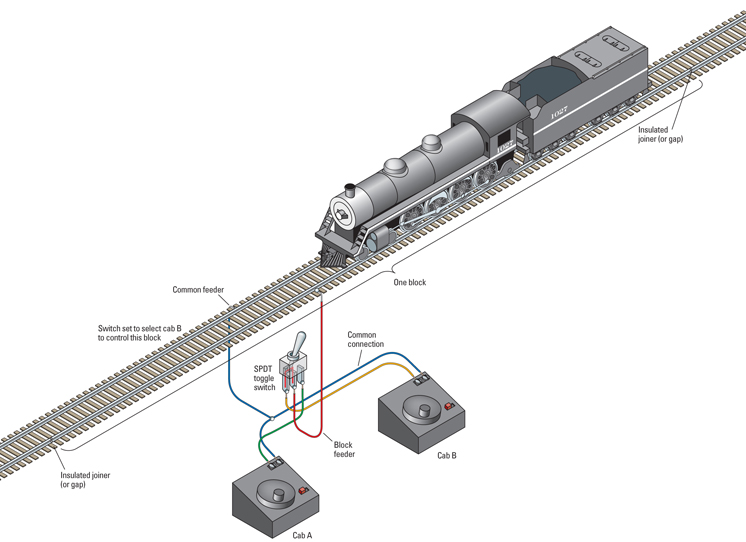
The initial goal of a new model railroader flush with locomotives, track, and rolling stock is to operate two trains on his layout at the same time, each with independent speed and direction control. This milepost can be reached with cab-control wiring. With two direct- current power packs, single-pole double-throw toggle switches, and hardware-store wire, […]