




Modern railroad dispatching systems and movement controls have evolved by trial and error into a two-tier system of centralized dispatching and trackside signaling. But while the physical means of controlling traffic converged on a few types of lineside signal equipment – semaphores, position-lights, searchlights, etc. – the colors and arrangements (“aspects”) they presented, and the […]
Tag: History
A railroading staple: The caboose
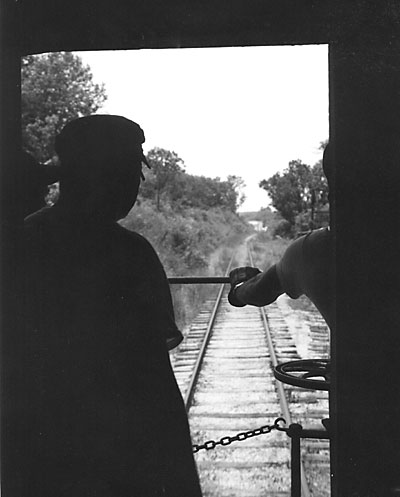
Caboose For more than a century, the caboose was a fixture at the end of every freight train in America. Like the red schoolhouse and the red barn, the red caboose became an American icon. Along with its vanished cousin the steam locomotive, the caboose evokes memories of the golden age of railroading. There are […]
Booster units
Say you’re an engineer running a multi-unit diesel consist on a freight train. During the trip, it becomes necessary to remove the lead unit because of a grade-crossing entanglement, some mechanical problem, or to give to another (underpowered) train. No problem – the second unit can lead as well as the first, so you resume […]
Outfit cars
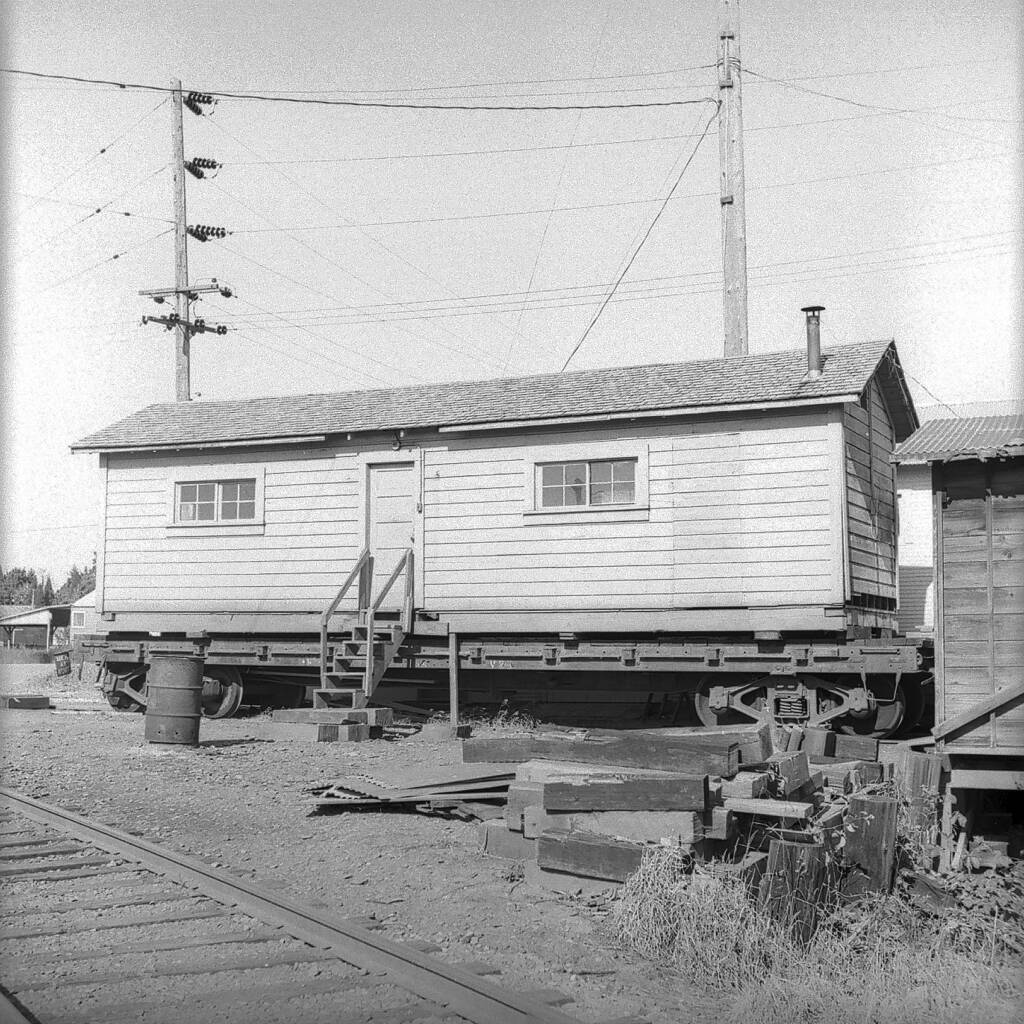
Outfit cars Cars equipped with facilities for feeding and housing construction and maintenance employees in the field are known as outfit cars or camp cars. Over the years they have taken a number of forms. Because outfit cars are not revenue-producing equipment, railroads have tended to not spend much money on them, and a common […]
Lillian “Curly” Lawrence and the history of live-steam locomotives
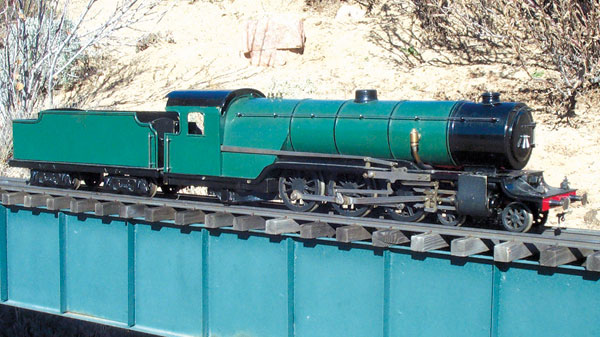
Lillian “Curly” Lawrence and the history of live-steam locomotives Lillian “Curly” Lawrence was a British model engineer who lived from 1882 to 1967. He built his first live-steam locomotive at the age of 13 on a used treadle lathe. A curious and reclusive fellow, he wrote live-steam columns for British model-engineering magazines under the pen […]
A brief history of garden railroading

At the turn of the century even the smallest trains left little room for indoor model railroading Back before the “dawn of time,” say around 1860, the model train hobby was in its infancy, as was the full-size railroad industry. In fact, for decades, the development of model railways closely paralleled that of full-size railways. […]
A brief history of garden railroading
At the turn of the century even the smallest trains left little room for indoor model railroading Back before the “dawn of time,” say around 1860, the model train hobby was in its infancy, as was the full-size railroad industry. In fact, for decades, the development of model railways closely paralleled that of full-size railways. […]
A brief history of garden railroading
At the turn of the century even the smallest trains left little room for indoor model railroading Back before the “dawn of time,” say around 1860, the model train hobby was in its infancy, as was the full-size railroad industry. In fact, for decades, the development of model railways closely paralleled that of full-size railways. […]
Ask Trains from April 2006
Q Why do automobile rack cars have TTX Co. reporting marks but also bear a logo from a railroad? – Gary Gergye, Marietta, Ga. A This started in the early 1960s when autoracks first came into use. Flatcars, with TTX reporting marks, were pulled from the Trailer Train pool, but the racks were purchased by […]
Post-World War II East Broad Top timeline
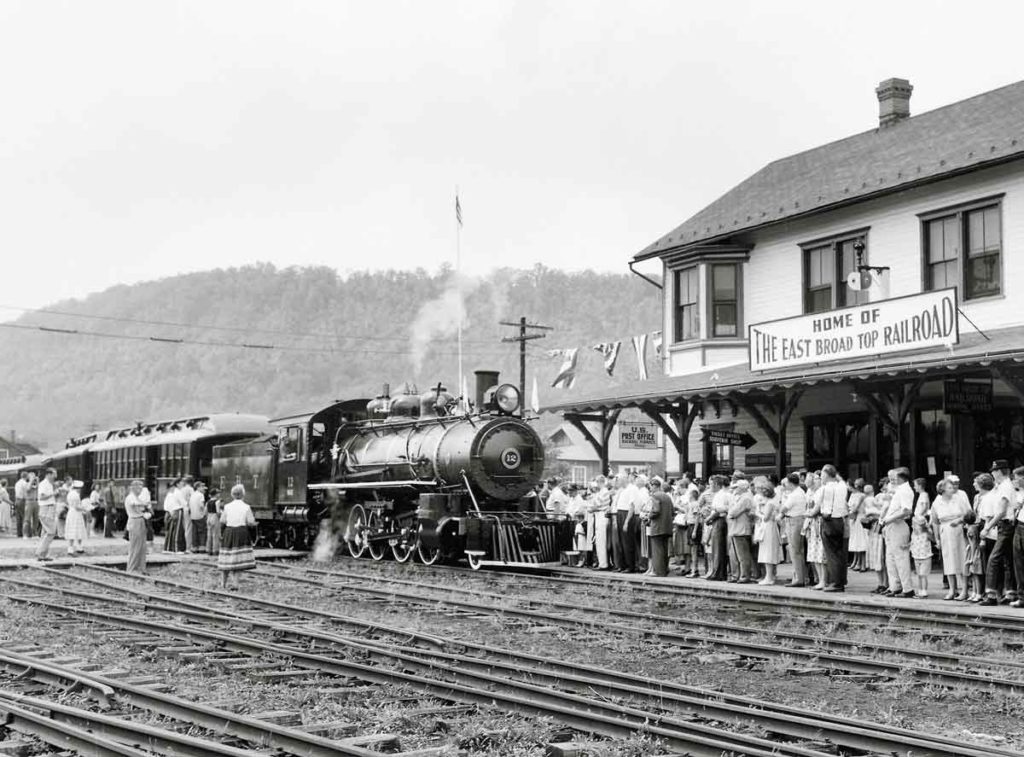
East Broad Top 2-8-2 No. 12 pulls into Orbisonia station for another load of riders on Oct. 14, 1960, during the narrow-gauge’s reopening weekend. Don Wood photo June 24, 1951 Last of seven chartered railfan trips, dating to 1936, operates on EBT. Jan. 1, 1952 C. Roy Wilburn, who eventually would lead the railroad’s day-to-day […]
Online video extra: P&LE’s Unwanted Berkshires
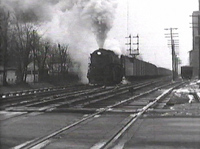
Herron Rail Video archive In his The Unwanted Berkshires in the Spring 2004 issue of Classic Trains magazine, Jack Polaritz looks at the genesis and careers of Pittsburgh & Lake Erie 9401-9407, the last 2-8-4 design in America. After P&LE dieselized, the engines were stored, then reactivated in 1955 when another New York Central subsidiary, […]
Online video extra: P&LE’s Unwanted Berkshires
Herron Rail Video archive In his The Unwanted Berkshires in the Spring 2004 issue of Classic Trains magazine, Jack Polaritz looks at the genesis and careers of Pittsburgh & Lake Erie 9401-9407, the last 2-8-4 design in America. After P&LE dieselized, the engines were stored, then reactivated in 1955 when another New York Central subsidiary, […]