
It’s no secret that model railroading can be expensive. Big-ticket individual items, such as locomotives, can carry price tags which climb north of $500. For good reason, too; it’s all too easy to forget how far model locomotive technology has come in recent years, with detail better than ever thanks to simultaneous advances in scanning, […]
Tag: Expert Tips
Gathering wood for model railroad benchwork
Benchwork is the foundation of a model railroad. Sturdy benchwork and you have a solid base for your layout’s life. But if you use subpar wood, problems will arise sooner or later. But what wood do you use to build sturdy benchwork? Where do you get it? This is everything you need to know about […]
10 helpful layout tips
Through many years and experiences, I’ve come to appreciate the wide range of interests our hobby has to offer. I’ve repaired and restored vintage Lionel locomotives, custom-painted entire train sets, and even researched the history of Lionel’s Super O trackwork. Although these activities are still exciting, they don’t compare to the thrills I’ve had operating […]
Control a working display case
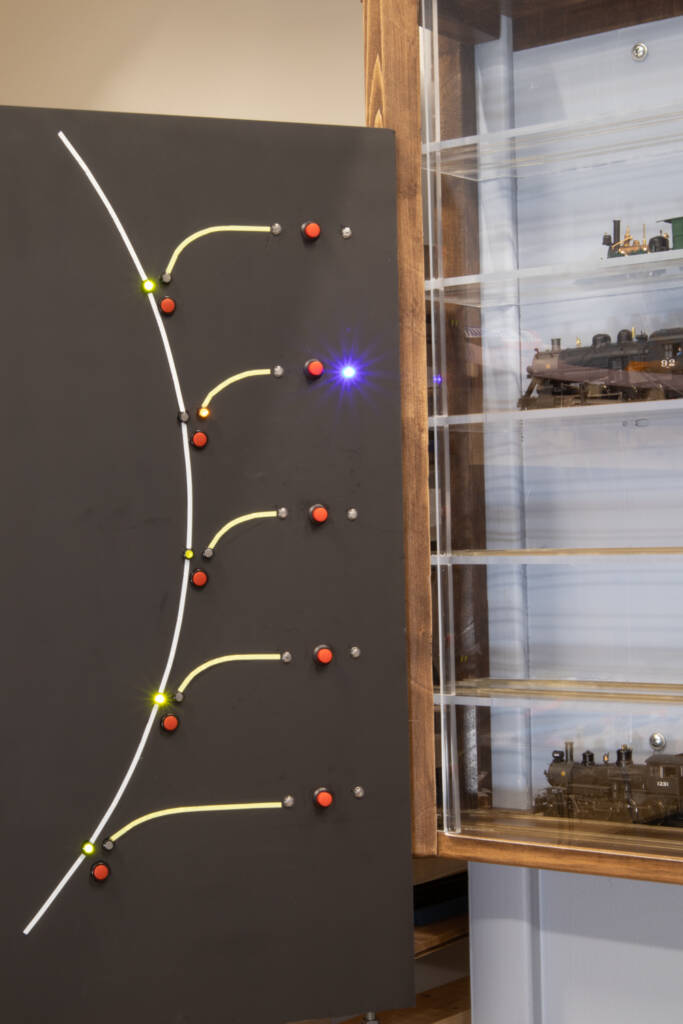
This project is the continuation of the “Build a working display case” project in our October 2024 issue. This second part details the physical and software infrastructure Randy built to control his working display case using an Arduino Nano. The working part All my locomotives are Digital Command Control, and most have sound. It’s obviously […]
Protecting your railroad during home improvements
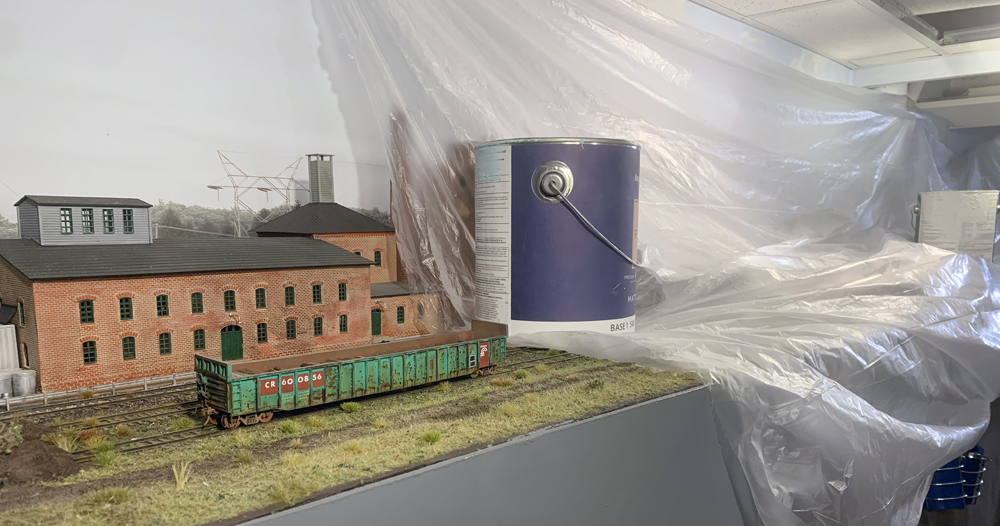
Next to “we are moving” some of the most disconcerting words a layout owner can hear is “we need home improvements.” Major changes to the house around a layout bring fear to our hearts: while models can be moved out of the way, all our hard work on track and scenery is suddenly in peril, […]
S scale product availability
A finished S scale layout or individual model can be both visually and operationally impressive. However, getting the desired model may be somewhat harder than in a scale with more manufacturers and product offerings. As S scale modelers are quick to point out, modeling in 1:64 calls for inventiveness and perseverance. While there are ready-to-run […]
Why do railroads use signals?
A common question newcomers to model railroading ask is “Why do railroads use signals?” The quick answer is to keep trains moving safely. But the topic of railroad signals deserves more of an explanation. The evolution of railroad signals When trains are running in the same direction on the same line, in opposite directions on […]
Model railroad cellphone photography tips
While reminiscing and revisiting my archive of photos of our dearly departed Milwaukee, Racine & Troy HO scale layout, I found myself admiring my own work. No, not my contributions to the MR&T, of which there were none, but rather my own photos, all of which were captured with my smartphone camera. For better or […]
Buying new O-scale trains without putting a dent in your wallet
I’ll admit in preaching to the choir that O-gauge model railroading can be an expensive endeavor. Newer, higher-end scaled products that can be either preorders or recent releases can cost many hundreds to thousands of dollars. My time at the Milwaukee Lionel Railroad Club (MLRRC) in New Berlin, Wis., has garnered friendships with fellow members […]
Make your layout tell a story
If you want to fascinate visitors and draw their eyes into your layout, make your layout tell a story. Many modelers put a lot of effort into making their locomotives, track arrangements, and operating schemes as realistic as possible. But not all of us put the same amount of thought into the little plastic people […]
How to fine-tune wobbly rolling stock
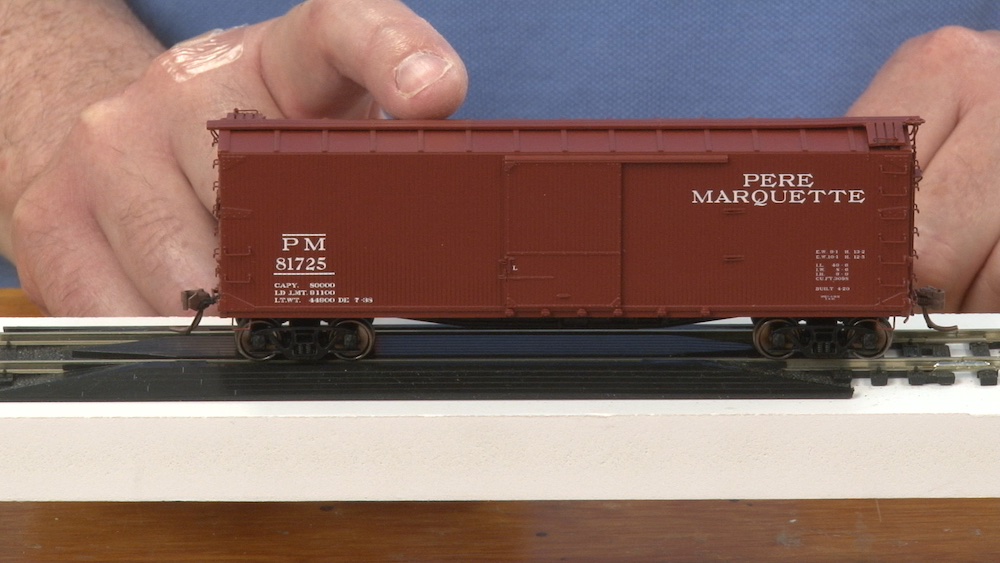
Sometimes, rolling stock needs a little fine tuning before it can be considered ready to run on a layout. One common quirk? Wobbling. Before you jump in and start making fixes, be sure to do some testing. Here’s how: With the model sitting on the track, lightly tip the body from side to side. If […]
Why do railroads use catenary?
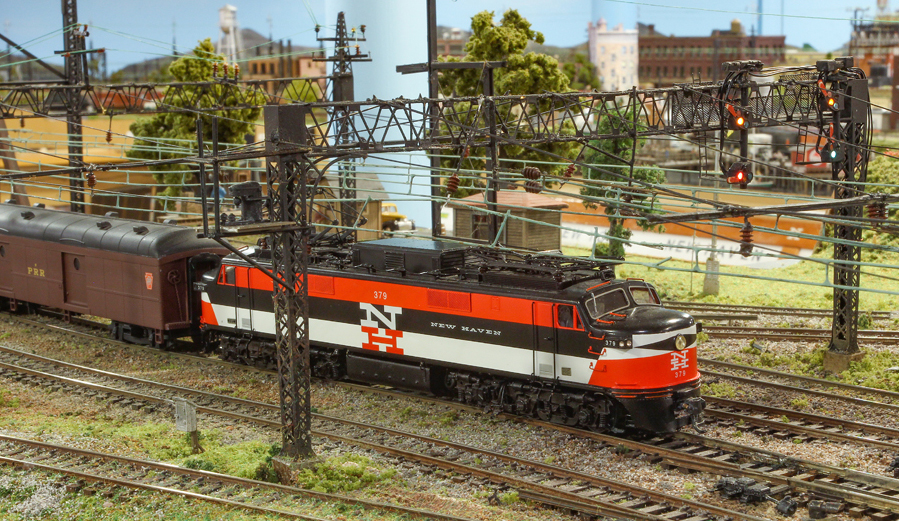
When you think about electrified rail lines today, the first thing that probably comes to mind is Amtrak’s Northeast Corridor. But in the first half of the 1900s, before the start of the diesel era, railroads used electrified lines to move freight and passengers. Examples in the east included the New York, New Haven & […]