




Q How do railroads figure how much power is necessary for a train?– Richard Panarese, Mesa, Ariz.A Railroads determine power needed for a train based on the route, and the train’s weight and priority. BNSF, for instance, considers the “horsepower per ton” required based on what officials call the train’s “transportation service plan.” The transportation […]
Tag: Beginners
Workshop safety for large-scale railroaders

A messy work area is not only unsightly, it is unsafe. A shop floor needs to be kept clear of dust and debris. Losing your footing can result in a sprained ankle, not to mention hitting your head on your workbench. Sweeping up at the end of your work session is all that is needed […]
Choosing rail for the garden railroad

Rail comes in many different sizes and materials. Here’s a little background information to help you chose the one that’s right for you. Rail sizes The size of model-train rail in any scale is referred to by “code.” For instance, in large-scale railroading we commonly use code-332, code-250, or code-215 rail, although code 197 is […]
Garden railroading/Large-scale railroading terms
Annual refers to a plant that lives for only one season and must be replanted each year. Ballast is the medium, usually gravel of some sort, that provides a firm underlayment for track, helps to hold it in place, and drains water away from the ties. Battery power is another way of operating electrically powered […]
Garden-railway etiquette for visitors
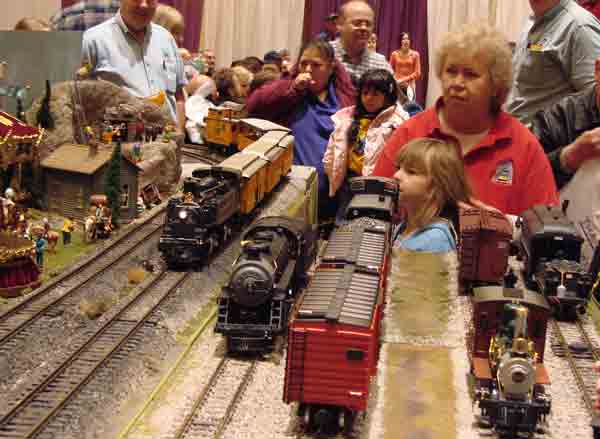
Bob Temper • Don’t arrive early. Most garden railroaders tend to work frantically up until the last minute getting their lines ready. Arriving early can be disruptive. • Don’t stay late. Our hosts are exhausted by the end of the day, so please leave by closing time. • Sign the guest book. Owners like to […]
Ask Trains from May 2009
Q In March Trains, an article on the demise of semaphore signals on the former Monon [Page 14] mentioned that CSX was doing away with lineside pole lines and their maintenance. It said the new system will use Electro Code, a system where signal communications run through the rails. How is this done?– Richard K. […]
Why does my American Flyer rolling stock have white residue?
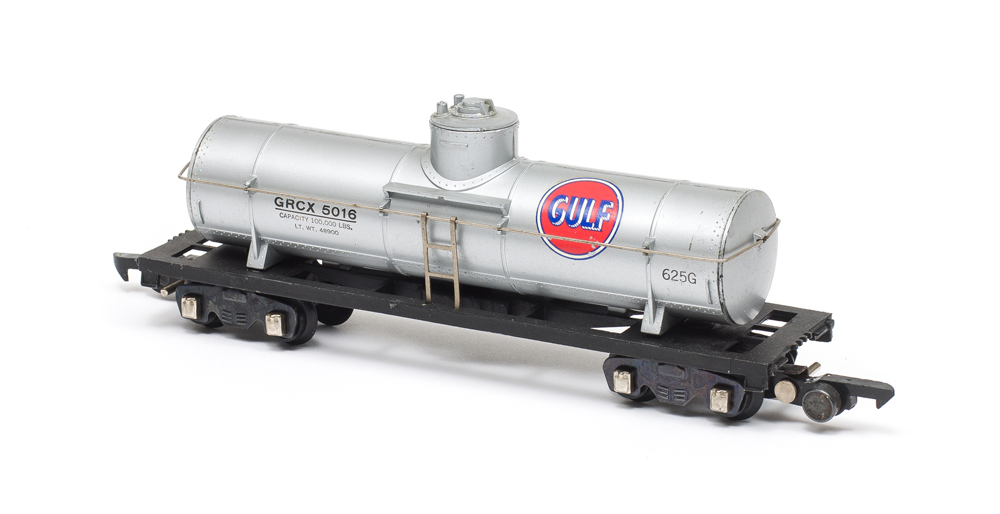
Q: Can you suggest how to safely remove the white residue that builds up on the bottom of my American Flyer rolling stock? – Bruce K. Davis, Youngwood, PA A: We receive this question several times a year. For some reason this white residue problem is more common with American Flyer S gauge trains of […]
Storing trains
Q: I have Marx and Lionel trains and accessories, both old and new. How do I store them so that my daughters and I can enjoy them when we move to a new home with more space? My house has just two levels and three bedrooms. We live in Maryland and the temperature and humidity […]
“A garden railroad you can build” trackplan
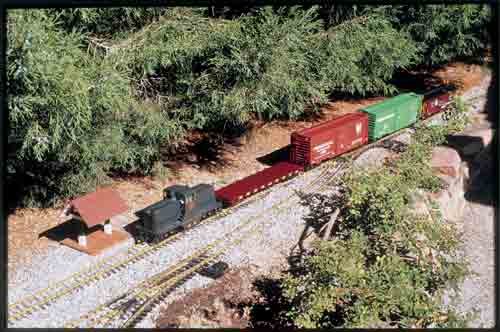
Marc Horovitz Download a track plan of the Middleboro project railroad, the subject of our new booklet, “A garden railroad you can build.” Click here to download a PDF version of the Middleboro track plan. […]
New technology in live steam
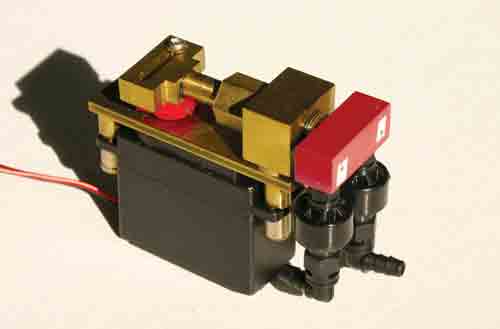
Jeff Young Full-size steam locomotives have been in existence for over 200 years, and live-steam models for nearly that long. On that basis, it might be easy to conclude that the hobby of small-scale live steam is one that would not see a lot of new technology. To the contrary, there have been a number […]
Broken belt on a postwar Lionel No. 364 log loader

Q: I have a Lionel No. 364 conveyor belt log loader which was received as a gift in the 1940s or early 1950s. The red conveyor belt has disintegrated over time and I would like to know how to service the accessory to get it back into operation. Also, I would appreciate knowing the approximate […]
Defect detectors
An Amtrak train en route from Milwaukee to Chicago on Canadian Pacific’s double-track main line hurtles by a metal cabin and some trackside apparatus. Over the radio, a stilted voice intones “CP detector, milepost five seven point six. Main track: two. Total axles: one six. No defects. Temperature: five three degrees. Detector out.” A moment […]
