





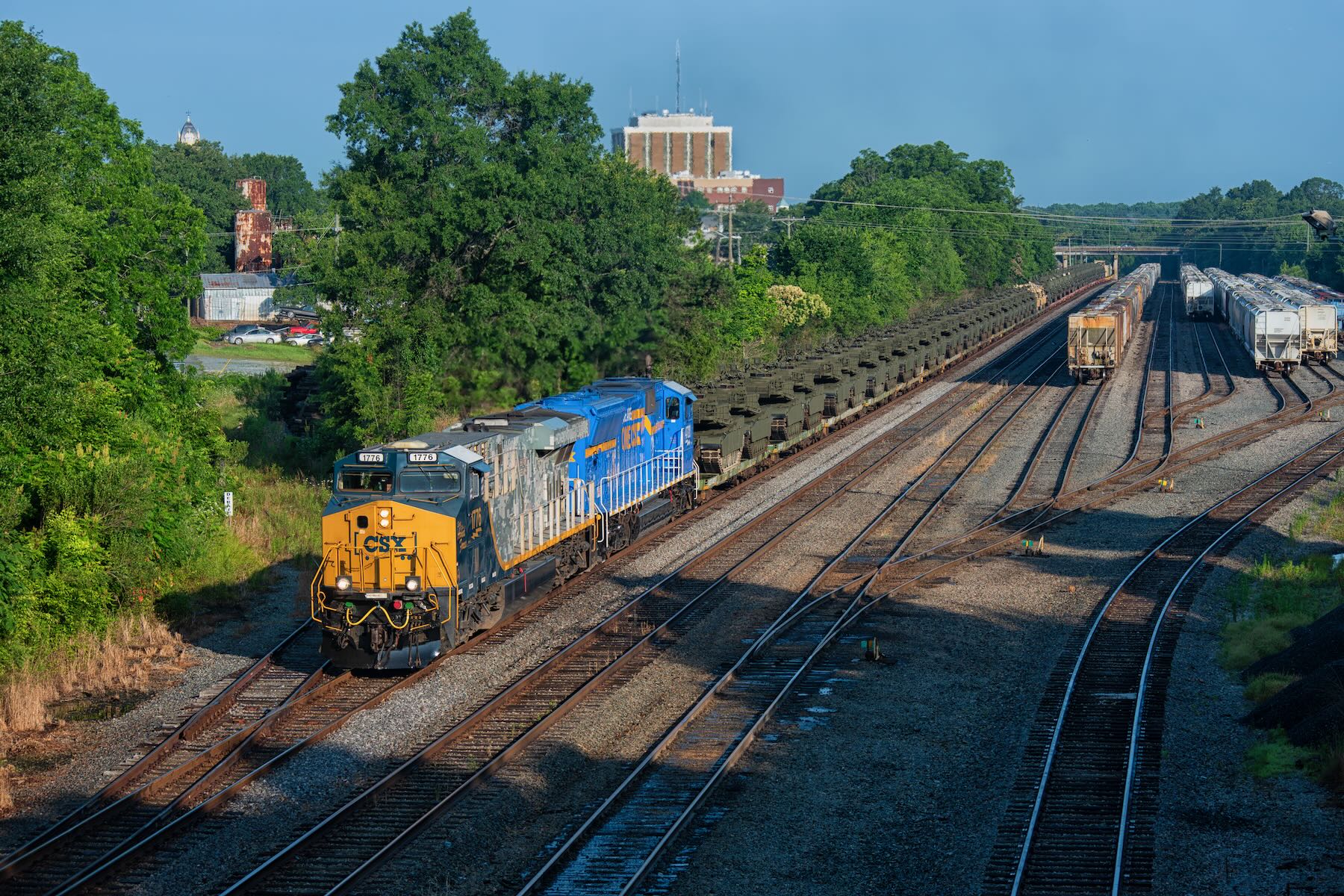
WASHINGTON — The U.S. Army has weighed in on the Surface Transportation Board’s proposal to revise its rules regarding reciprocal switching, saying such agreements would serve national defense interests.
The STB in January announced plans to repeal regulations that it says have prevented captive carload and bulk shippers from gaining access to a second railroad [see “STB proposal would make it easier …,” Trains.com, Jan. 7, 2026]. As part of its proposed rulemaking, the board would consider requests for reciprocal switching on a case-by-case basis.
A five-page submission filled with the acronyms that define military communications — for example, readers will learn that the continental United States is CONUS — indicates the military’s support for such case-by-case consideration. The filing by the Railroads for National Defense Program of the U.S. Army Transport Command (or RND, a part of ARTRANS, if you prefer) says railroads “generally provide adequate levels of support for peacetime needs and have often responded to unique peacetime military rotational requirements and timely mission objectives.”
But post-COVID operations “exposed risks in the rail network’s ability to adapt rapidly” to events outside of a railroad’s control, as well as to the impacts of the industry’s business decisions, the filing says. National or regional emergencies, sudden changes in demand, or post-merger service disruptions have led to instances where military response have had problems “if a major large-scale contingency deployment or mobilization was ordered.” Those situations make it critical “to have deployment options that mitigate these risks and to exercise these options before they are urgently needed.”
As a result, the RND program says it would “strongly consider advocating for reciprocal switching agreements at critical defense activities which currently rely on a single rail carrier for service” to gain flexibility to address rail service challenges. It would seek such an agreement “solely where it is reasonable, practicable and in the best interest of national defense.”
The filing concludes by asking the board to “consider the unique needs of national defense when evaluating reciprocal switching petitions … Ensuring flexibility, resiliency, and reliability in rail service is critical to safeguarding military readiness, national security, and the public interest.”
— To report news or errors, contact trainsnewswire@firecrown.com.
Share this article


I worked for a government contractor. What the Army really wants is cheap deal on freight rates. All that other stuff is Bureaucratic Gobbledegook designed to deflect their real intentions. I have seen it time and time again, Democratic, Republican, it doesn’t matter, The military’s attitude is why pay a fair price if you can break and arm and get a cheap deal… It may not be what you really want but boy, it will be cheap.
This is a major issue. Both the military and NASA depend on reciprocal switching in order to move all their equipment. If the railroads don’t get this taken care of, it’ll put delays on major missions. Not only will the military and NASA be at risk, the Department of Energy and DOT themselves will be at risk also. Both DOT and the Department of Energy transport nuclear shipments by rail and also the inspector’s private car. Most of those shipments come from the military out of Puget Sound and also out of Alabama and Texas from decommissioned vassels and they need reciprocal switching in order to get those casts from the shipyards deliver to the Waste Isolation Pilot Plant or to INL for permanent storage. And then we have the big giant uranium cast that need to be transported over to the Salt Flats All of this depends on reciprocal switching. The railroads need to put the rivalries behind them and get this stuff delivered.
I would think in the time of national defense needs, the railroads would not hinder the movement of our military. No matter where or when on any railroad, the defense system should have full access to all lines all the time. I know it is not that easy but, it should be able to be accomplished with out laws and all the related BS that is always in the way.
Unfortunately the BS you talk about is often initiated by the Department of War. not the other way around. And for your information, NASA or the DOD (DOW?) have never been denied access to the rails. Its usually getting them to the rails where they (DOD) fall flat on their face…