Investigators focused on the failure of CSX to identify and mitigate the risk of operating trains under a signal suspension on a 23-mile segment of the railroad’s Columbia Subdivision. The conductor of local freight reported to the engineer that he had realigned a switch to the main track, and the engineer had informed the dispatcher that the switch was in the correct position.
It was not.
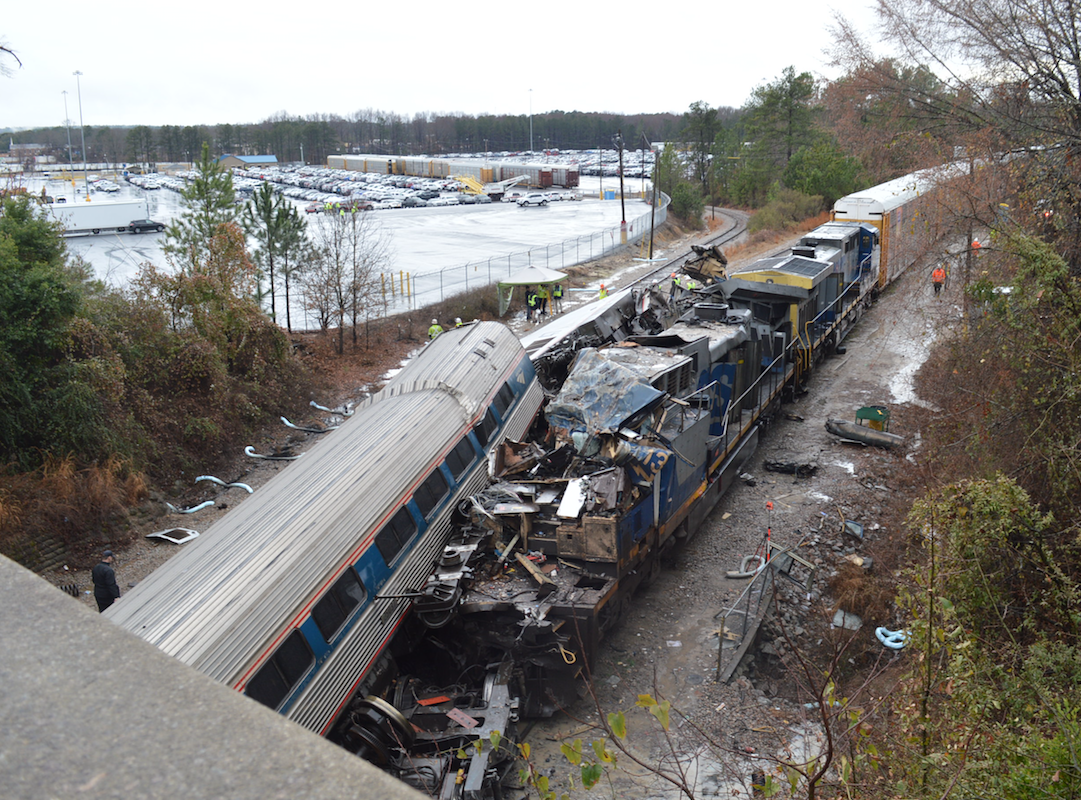
As a result, Amtrak Train 91 was diverted from the main track into the path of CSX local F777, hitting it head-on at more than 50 mph. The Amtrak engineer and conductor were killed, and 74 of the train’s passengers were injured.
“CSX failed to ensure that this crew was properly prepared to perform the tasks CSX assigned them to do that night,” said NTSB Chairman Robert Sumwalt, about what led up to the Feb. 4, 2018, crash.
Ironically, CSX had suspended the signal system to install positive train control, the system that’s intended to prevent the very kind of crash that took place in Cayce, a few miles south of Columbia.
The NTSB repeated its recommendation that the Federal Railroad Administration to issue an emergency order requiring railroads to operate trains at restricted speed approaching switches when a signal suspension is in effect. The FRA only advised railroads to do so late last year.
Amtrak decided to follow the NTSB’s guidance, with a “glaring lack of pushback” from its host carriers, noted Richard Hipskind, the lead investigator in the Cayce crash.
The NTSB also repeated its call for FRA to do more to prevent crashes caused by misaligned switches, such as requiring the installation of switch position indicators.
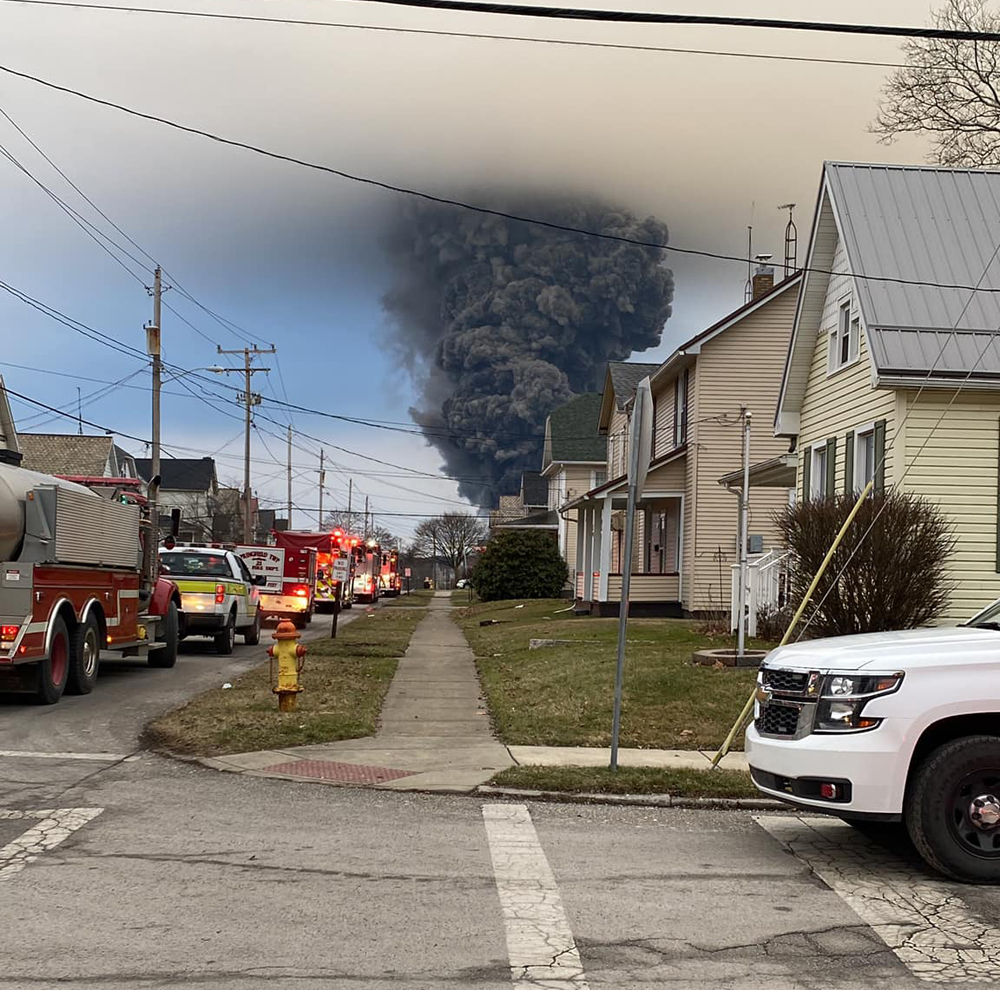
It was, as NTSB’s Jennifer Homendy pointed out, an improperly lined switch that led in part to the PTC requirement. That crash, in January 2005, in Graniteville, S.C., produced a toxic cloud of chlorine gas that killed a Norfolk Southern engineer and eight other people.
A deadly head-on collision between a Metrolink commuter train and a Union Pacific freight in Chatsworth, Calif., three years later finally pushed Congress to require PTC. The Metrolink engineer and 24 passengers were killed. Investigators found that the Metrolink engineer had been texting and ran past a stop signal.
As in Graniteville and Chatsworth, NTSB investigators found human error at the root of the Cayce crash.
“I believe that the conductor had every intention of following the rules and thought that he did,” testified Mike Hoepf, an expert on human performance. “He just made a mistake.”
Compounding that mistake: A lack of attention by CSX to the risk of putting a train crew in an unfamiliar situation and expecting them to perform at the same level.
Investigators found that CSX never conducted efficiency testing, or a skills assessment, on either the engineer or conductor of F777 for the purposes of ensuring proper switch alignment.
The NTSB also cast doubt on the effectiveness of using a Switch Position Awareness Form to mitigate the risk of an improperly lined switch. NTSB investigators reported they could not find the form used by the F777’s crew that day.
Since the Cayce crash and another fatal crash in December 2017 in DuPont, Wash., Amtrak has taken safety risk management into its own hands rather than relying on its host carriers, NTSB experts noted. Roughly 97 percent of Amtrak’s operations take place on other railroads’ tracks.
“They have made an awful lot of progress,” Hoepf said of Amtrak.
NTSB officials weren’t as complementary about federal regulators.
“It seems like they have been doing an awful lot of foot dragging,” NTSB Vice Chairman Bruce Landsberg said of the FRA.