SEATTLE — In a milestone for Sound Transit’s ongoing expansion of its light rail network, a light rail train operated across Lake Washington’s Interstate 90 floating bridge late Monday night (Sept. 8, 2025). It was not only the first time a Sound Transit train has crossed that bridge under its own power, but, according to the agency, the first time a train has operated across a floating bridge anywhere in the world.
A single train made multiple trips across the 5,811-foot Homer M. Hadley bridge, at speeds ranging from 5 mph to 55 mph, which will be the speed limit when regular operations begin. A Sound Transit press release says the initial powered operation occurred at night so crews could see and document electrical arcing, which it says is typical in this phase of testing.
The Seattle Times reports that the light rail trainset entered the bridge at 11:49 p.m. on Monday, and that tests are in part to demonstrate that the transit agency can control stray current, which otherwise might corrode steel rebar within the concrete bridge structure. The paper quoted an email from Tony Raben, the project’s executive director, saying the protection systems were “performing as designed” to prevent that issue.
The light rail route across the floating bridge was to have opened in July 2023, but that was pushed back because 4 miles of track on either side of the bridge had to be rebuilt because of issues with concrete ties [see “Construction delays push back …,” Trains.com, Aug. 22, 2022]. Sound Transit eventually opened an isolated 6.5-mile, eight-station segment east of the bridge in April 2024. Two additional stations later opened with a further extension into downtown Redmond, Wash.
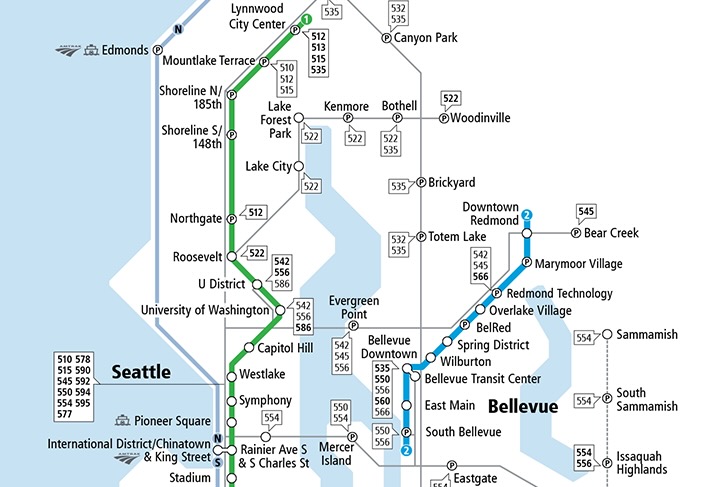
When the section across the bridge opens — currently projected for next spring — it will complete the 14-mile, 12-station, east-west route known as the 2 Line, connecting the currently isolated portion to the original north-south light rail route now called the 1 Line.
Sound Transit first moved a light rail trainset across the floating bridge in May, towing the equipment to check clearances and the bridge’s response to the move.