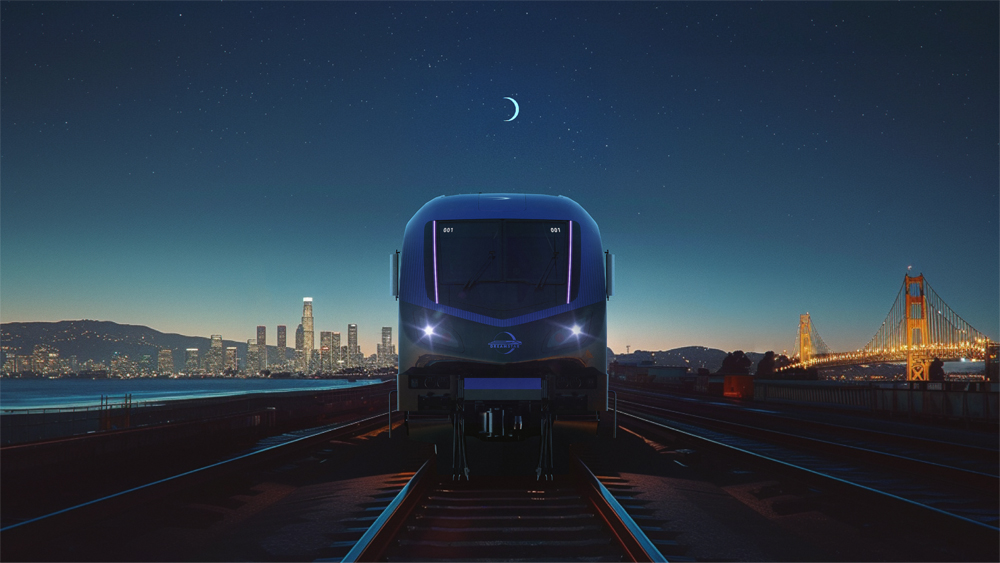
First of two parts
Before jets dominated air travel and a fully developed, publicly funded interstate highway system crisscrossed the U.S., many North American city pairs were linked by dusk to dawn passenger trains. Two companies are seeking to revive that travel option.
Prospective U.S. operators Dreamstar and Lunatrain are citing a recent resurgence of overnight sleeping-car travel in Europe, despite a plethora of high-speed daytime rail options there. They have floated proposals that would utilize new or refurbished equipment to serve routes Amtrak has declined to cultivate with its existing network and rolling stock. Their websites imply service launches are imminent; they’re not. But overnight trains have proven themselves in the past, so News Wire recently asked the principals behind these new ventures for more details.
The first portion of this two-part article looks at Dreamstar, which has been developing its plans for several years. Part two, on Wednesday, will examine newcomer Lunatrain.
Los Angeles-San Francisco Bay Area in luxury
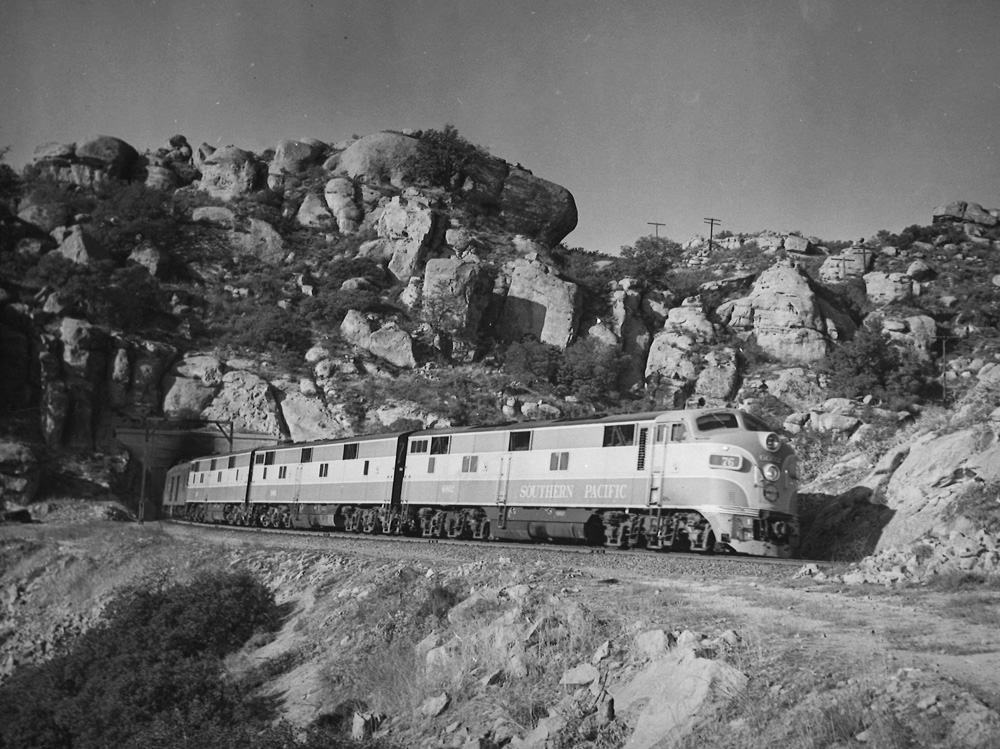
Into the early 1960s, Southern Pacific’s overnight Lark offered exactly the kind of schedule and onboard amenities — if not more spacious and updated sleeping accommodations — that Dreamstar’s Thomas Eastmond and Joshua Dominic envision.
Larks departed from both SP’s San Francisco Third and Townsend station and Los Angeles Union Passenger Terminal at 9 p.m., arriving at 8:30 the next morning. Once all-Pullman, the post-World War II streamlined version sported coaches, flashy lightweight sleeping cars, and a triple unit diner-kitchen/dormitory-tavern lounge, even though passengers had limited awake time to enjoy its onboard perks. Through cars diverging to Oakland, billed as the Oakland Lark, were dropped in 1960. The train itself went out with a bare-bones whimper on April 8, 1968, after downgrading that afflicted most SP offerings during the decade.
Amtrak morphed the route’s daytime Coast Daylight into the San Diego-Seattle Coast Starlight in 1971, keeping the Los Angeles-Oakland segment daily and soon cutting the San Diego portion. The state-sponsored Los Angeles-Sacramento overnight Spirit of California debuted in October 1981 with head-end-power 10-roomette, 6-double-bedroom sleeping cars and tray meals served in an Amdinette. It ended Sept. 30, 1982 as the state dropped funding — even as both population centers experienced exponential growth.
The routes of both trains still exist, but ownership and traffic volumes have changed dramatically over the last 40 years. The Los Angeles County Metropolitan Transportation Authority (LA Metro) manages Union Station; Metrolink owns and operates its Ventura County line as far as Oxnard, Calif.; and Caltrain has taken over and electrified the busy San Jose-San Francisco segment. What caught the attention of Eastmond is that almost 400 miles between San Jose and Ventura — the longest portion of the route, now owned by Union Pacific — has minimal overnight freight and passenger activity.
 As originally conceived in a 2018 PowerPoint presentation, Dreamstar planned to design and build all-new sleeping and lounge cars. Images showed what appear to be high-ceilinged, opulent interiors unlike anything that ever rolled on North American rails. Today, the site’s “media kit” illustrations are limited to a stylized locomotive, although the “renderings” portion of the website does feature various accommodations concepts. Because Dreamstar now plans to retrofit four stainless steel bilevels instead of building new carbodies, their execution will depend on the type of cars chosen.
The company’s recently negotiated option-to-purchase agreement, Eastmond says, “will allow our engineering consultant, Los Angeles-based BMW Designworks, to inspect the vehicles to ensure our basic interior plan is feasible. It gives them the ability to go out there with a tape measure — ‘here’s how we can build out the space into various accommodations.’ We want to make sure there are no obstacles with things like ventilation and wiring that would change that calculation.”
During a High Speed Rail Alliance webinar in February, CEO Dominic said lounge space and four sleeper classes are contemplated: a lie-flat business class seating compartment, standard bedrooms, larger suites, and family rooms designed to sleep six.
Key agreement in hand, others still sought
As previously reported, the company has a track access Memorandum of Understanding with Union Pacific [see “Plans for private SF-LA overnight …,” News Wire, March 25, 2024]. Eastmond says Dreamstar is now “in the drafting stage of MOUs with Metrolink and L.A. Union Station, and we’d like to get to downtown San Francisco. If it looks like Caltrain is going to be taking some time, we can start with San Jose and build from there. We are also in discussion with several potential independent train operations companies for locomotive and equipment maintenance — not Amtrak or UP — and we will pursue that with a competitive request for proposals.”
The website says a liability insurance package was arranged in 2024 and Eastmond asserts that Dreamstar “expects to have some kind of auto transport service when we start to test the demand, but probably not like [Amtrak’s] Auto Train. We’ve done the math, and if we could fill up a nine-car [highway] auto carrier, we basically break even with shipping costs to supplement the basic service.”
Financing efforts are ongoing, with Dreamstar recently gaining a notable backer in Southern California homebuilder Bill Lyon, who disclosed in mid-March that he has made a $100,000 investment in the company. Asked during the February webinar about the start of service, Dominic and Eastmond estimated constructing the equipment would take about 18 to 24 months, and service could begin, “worst case,” before the 2028 Summer Olympics.
— Updated April 2 at 11:45 a.m. with link to Dreamstar interior renderings.
Part 2: Lunatrain targets the Northeast
Share this article