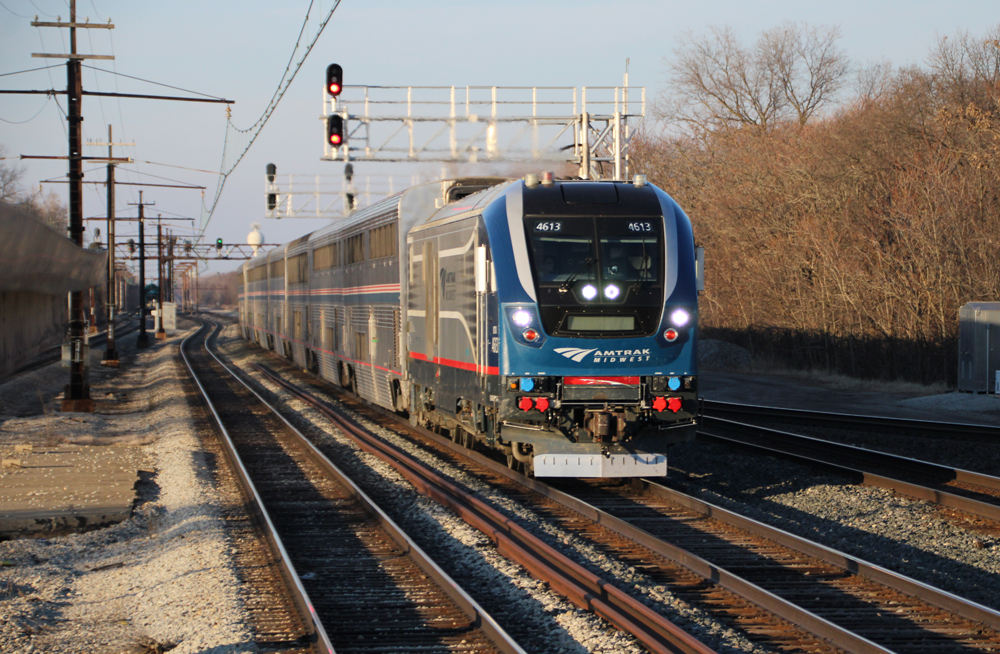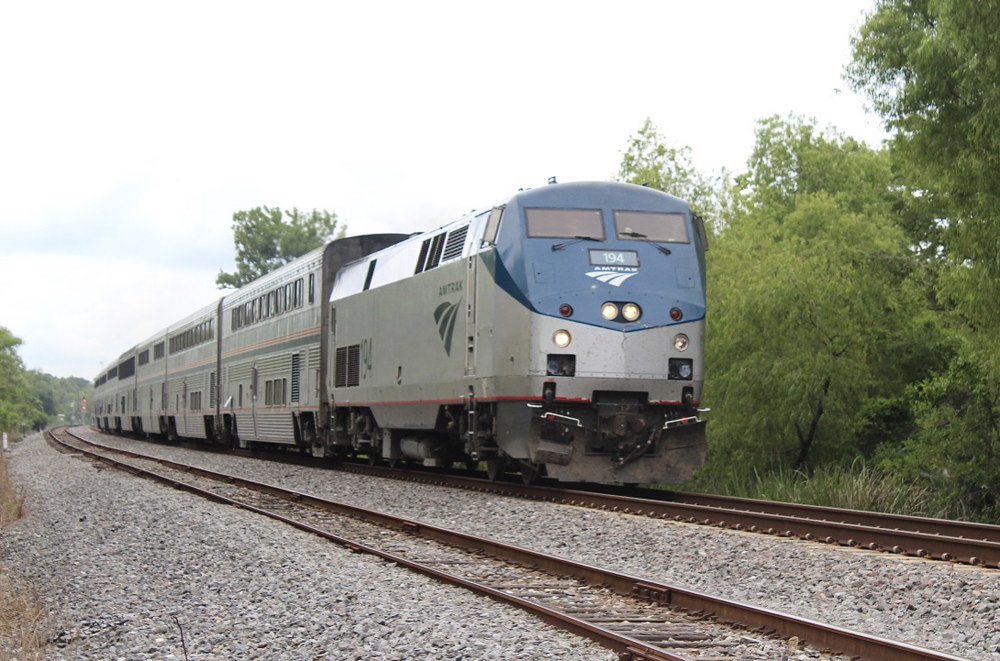
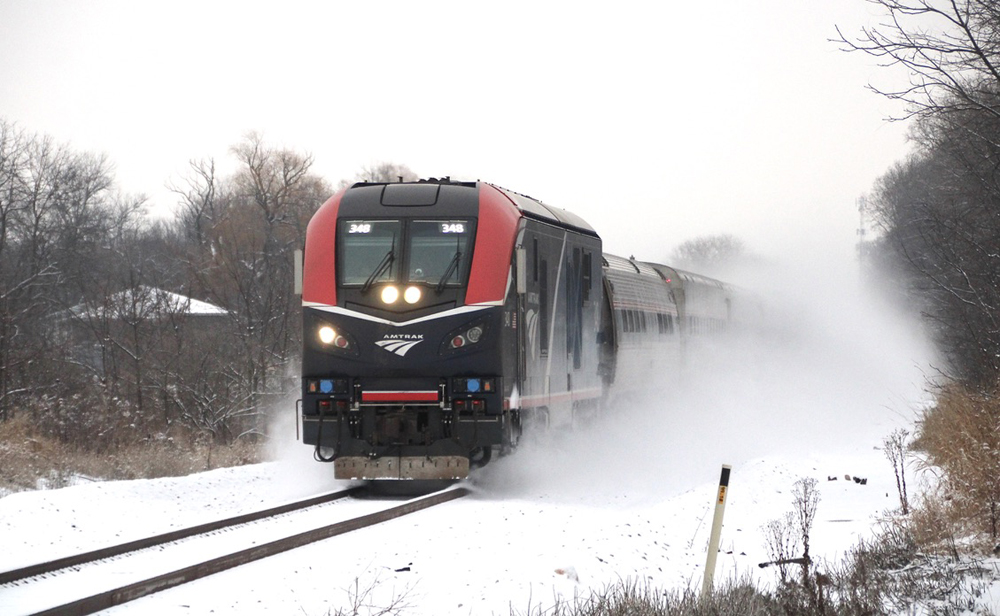
As the Chicago-St. Paul, Minn., Borealis surpassed 100,000 riders a little over five months after its May 21, 2024, debut, the train far exceeded the performance that its state sponsors, passenger rail advocates, and Amtrak had suggested would occur.
In fact, Borealis’ origins and public acceptance contain elements that should be weighed heavily when decisions are made about prioritizing passenger rail investment around the country.
Studies generate funding
A 2015 Amtrak analysis had suggested a second daily train on the Chicago-St. Paul portion of the Empire Builder route would carry 155,000 passengers annually. For years, the company helped cultivate the 411-mile market with a Builder “cutoff coach,” but 2008’s Passenger Rail Investment and Improvement Act dictates that any operations and capital improvements required for a separate train traveling less than 750 miles must be funded by states.
The “Twin Cities-Milwaukee-Chicago Intercity Passenger Rail Project,” TCMC for short, gained momentum in 2017 with a second study funded by Minnesota, Wisconsin and Illinois transportation departments, as well as St. Paul’s Ramsey County. That report’s positive conclusions generated more than $20 million of state and Amtrak matches to a $31.8 million Consolidated Rail Infrastructure and Safety Improvement (CRISI) grant in 2020. The combined money funded final design work as well as a down payment on track, signal, and bridge improvements Canadian Pacific said it would need to accommodate a second passenger train. Total annual passengers projected in this study were pegged at 122,000, but the travelers were estimated to generate $47.7 million in regional economic benefits.
Selling the service

Though the Republican-controlled Minnesota legislature initially balked at providing matching funds, an intense information campaign along the corridor by Amtrak government affairs personnel, the state DOTs, and members of the local Great River Rail Commission was instrumental in generating a political shift in mid-2021 that paved the way for Minnesota’s $10 million contribution.
Significantly, Canadian Pacific only sought improvements at key chokepoints and did not insist all upgrades be completed before the second passenger train could begin. The biggest project called for controlled switches and signaling in Winona, Minn., to convert a siding used primarily in switching industries into a second main track through the station. Although the railroad’s concurrent merger bid for Kansas City Southern may have been a factor in its acceptance, so was the symbiotic relationship CP had cultivated with Wisconsin’s DOT for Chicago-Milwaukee Hiawatha service expansion. The state recently received a $72.8 million CRISI award to fund a signaled track next to CPKC’s Muskego Yard in Milwaukee that will permit freight trains to bypass the downtown station. Once completed by 2026, another Chicago-Milwaukee round trip can be added, allowing the Borealis to operate as a separate train rather than taking up a Hiawatha slot.

As construction plans on the $53 million project advanced in 2022 and 2023 while operational funding was being secured from the states, engagement efforts by Great River Rail and other organizations continued in public meetings and various forms of outreach. These included a survey by the Minnesota Department of Transportation on pricing and amenities. A byproduct of the TCMC public awareness campaign was approval by the Minnesota legislature in 2023 of $195 million toward reviving Minneapolis-Duluth passenger service as the Northern Lights Express, after state senate members voted down a smaller amount the previous year.
Exceeding delivery

All of that spade work paid off by the time Borealis launched on May 21. Ceremonies at St. Paul and intermediate stops called attention to the debut. The first runs sold out, as expected, but patronage remained consistently strong all summer and into the fall. Demand drove coach fare levels higher than the Empire Builder on many dates. Since the first full month in June, the trains have been averaging more than 20,000 passengers per month, according to data released by the Wisconsin Department of Transportation. From June through September, Chicago-Milwaukee ridership averaged between 25% and 34% of the train’s total.
Minnesota’s DOT recently analyzed 18,788 origin-destination pairs in September. It found that 62% of trips were between stops on the Chicago-Milwaukee corridor or those points and St. Paul, 30% were “big city-small town” journeys, and the remaining 8% were between rural intermediate stops.
There have been the usual Amtrak mechanical hiccups with the Horizon and Amfleet coach and cafe/business class equipment. Passengers on the inaugural run told News Wire that a baggage car to handle bicycles would be welcome addition, but states would have to foot the bill for that. There have been periodic delays, but CPKC dispatchers have generally done a good job threading Borealis and Empire Builder round trips and a steady parade of long freight trains past each other on what is largely a single-track railroad. For instance, you can generally count on a long manifest or intermodal waiting in the wings at Portage, Wis.

Lessons learned
What to make of all this? The Borealis blueprint for success is clearly capable of being replicated in other corridors where long-distance trains now operate. If Amtrak’s current equipment shortage can be overcome, these might include:
— Dallas-Fort Worth-Temple-Austin-San Antonio on the Texas Eagle’s route.
— A daytime Chicago-Toledo-Cleveland-Buffalo train opposite the nocturnal Lake Shore Limited and Floridian.
— A Charlotte-Atlanta Piedmont add-on utilizing the Crescent’s route.
Qualified Amtrak crews, stations, and existing passenger traffic are already present on these potential additions. However, key elements from the Borealis checklist are missing in those corridors, otherwise ripe for cultivation:
— Legislative champions and governors who believe in funding public transportation while fending off naysaying road builder and oil company lobbyists.
— State transportation departments sufficiently staffed to apply for federal grants
— Enlightened host railroad leadership that sees the value of tapping federal infrastructure funding opportunities to have the public pay for expand physical plant capacity their lines can utilize when passenger trains aren’t running.
— Route-specific advocacy organizations continuing to make the case for passenger rail
In 2024, the Federal Railroad Administration advanced $500,000 Corridor Identification Grants to 69 different projects — that’s $34.5 million. It is likely that most of the proposed ventures will lack the building blocks that have benefitted this train. But through Wisconsin’s DOT, the “TCMC” was the recipient of one of those grants. It is to be used to develop a service development plan for a second Borealis round trip.

Previous News Wire coverage:
Effort to launch second Chicago-Twin Cities train receives $31.8 million grant, Sept. 23, 2020
Minnesota lawmakers approve funding match required for second Chicago-Twin Cities round trip, June 29, 2021
Final design phase begins for work to support second Chicago-Twin Cities passenger train, Sept. 20, 2022
Minnesota governor’s budget calls for funding second Chicago-Twin Cities train, Feb. 2, 2023
Minnesota legislature approves funding for Northern Lights Express passenger service, May 22, 2023
Second train between Twin Cities and Chicago slated to begin in 2024, Nov. 3, 2023
Amtrak to launch Chicago-St. Paul train May 21, May 1, 2024
Amtrak Borealis makes debut, May 21, 2024
Second Chicago-St. Paul train shows value of frequency, capacity: Analysis, May 22, 2024
Amtrak’s Borealis hits 100,000-passenger mark in 22 weeks, Oct. 25, 2024
Wisconsin begins study of second Borealis round trip, Nov. 29, 2024