

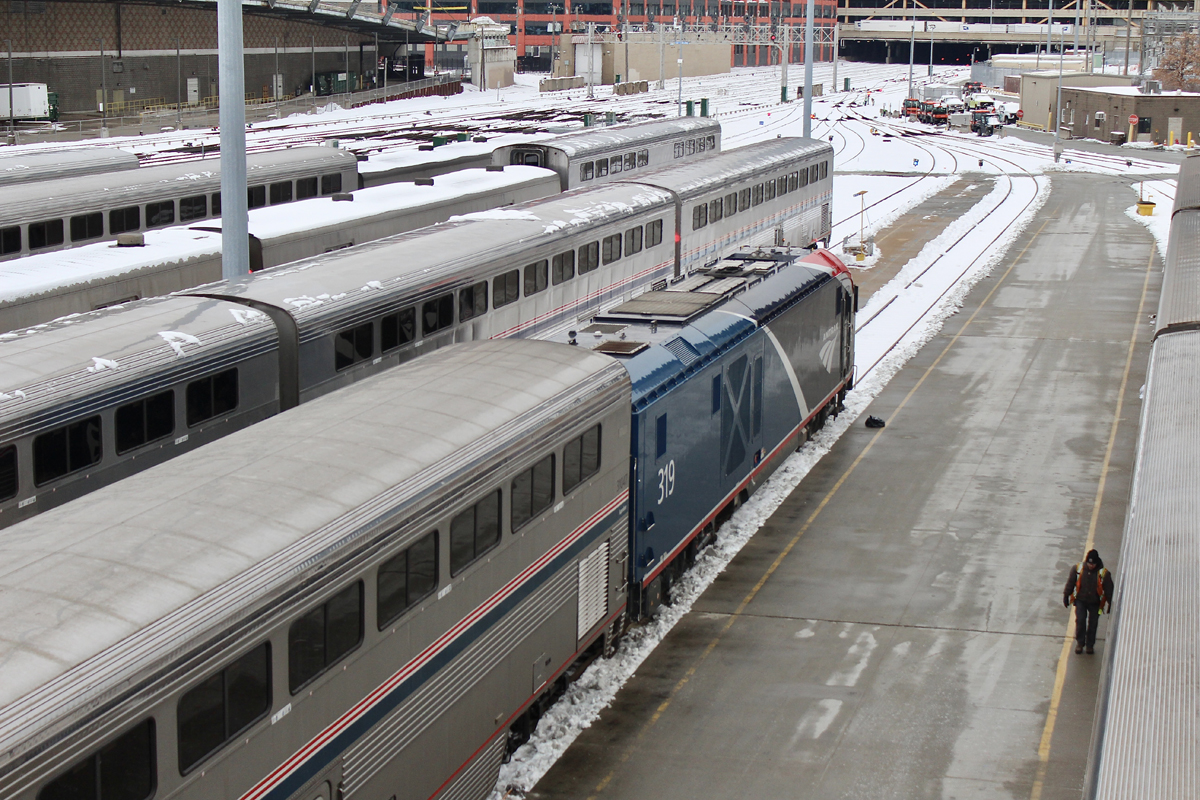
CHICAGO — More evidence of the toll Amtrak’s aging locomotive and passenger car fleet is taking on operations was provided in recent days when long-distance and regional trains were canceled or suffered hours-long delays, most shortly after leaving Chicago.
The common thread? Problems with electrical head-end power.
On Monday, both the westbound California Zephyr and Southwest Chief didn’t make it through the first night of their trips. Their eastbound counterparts, set to utilize the same scarce equipment, have already been canceled: Wednesday’s Chief from Los Angeles and Thursday’s Zephyr from Emeryville, Calif.
One of the first trains to be affected was Monday’s westbound Borealis, which departed Chicago for St. Paul, Minn., at 1:56 p.m. — two hours, 46 minutes late — following “equipment adjustments at the maintenance facility,” according to an Amtrak advisory to passengers.
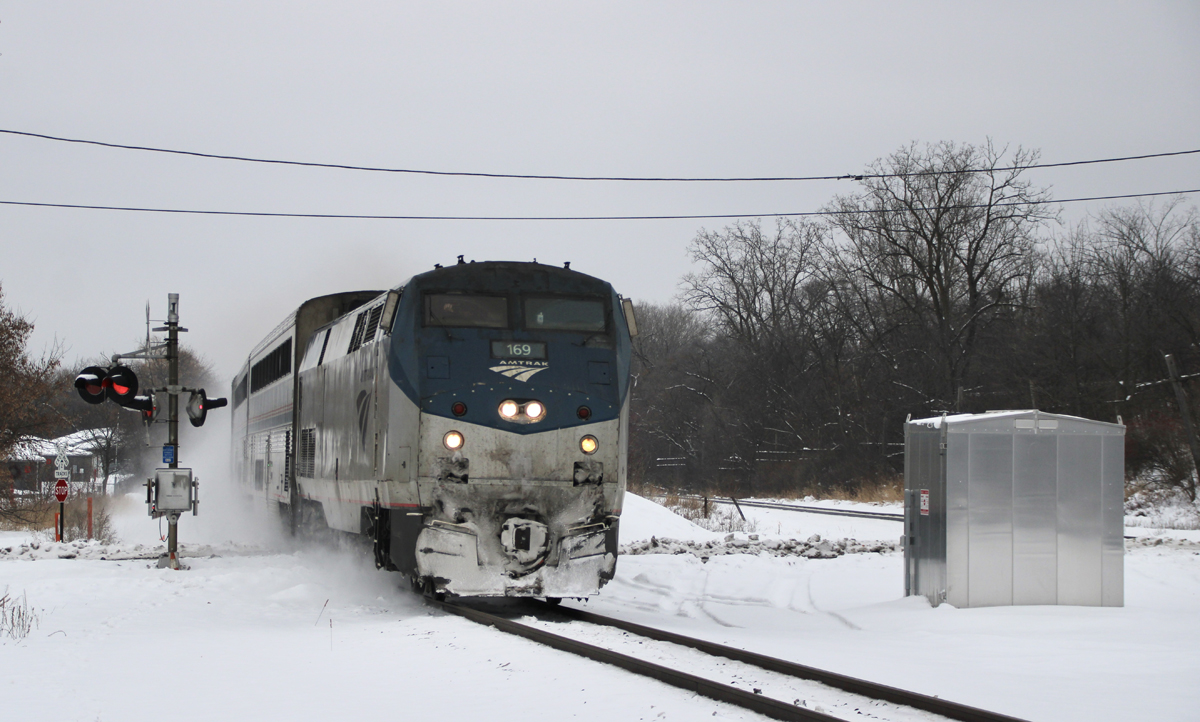
The day’s westbound California Zephyr made it as far as Ottumwa, Iowa, after experiencing recurring problems with one of the train’s passenger cars. Amtrak reports indicate a lengthy delay at Burlington, Iowa, due to “equipment adjustments,” but the train stopped again west of Ottumwa, after departing there at 1:21 a.m., when the train was almost six and a half hours late. As of 3:31 a.m. it was canceled for the rest of its journey to Emeryville.
The same day’s Southwest Chief departed on time behind the Zephyr but didn’t make it to Naperville, Ill., until almost two hours later after undergoing a “locomotive assessment.” West of Fort Madison, Iowa, the train stopped another three hours, “due to a mechanical assessment and an adjustment to the train’s consist, then advanced to the next stop, LaPlata, Mo., “to be further evaluated.” That’s where the train was canceled.
Amtrak says head-end power issues were responsible in both cases. Zephyr passengers were given the choice of returning by bus to Chicago or remaining in Ottumwa until they could continue by train; those who chose to stay were housed by Amtrak. Those on the Chief were taken to Kansas City, where substitute transportation back to Chicago was similarly made available. Both trains were then deadheaded to Chicago.
Passengers will be provided full refunds and other compensation, in addition to housing and meals, along with the company’s apologies, according to an Amtrak spokesman. The railroad is analyzing the cause of the problems.
About the time those issues were unfolding in Iowa and Missouri, Amtrak’s eastbound Floridian made an unscheduled stop at the Hammond-Whiting, Ind., station. The train was shown departing Chicago one minute late at 6:41 p.m. but nearly three hours later had traveled only 16 miles.
First reported as a locomotive “mechanical assessment” at 9:19 p.m., the cause of the delay was soon attributed to “readjusting a coach car to the end of the train.” However, that maneuver took another three hours. Following a mandatory operating crew change, the train reached its first scheduled stop, South Bend, Ind., at 3:36 a.m., some six hours, 27 minutes late.
The Floridian’s delay follows a similar electrical problem that occurred when the westbound Cardinal departing New York on Friday suffered an apparent short in head-end power cables west of Hinton, W.Va., on Friday evening, Dec. 5. The train limped into Charleston, W.Va., an hour late, but the problem couldn’t be fixed.
Passengers were bused overnight from there to all intermediate stops and the equipment deadheaded to Chicago.
— Updated Dec. 10 at 8:22 a.m. to clarify that passengers could return to Chicago or choose to wait to continue by train. To report news or errors, contact trainsnewswire@firecrown.com.
Share this article