

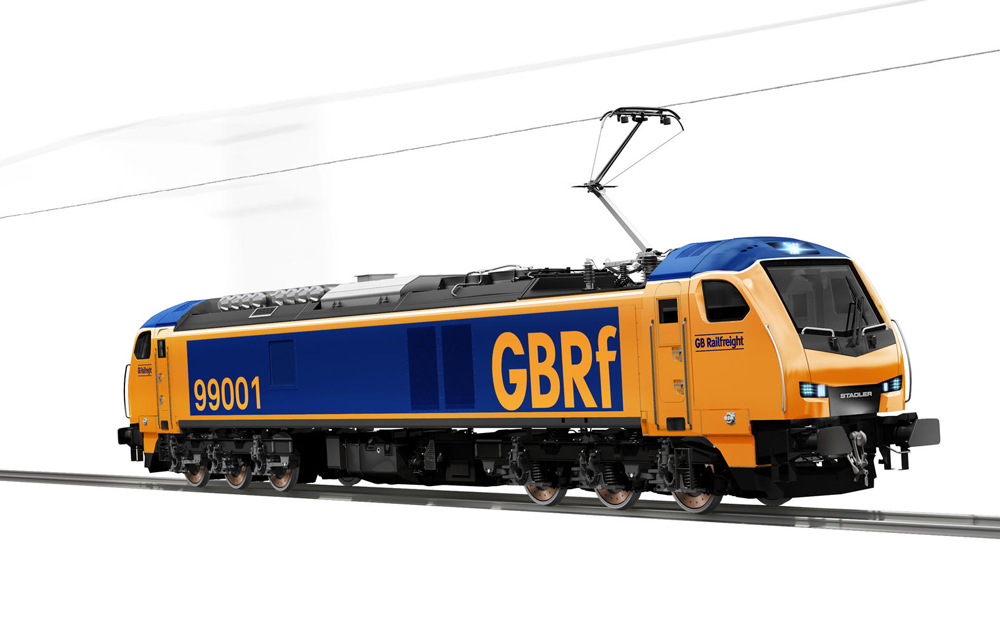
LONDON — Locomotive and equipment manufacturer Stadler has won a major order to build new powerful dual-mode — electric and diesel — locomotives for British rail freight company GB Railfreight. The new units will begin the process of replacing an extensive fleet of EMD-built Class 66 (model JT42CWR) locomotives, derived from the SD40 design.
The 30 new locomotives, funded by leasing firm Beacon Rail, will be designated UK Class 99, and will be built in Spain, with deliveries beginning in 2025.
The new six-axle locomotives are derived from Stadler’s existing “Eurodual” design, also built at its Spanish shop in the suburbs of Valencia. The Eurodual design, in use by multiple rail freight companies in France, Germany, and other countries since 2020, uses a 16-cylinder Caterpillar C175 diesel engine manufactured in the U.S. Exactly what engine will be used in the new Class 99 hasn’t been revealed, although Stadler says it will be rated between 2,200 and 2,400 hp, with low emissions meeting European Stage V requirements. When using 25-kilovolt A.C. overhead power, the 75-mph Class 99 loco will offer 8,000 hp at wheel.
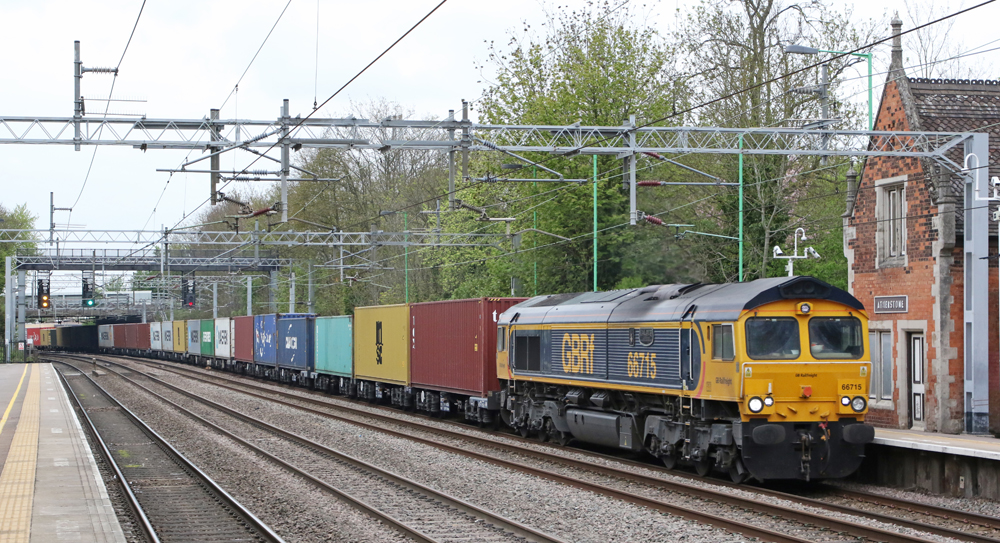
GB Railfreight says it intends to use the new locomotives to replace the EMD Class 66 diesels working intermodal trains from ports such as Felixstowe (east of London). This will reduce carbon emissions by around 50% per journey, as most of these routes currently involve Class 66 locomotives operating for long distances on electrified lines. GB Railfreight expects the use of the new Class 99 locos will reduce its carbon footprint by 470 tons every working day, thanks to the ability to use electric power on these electrified routes.
Stadler has already built smaller and less powerful four-axle, dual-mode locomotives for UK use – the Class 88 design is used by freight company Direct Rail Services, and a new tri-mode (diesel/electric/battery) version, designated Class 93, is on order for passenger and freight use.
Until now GB Railfreight has been one of the most enthusiastic users of EMD diesels in the UK. It has even bought Class 66 locomotives second-hand from operators in mainland Europe, modifying them for use in Britain, where clearances for lineside structures and bridges, as well as safety systems, differ from other European countries. Recently GB Railfreight has converted several older British Rail-built Class 56 units to EMD 710 engines, having bought these several years ago before new emissions rules took effect. An upcoming Trains Magazine article will be look at the Class 66 locomotive.
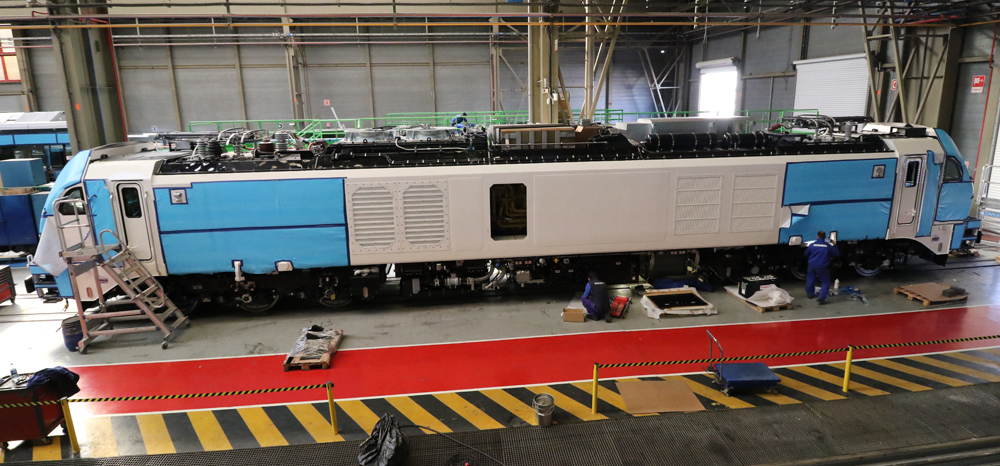
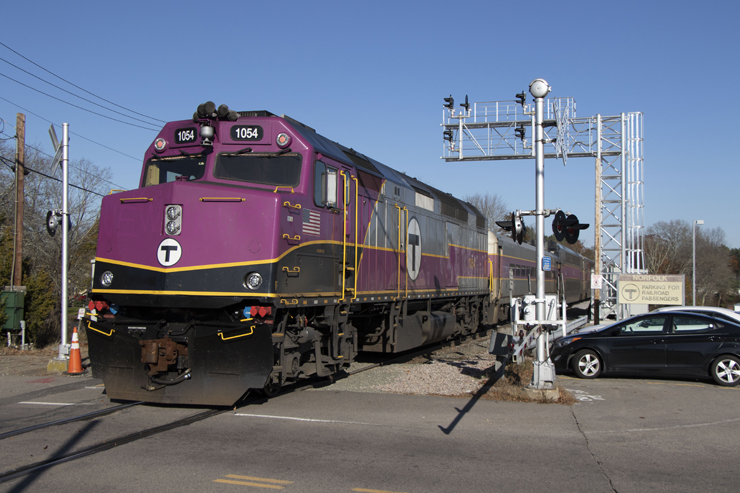
The Stadler locomotive shop in Valencia has a lengthy history of working with EMD, most recently on the F125 for Los Angeles commuter operator Metrolink. The plant’s origins go back to Spanish firm Macosa, which built EMD designs from 1960 onwards for use by Spanish Railways and for export; before Stadler bought the firm in 2015, both Alstom and Vossloh had each owned it for more than a decade.
Share this article