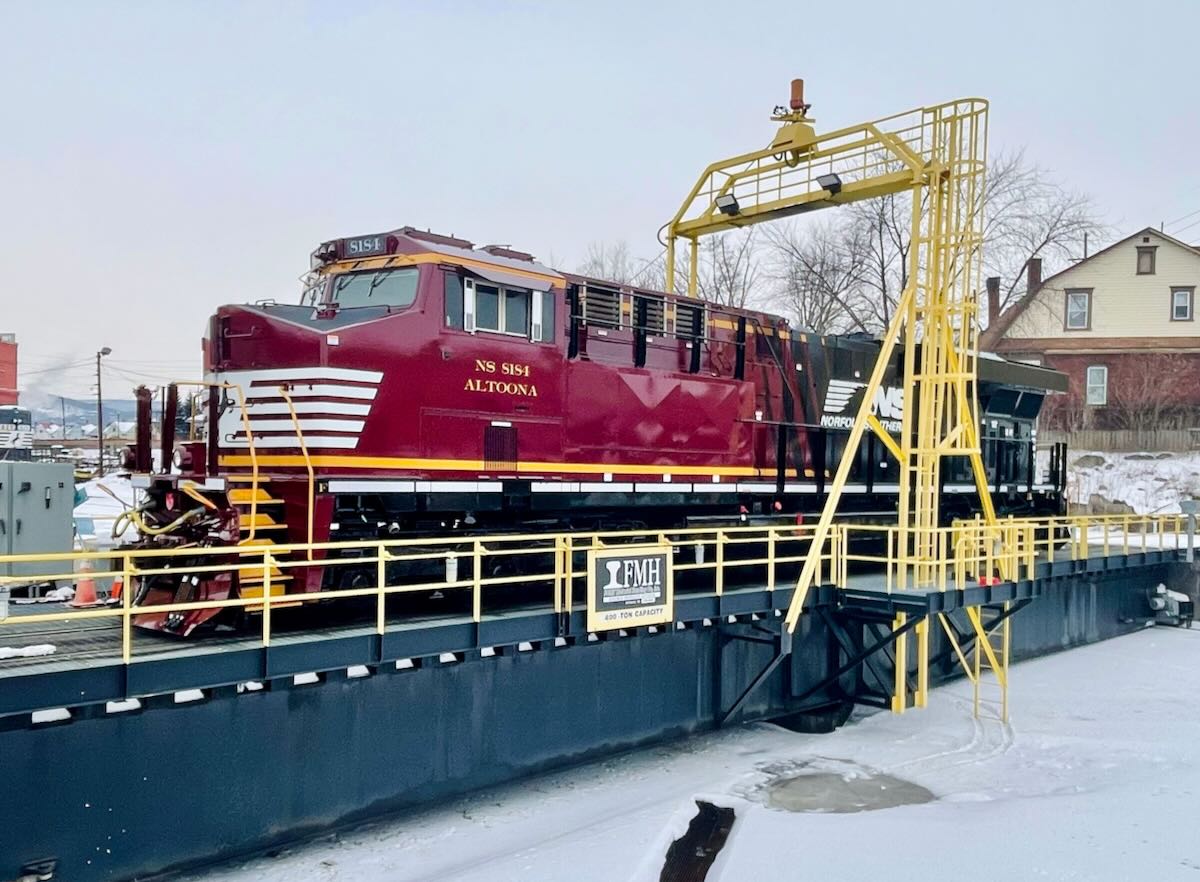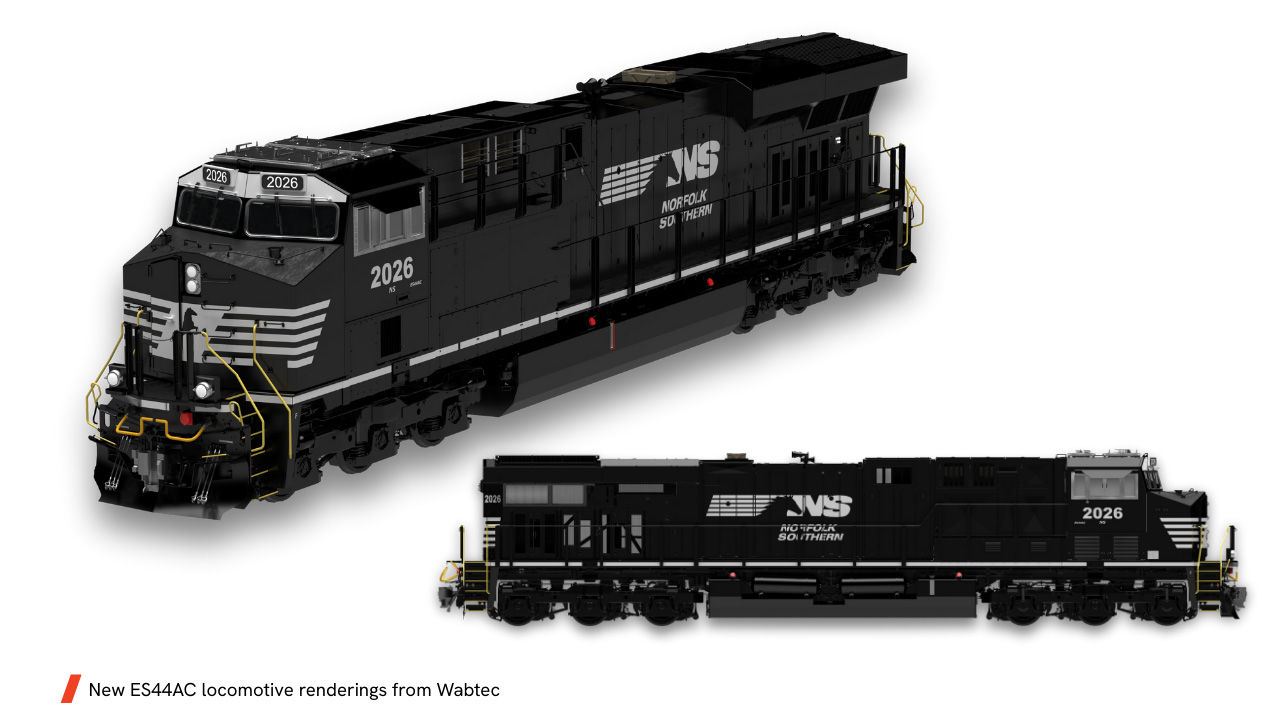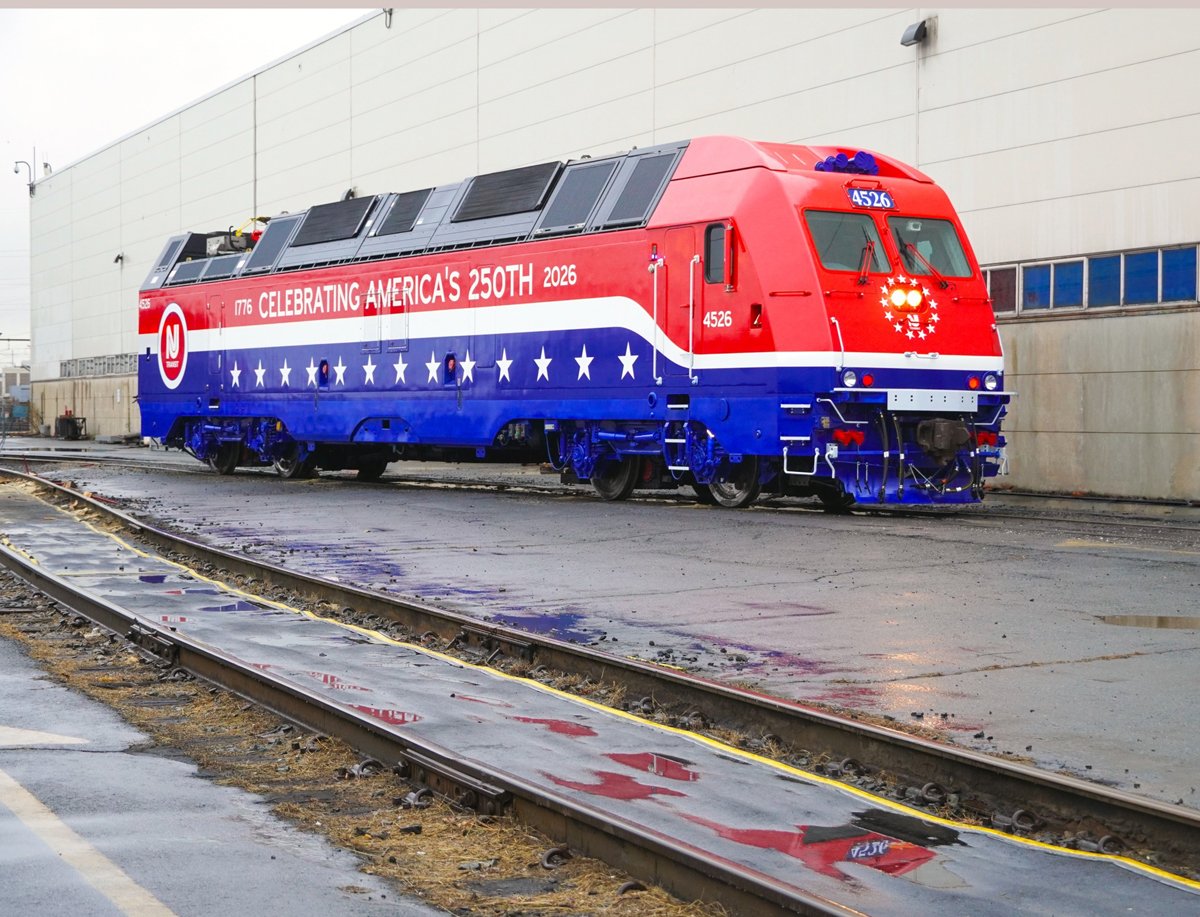


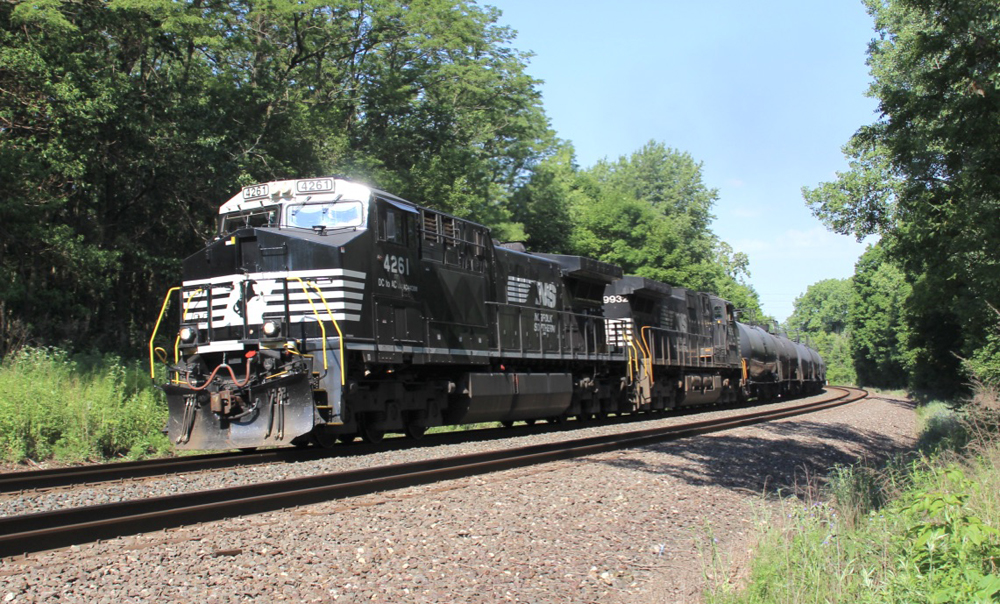
NORFOLK, Va. – Norfolk Southern continues to convert older D.C.-traction locomotives into A.C.-traction units at a pace of just over 100 locomotives per year.
Some 54% of the NS road fleet is now A.C. traction, Chief Financial Officer Mark George told an investor conference today. That’s up from a third of the fleet at the end of 2018. The railroad aims to have 65% of its road locomotives feature AC traction.
The D.C.-to-A.C. conversion program provides NS with a like-new locomotive for half the cost of buying a brand-new road locomotive. The A.C. units are more reliable, have reduced maintenance costs, are more efficient, and have better tractive effort than the D.C. locomotives they replace.
NS continues to add energy management systems to its road fleet, as well, as a way to improve fuel efficiency. About 80% of the road fleet is equipped now, as the railroad moves toward a goal of 90%. The railroad aims to put locomotives with energy management systems on the point so that the software can reduce the fuel consumption of the entire consist.
NS also is relying more on distributed power as it boosts train length and weight, George says. Just under half of NS’s road trains now operate with distributed power, a figure that will grow as train length increases.
NS continues to seek ways to combine trains, blend different types of traffic, and tack new volume on to existing train starts, George says.
The average NS train is just over 7,000 feet long, George says, and only 10% of its trains are 10,000 feet or longer. The railroad set quarterly records earlier this year, however, for both train length and weight as it aims to move tonnage on fewer but longer trains.
George spoke at the UBS Global Industrials and Transportation Conference.
Share this article