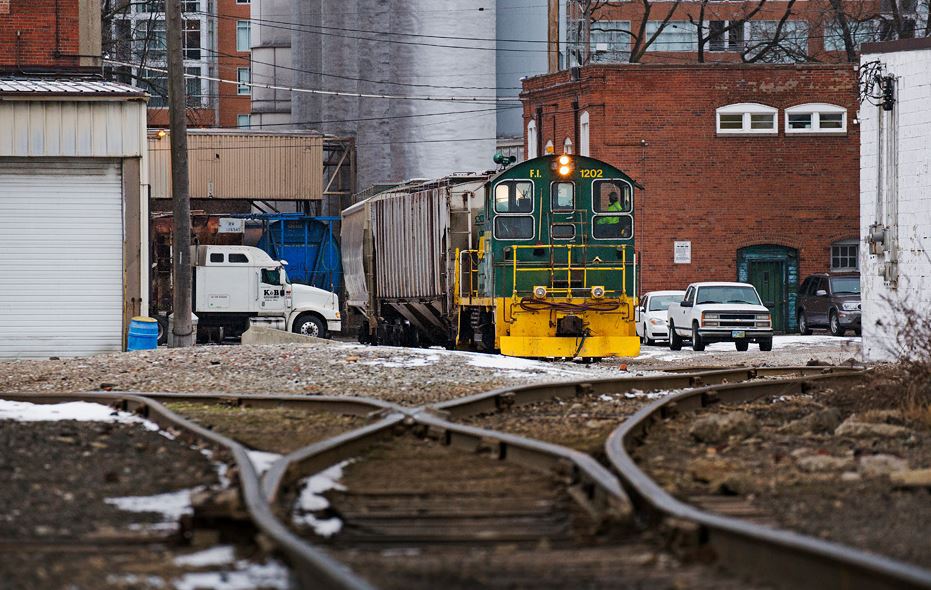
Switchers are resilient: Less than 4% of Electro Motive Division SW- and MP-series switching locomotives manufactured between 1966 and 1987 remain in use on Class I railroads today. Of the more than 2,900 locomotives built in those 20 years, TRAINS calculates less than 12 SW and approximately 100 MP switchers still earn revenue for Class I railroads today. Big railroads have parted ways with the switcher, preferring younger and higher-horsepower GP siblings, which Class I railroads still possess in abundance.
Even though these locomotives aren’t an ideal fit for Class I railroads, they are far from irrelevant in the industrial, terminal, and short line scene. Lessors and contract switching companies bolster their rosters with these locomotives at every opportunity, as their characteristics make them attractive for industrial work.
Switchers occupy a niche void in industrial railroading. As Class I railroads divest, SWs and MPs are sold into the aftermarket at prices more affordable than a Trackmobile and with a horsepower rating more effective than a railcar mover without the extra muscle offered by GPs. Whether at steel mills, grain elevators, or chemical plants, switchers offer the right balance for switching-intensive operations and moderate tonnage. Another feature is the shorter wheelbase and minimum turning radius. Switchers can navigate 39-degree curves, compared to 42 degrees for GP38-2s. Chemical plants often feature tight clearances and sharp curves, giving switchers a competitive edge in this market.
While Trackmobiles have siphoned buyers away from locomotives, switchers remain important in heavy switching operations, and remain a necessity in rail and intra-plant environments where Federal Railroad Administration rules apply.
Today’s switchers are resilient mostly in the care of lessors like GATX Rail, which employs a roster of around 200 units. Larry’s Truck & Electric, another leasing company known for its hodgepodge of first- and second-generation diesels, has about 70. And shortline and industrial railroads like Watco, Railserve, and Genesee & Wyoming’s Rail Link have comparable rosters of 30 to 50 units each.
Switchers oftentimes close out lifespans at sleepy, low-volume grain elevators or other seasonal businesses. It is speculated there are more individually owned private switchers scattered across North America than are owned by all leasing companies combined, though determining the validity of that is challenging.
And even though Class I railroads have fewer switchers today, a keen eye will find a few exceptions across big railroads’ networks. CSX Transportation maintains the largest active fleet of MP15 locomotives today, estimated at 70, plus a single SW1500 in storage. Kansas City Southern operates less than 30. Canadian National and Norfolk Southern have a handful of SWs, however NS’ three SW1001s, all former Reading units, are stored in Altoona, Pa.
While the availability of replacement parts will be a rising challenge in the years ahead, well-maintained switchers in the care of responsible chaperones should allow railroads and shippers to extract the most life from a locomotive that still plays an important role in railroading 50 years after entering the marketplace.