

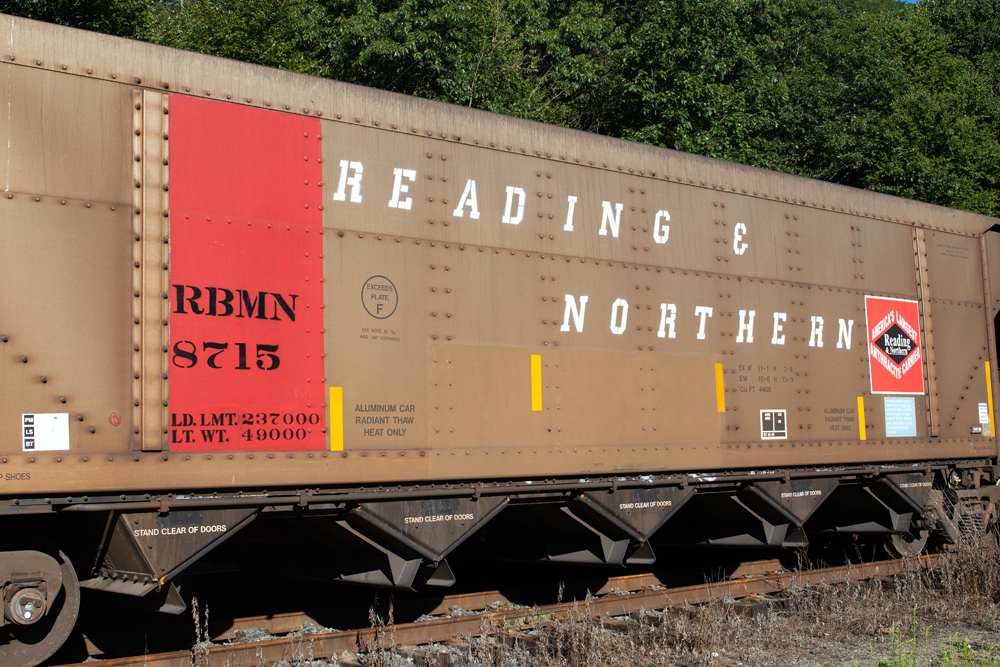
PORT CLINTON, Pa. — Reading & Northern Railroad has shipped more than 1 million tons of anthracite coal for the third straight year, the company announced on Dec. 31.
That figure came despite a downturn in export volume, the railroad said in a press release, thanks to the domestic market that mainly supports U.S. steel production. The railroad’s domestic anthracite traffic grew nearly 20% in 2025, with most shipments going to electric-arc furnace steel mills across the country. To support the traffic, the railroad purchased additional hoppers in mid-December that are expected to be delivered in January or February 2026. They will join R&N’s fleet of more than 2,000 railcars, and the railroad anticipates purchasing additional equipment to meet the demand.
Overall, the railroad expects to move more than 40,000 carloads in 2026.
R&N first reached the 1-million-ton mark in 2023 [see “Reading & Northern hits one million tons …,” Trains.com, Dec. 11, 2023].
In a subsequent release, the railroad said it posted record freight revenues and passenger ridership in 2025. Freight traffic showed modest growth, including a 2,000-carload increase in frac sand traffic, as well as carload and revenue success with movement of plastic resins, forest products, and food and agricultural commodities. The R&N spent more than $8 million to support this traffic through purchase of 117 freight cars, vehicles and track equipment, and track and signal materials, the company said. Passenger operations saw excursion ridership top 400,000 for the first time.
“Thanks to our customer-focused staff, R&N continues to enjoy growth year after year,” CEO Andy Muller Jr. said. “We continue to invest in our railroad to make sure we bring first-class service to our freight customers and our passenger riders. Reading & Northern will continue to thrive and work with our communities and neighbors to expand our offerings.”
— Updated Jan. 6 at 7:25 p.m. CT with additional information. To report news or errors, contact trainsnewswire@firecrown.com.
Share this article