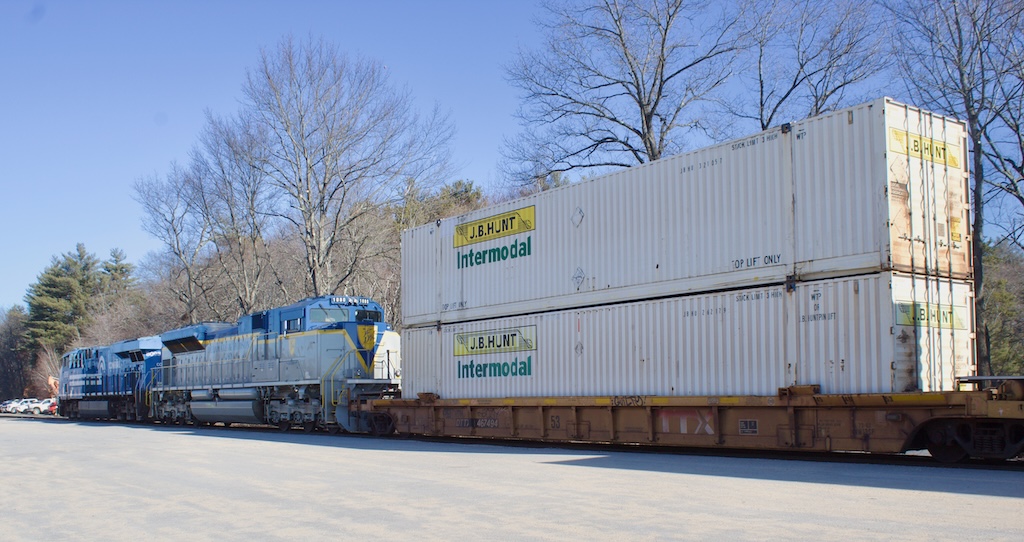
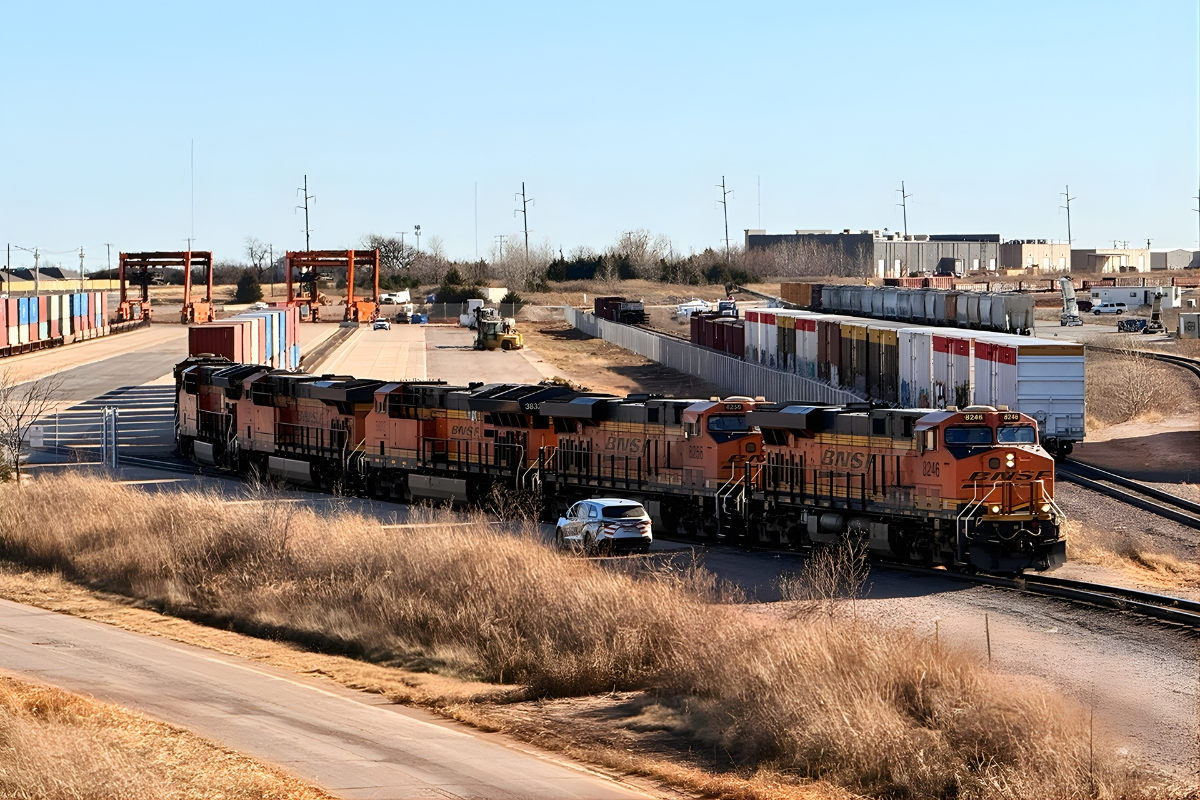
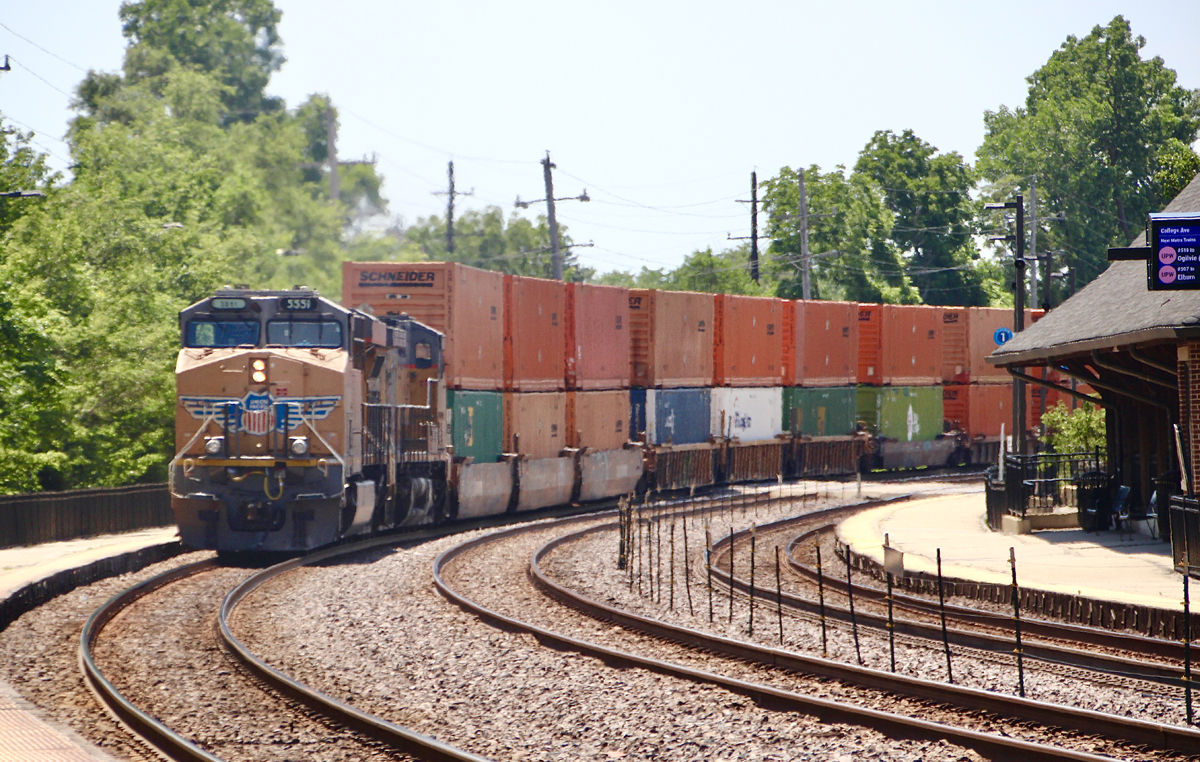
WASHINGTON — BNSF Railway wants to launch international double-stack service this week between Southern California and Salt Lake City via trackage rights over Union Pacific’s former Western Pacific route through the Feather River Canyon.
Not so fast, UP says.
UP says that BNSF has not provided sufficient notice so that UP can hire and train crews to handle the five trains per week between Roseville, Calif., and Salt Lake City. UP also says the BNSF trains must follow its directional running pattern, with eastbounds moving over the former Southern Pacific route over Donner Pass — which would trigger a provision requiring BNSF to pay for half the cost of UP’s 2009 double-stack clearance project.
So BNSF yesterday asked federal regulators for an emergency order directing UP to permit it to begin operating the trains this week for customer CMA CGM via the former Western Pacific, which BNSF dubs the “northern route.”
“BNSF respectfully requests that the Board promptly issue a decision ordering UP to allow BNSF to run double-stack intermodal trains eastbound and westbound over the Northern Route pursuant to BNSF’s trackage rights over these lines and ordering UP to provide the crews for these BNSF trains,” BNSF said in a filing with the Surface Transportation Board.
The trains will use a new intermodal terminal on short line Salt Lake Garfield & Western.
“The SLGW intermodal facility will open for business today,” BNSF said in its July 7 filing. “The first empty train arrived in Salt Lake City last night and the first container arrived today. Once loaded, the first westbound train is expected to leave Salt Lake City this week. BNSF anticipates that the first eastbound movement of BNSF double-stack intermodal trains over the Northern Route will begin as early as later this week.”
BNSF contends that the trackage rights agreement that was part of UP’s 1996 acquisition of Southern Pacific allows it to select which lines it will operate over. “At the time of the UP/SP merger, there was no restriction on BNSF running double-stack intermodal trains bi-directionally on the Northern Route, and there is no such restriction today,” BNSF told the board.
In addition, BNSF notes that it already operates both eastbound and westbound traffic over portions of the former Western Pacific.
“BNSF operates bi-directionally today on a portion of the Northern Route between Roseville, Calif. and Keddie, Calif., so BNSF assumed that it could move its new intermodal service bi-directionally on the remaining segment of the Northern Route between Keddie, Calif. and Weso, Nev.,” BNSF told the board.
BNSF also claims that UP’s attempts to delay the new service are retaliation for losing CMA CGM business.
“By refusing to allow BNSF to run its double-stack intermodal trains eastbound over the Northern Route, UP is blatantly attempting to disrupt the business of BNSF and its intermodal partners and to recoup UP’s lost contribution from that intermodal business by forcing BNSF to pay for one-half of the costs UP unilaterally incurred when it took steps to increase the clearances of the Donner Pass tunnel on the Southern Route for its own business purposes in 2009,” BNSF told the board.
BNSF initially told UP on May 2 that it was planning the new service that would begin in June, without specifying a route.
CMA CGM, in a letter to the STB, urged regulators to act quickly to allow the service to begin.
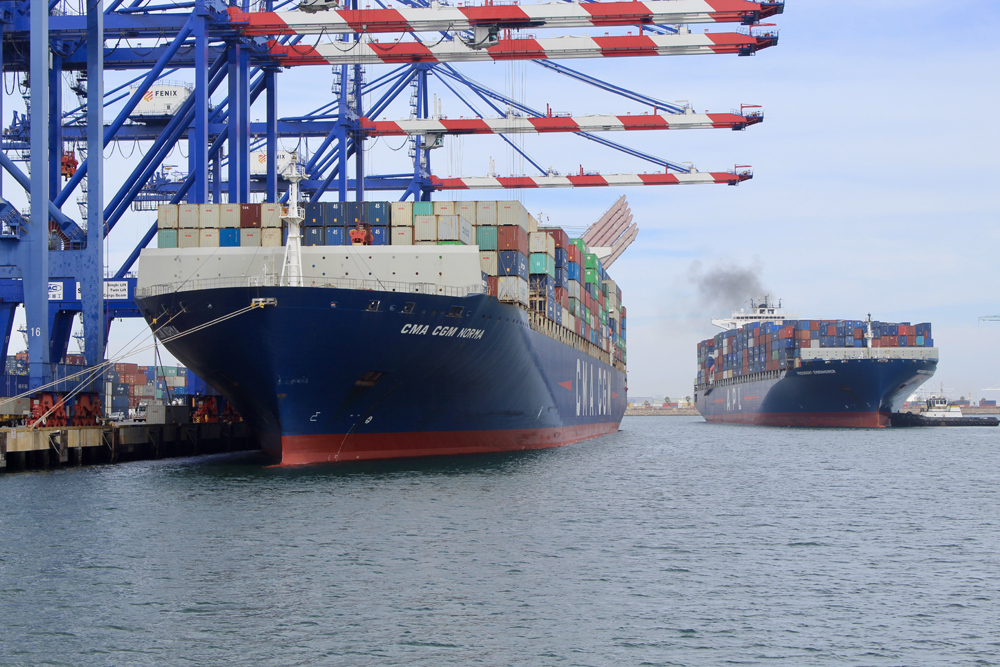
“This development is deeply concerning. Without immediate resolution, our supply chain will be disrupted, impacting our customers across the region, including potentially a loss of business,” Bob Basila, the shipping company’s senior vice president and chief procurement officer, told the board. “We have made substantial operational and commercial commitments based on the availability of this service, and the current impasse threatens to undermine those investments.”
Union Pacific counters that BNSF failed to follow proper procedures. “If BNSF cannot fulfill its promises to begin running new intermodal service this week, it has only itself to blame,” the railroad told the STB.
“The Board should deny BNSF’s request for emergency action. Had BNSF simply followed contractual procedures, there would be no issue. Union Pacific is fully willing to allow BNSF to institute new intermodal service once it hires and trains the required crews and works through any operating issue with SLGW,” UP said.
UP says the 1996 trackage rights agreement with BNSF gives it the right to operate directionally, while also requiring BNSF to pay its share of clearance improvements on the SP Donner Pass route.
“Resolving this particular dispute is about payment of money — it is not an ‘emergency’ that requires a departure from the Board’s normal process for resolving disputes,” UP said. “Union Pacific believes the dispute over BNSF’s obligation to pay its share of the costs of clearances on the Southern Route should be arbitrated.”
Carl Garrison, UP’s vice president of network planning and operations, told the board that BNSF didn’t provide detailed written notice of the planned new service and its proposed route until June 20, and that the few operational details BNSF provided suggest that the interchange with the SLGW will interfere with existing operations.
“Union Pacific is apparently expected to shove the train into SLGW’s yard, which means that Union Pacific must stop and reverse the train on its main line, and the plan says SLGW will switch the train in three cuts, which suggests that the train might occupy Union Pacific’s main line while SLGW is switching the train,” Garrison told the board.
Running eastbounds against the flow of traffic on the former WP, he added, would disrupt service for customers on BNSF’s trains as well as those who rely on existing westbound trains.
Note: Updated at 11:54 a.m. Central to add detail regarding the timing and extent of BNSF notifications to UP.
Share this article