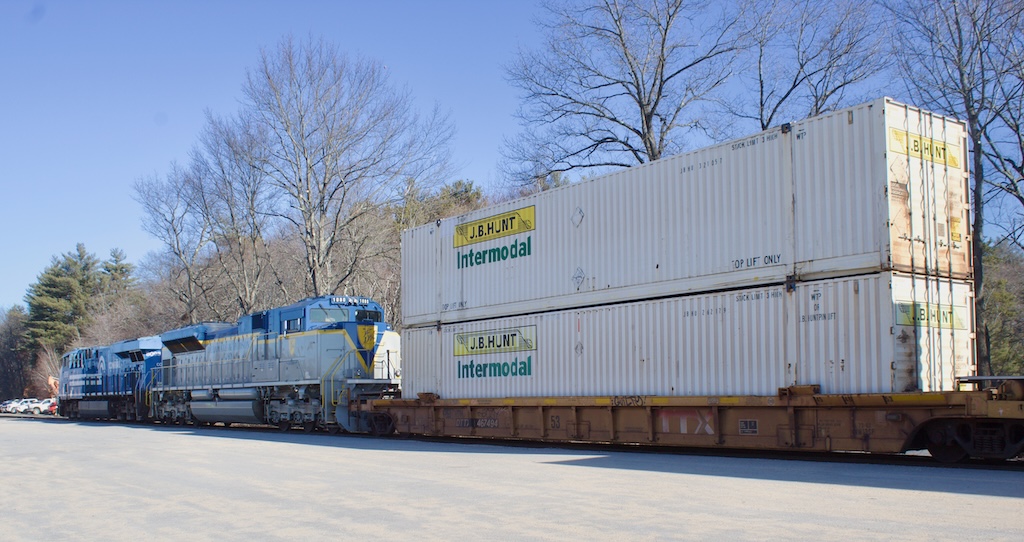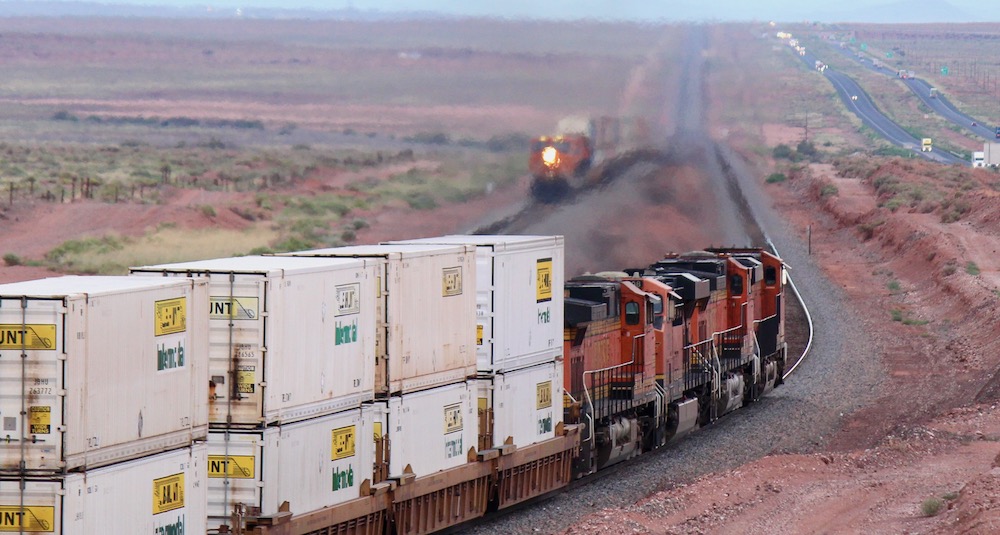
NEW YORK — The Quantum intermodal service that BNSF Railway and J.B. Hunt launched in November — specifically aimed at loads that have never touched rails before — is providing 99% door-to-door on-time performance and is gaining volume, executives said today.
“This is true highway conversion. It’s not intended to be a different service level for existing intermodal,” Darren Field, J.B. Hunt’s intermodal president, told an investor conference. “We are attacking the highway opportunities out there and have good reception and good success and really believe that over the long term we can grow the intermodal business using our Quantum product.”
BNSF and J.B. Hunt did not release specific growth figures for Quantum. The service is a day faster than traditional intermodal, shoots for 95% on-time performance, is built around each customer’s specific transit-time needs, and offers flexible pricing. Plus, J.B. Hunt employees sit alongside their counterparts at BNSF headquarters in Fort Worth, Texas, to monitor Quantum loads and can take steps to expedite them if they fall behind schedule.
BNSF and J.B. Hunt say they have proven the concept since beginning test loads last summer. “It’s one of the things that makes me optimistic about our intermodal future,” says Tom Williams, BNSF’s group vice president of consumer products.
Across the industry, overall domestic intermodal volume has been in the doldrums for about a year due to abundant truck capacity and rock-bottom trucking rates.
J.B. Hunt’s volume was flat overall in the first quarter. But its Transcon volume — which includes any load originating or terminating in Washington, Oregon, California, or Arizona — was up 5%. Its Eastern volume — which includes the rest of Hunt’s intermodal business — was down 7% due to tougher competition, mostly from truckers but also rival intermodal companies.
“It’s just a big fistfight going on there,” Field says.
International intermodal volume off the West Coast has been strong for both BNSF and Union Pacific this year, partly because cargo owners have chosen to send more marine containers all the way to inland points rather than transload the freight into domestic containers.
BNSF believes this a blip in the long-term trend toward transloading more and more imported cargo, particularly freight that comes through the nation’s largest port complex at Los Angeles and Long Beach.
Transloading is the reason why BNSF has proposed its $1.5 billion Barstow International Gateway project. The 4,500-acre complex will include a block-swap yard, support yard, and warehouses and transload centers where goods in international containers can be transferred to domestic boxes for the eastbound trip to inland markets via rail. The idea behind BIG is that it will ease congestion at the ports of Los Angeles and Long Beach and eliminate the 80-mile dray moves for freight that’s currently trucked from the ports to the Inland Empire for transloading before being trucked to one of BNSF’s Southern California intermodal terminals.
BNSF currently expects BIG, which is in the permitting process, to open in late 2027 or early 2028, Williams says.
Williams was asked about comments that Berkshire Hathaway Chairman Warren Buffett made in his annual letter to shareholders about BNSF’s need to improve its profit margins and subsequent comments that Berkshire Vice Chairman Greg Abel made at the company’s annual shareholder meeting this month regarding the need for BNSF to bring its costs in line with demand. Does BNSF have more of a focus on profit margins now and if so, how will that affect intermodal?
In order to be successful with intermodal and carload freight, BNSF must be cost-competitive with other railroads and trucks, Williams says.
“We are not de-emphasizing intermodal,” he says, and the railway remains committed to maintaining its intermodal leadership.
Field and Williams spoke at the Wolfe 17th Annual Global Transportation & Industrials Conference.
Share this article