

Second of two parts
Part one of this report appeared Tuesday, Sept. 5
EFFINGHAM, Ill. —The latest round of tests investigating ways to ensure trains always activate track circuits — the process known as “shunt” — involves shunt-enhancing antennas mounted on both trucks of a state-owned locomotive in Amtrak service in California.
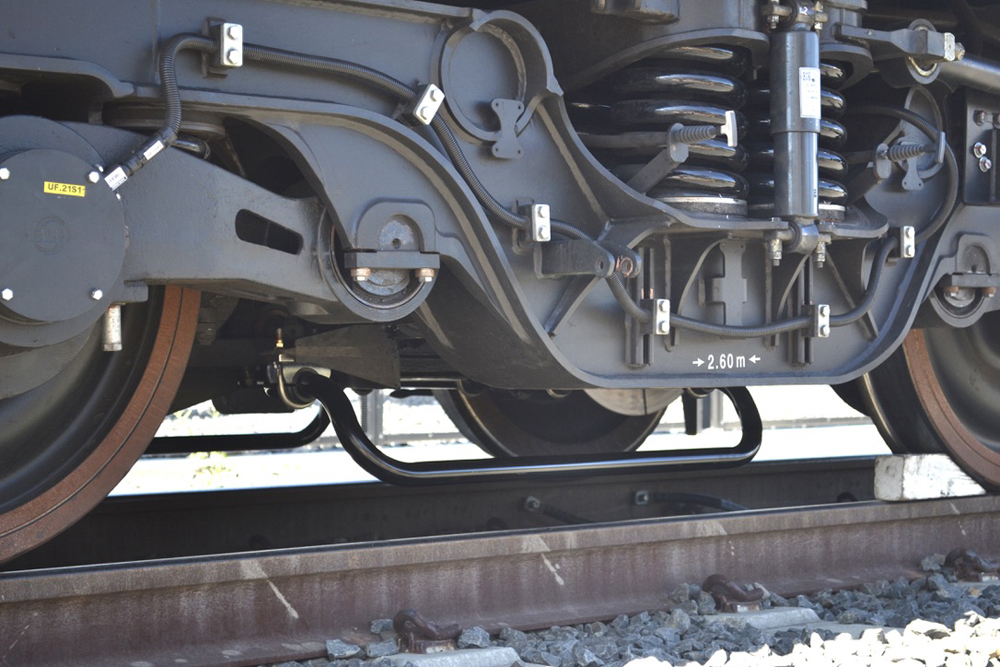
Here’s how the antennas work on F59PHI locomotive No. 2007: Using electricity supplied by the locomotive in an 11-mile test zone, a specially designed track circuit assistor (TCA) antenna is mounted near each running rail. The TCA antenna induces current into the rails, creating an electrical circuit for signal detection that may not otherwise be reliably transmitted through the train’s wheels. The idea is to create a dependable shunt on the locomotive to obviate the need for axle counts, speed restrictions, or certain types of equipment currently used to address loss-of-shunt issues.
Canadian National has been sponsoring the tests over the last several years, with financial and technical assistance from Amtrak, the Federal Railroad Administration, the Illinois and California departments of transportation,and other Class I railroads.
In a lengthy statement to Trains News Wire, CN says, “Extensive testing up to this point indicates that the random loss of shunt detection events experienced by single-level passenger equipment in the US is due to the absence of sufficient contact area between the wheels of passenger trains and the rail head.
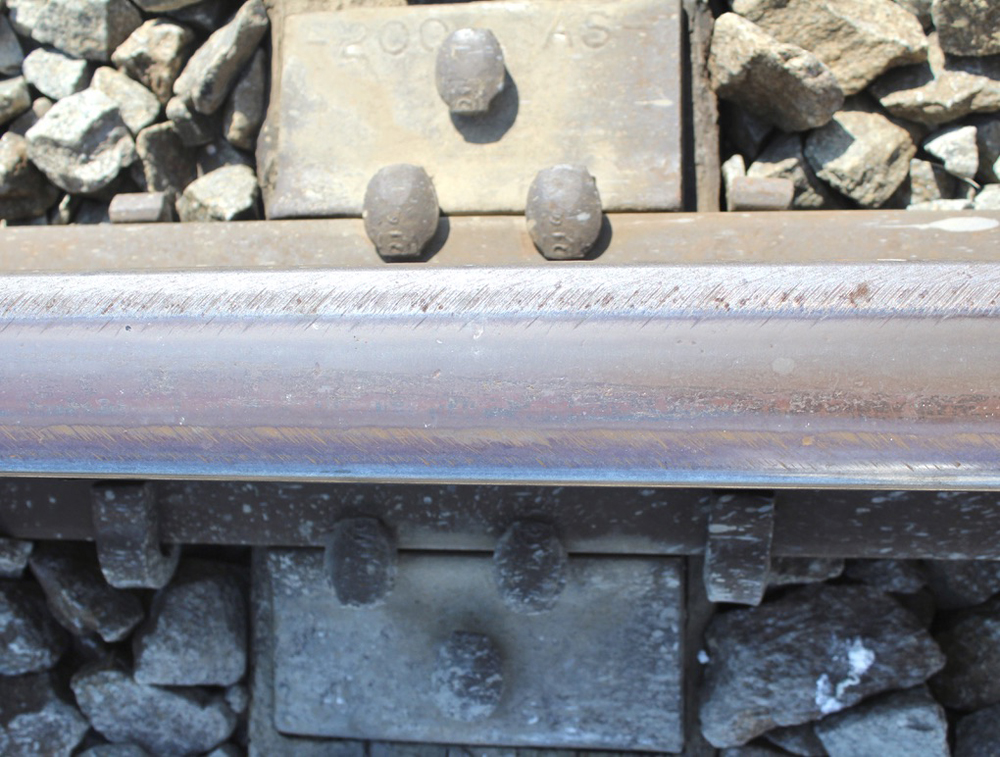
“The smaller contact area on the wheel profile of passenger equipment, combined with short and light trains, prevents the systematic sufficient transmission of current necessary to activate fully operational and FRA compliant railway crossings.”
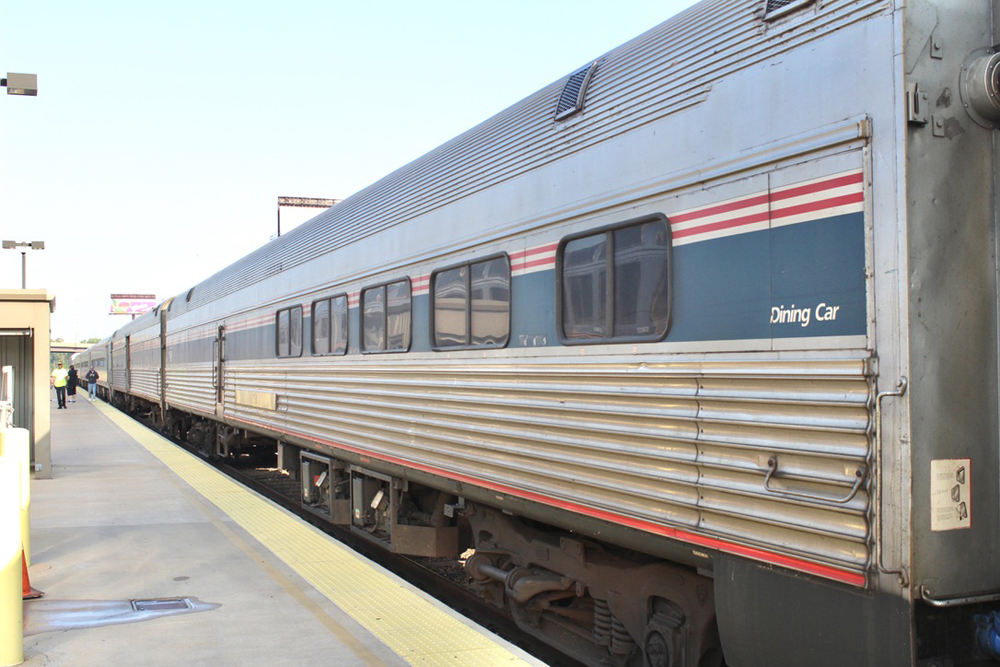
Addressing why Superliners were required on the Illini-Saluki route, the company asserts, “Due to the safety concerns, CN required either the use of heavier equipment or lowering the maximum operating speed at grade crossings for single-level equipment on this route. This was the responsible thing to do to ensure safe operations.” The speed restriction does not apply with Superliners, which were found to consistently shunt the circuit.
The railroad also says, “The random loss of shunt detection events are not due to the quality or conformity of freight or host-railroad-owned equipment or to anything within their control. The Superliner requirement is not invoked on other CN routes as speed reductions dictated by timetable or track topography permit a consistent enough shunt.”
Equipment requirements are not specified in California on Union Pacific’s Santa Barbara and Coast Subdivisions, where any train less than 30 axles must approach certain highway crossings at slower speeds. The restriction is imposed on a line where the combination of light traffic and salt air is believed to interfere with crossing starts. However, the UP also requires Amtrak trains with at least 30 axles between St. Louis and Kansas City, one of its most heavily traveled routes.
Canadian National maintains, “Loss of shunt is not caused by any host railroad’s infrastructure. Events occur where the combination of consistently trued wheel profile, light weight equipment, and minimal axle counts are present. It is false to claim it only happens on some routes, as any route with these aspects present would likely result in random loss of shunt events.”
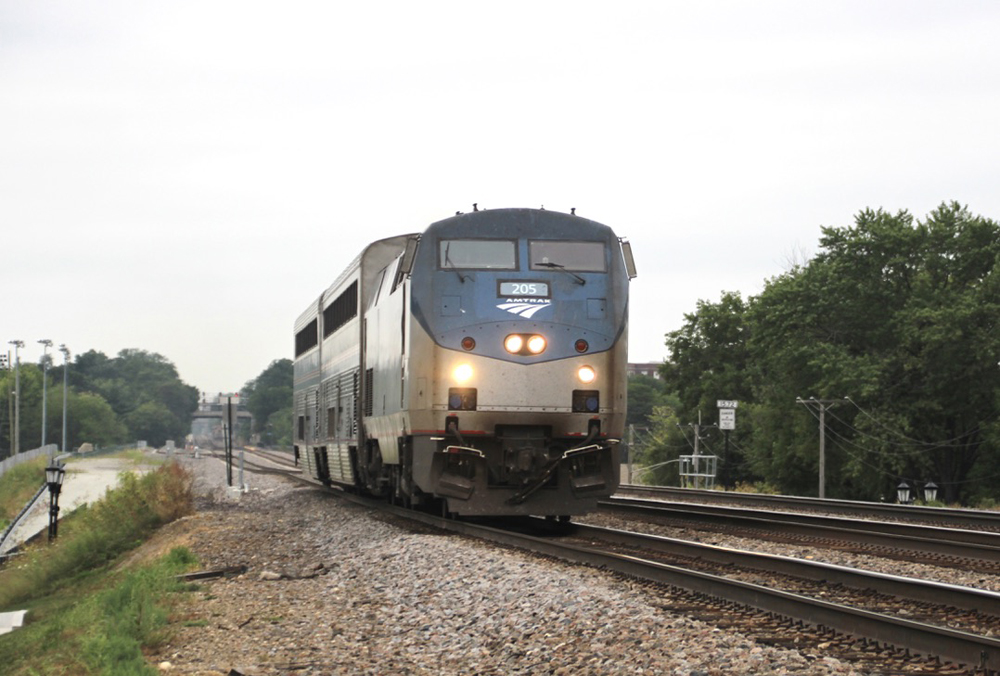
That said, other host railroads routinely permit short Amtrak trains without speed restrictions. These have consistently operated safely for decades without incident on their routes.
Is lack of curvature a possible issue? Canadian National’s Champaign and Centralia subdivisions are some of the straightest in the U.S. “Long stretches of tangent track only exacerbate the problem caused by lack of flange contact with the rail,” CN says, though the railroad correctly notes, “The same problems are happening across the country on both tangent and non-tangent track at a variety of speeds. In the interest to ensure absolute safety, we have chosen to implement strong safety related restrictions. It is because of CN’s unwavering commitment that we continue to push forward to a successful solution to mitigate this problem for the nation’s rail network.”
Further, the railroad states, “Even in the face of significant concerns and questions about on-time performance, CN stood firm in insuring operations were adjusted to safely take into account the uncertain nature of the random loss of shunt events.”
In addition to the Effingham test bed, CN constructed a test track on behalf of the National Loss of Shunt Committee in its Pontiac, Mich., yard to evaluate wayside signal equipment, as well as various antenna combinations mounted on locomotives and Hi-Rail vehicles. The railroad says data collected from the Pontiac test track and Effingham test zone “is applicable to any carrier experiencing a loss of shunt phenomenon with passenger trains of similar makeup and equipment. It is not subdivision-specific, and therefore does not require each subdivision to have its own group of tests.”
Until a definitive solution is determined, speed requirements may be imposed. The railroad says, “Each subdivision was reviewed, and based on a host of data points, such as maximum timetable speed, track curvature, and number of crossings, a specific restriction was crafted to minimize the impact to train operations but ensure absolute safety over the specific route. In the case of the Holly Subdivision (between Detroit and Pontiac, Mich.), the maximum speed noted in the timetable for passenger trains is 60 mph as the route does not allow for a greater speed.”
As results of the latest Effingham test are being evaluated, CN says, “Preliminary data collected with both the TCA antenna system active and inactive, conclusively show improvement of the shunting profile with this device. With CN’s leadership, freight rail, passenger rail, lawmakers and regulators are now fully engaged in a conversation about measures to ensure safe signaling by passenger rail. We are on a path to implement future solutions to ensure enhanced safe operations.”
Additional tests are ongoing. Trains News Wire will cover further developments.
Share this article