

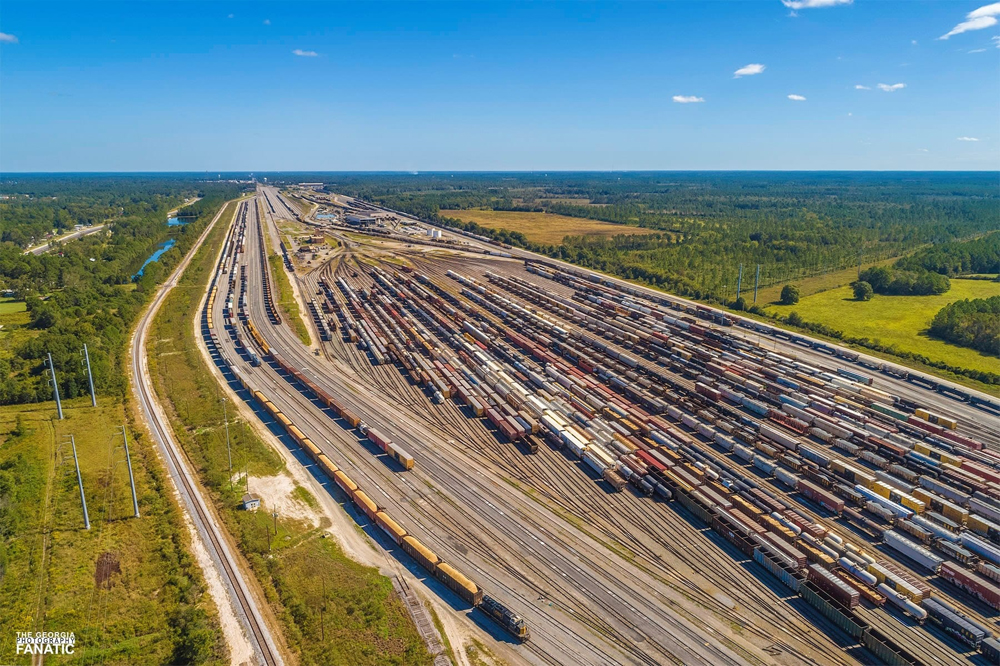
WAYCROSS, Ga. — If there’s one dot on the CSX system map that’s more important than any other, it’s Waycross, Ga., the home of Rice Yard.
CSX’s largest and busiest hump yard sits at the junction of the railroad’s main corridors to Chicago, New York, Florida, and New Orleans.
And with CSX expecting a wave of merchandise traffic growth from a record number of major industrial development projects coming to fruition in the next three years, Rice Yard’s role as a key cog in the Southeast will become even more critical.
“No manifest trains run around Waycross. It all comes in here,” Terminal Superintendent Arthur Clark said during an investor day yard tour last week. The yard builds 17 road freights per day for destinations across the system, plus five locals that serve customers in Georgia and Florida. It receives a like number of trains.
Waycross currently handles up to 3,000 cars per day, but CSX operating officials aim to boost that processing capacity to 3,300 by tweaking how trains and cars move through the yard.
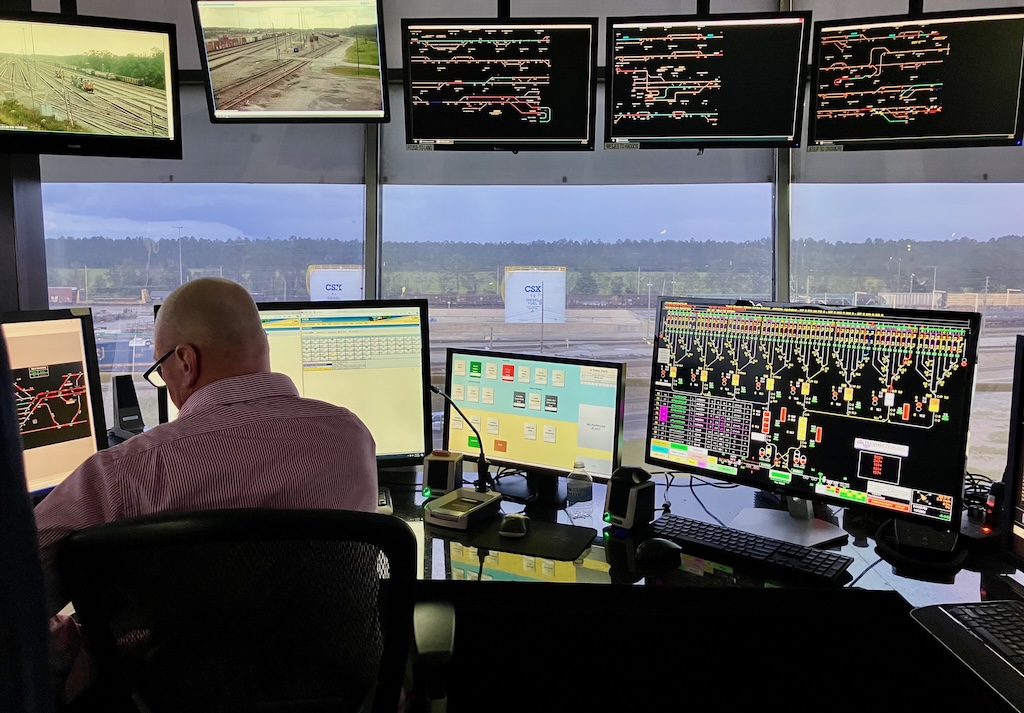
First, CSX has slowly increased the speed of hump shove moves to a fixed 2.5 mph, a 15% improvement over the past year, Clark says. “We think there’s a little bit more we can still tweak, but we do it incrementally so as to not cause any misroutes,” he says.
A car that’s misrouted onto the wrong track in the yard’s 64-track classification bowl takes crews 15 to 20 minutes to fish out. Since 2021 the misroute rate has been cut in half, to two out of every 1,000 cars that roll over the hump.
Second, to turn yard inventory more quickly, CSX is raising track speeds in the bowl pullout and 14-track departure yard to 15 mph, up from 10. “To get a 50% improvement in speed, it’s going to be significant,” Clark says.
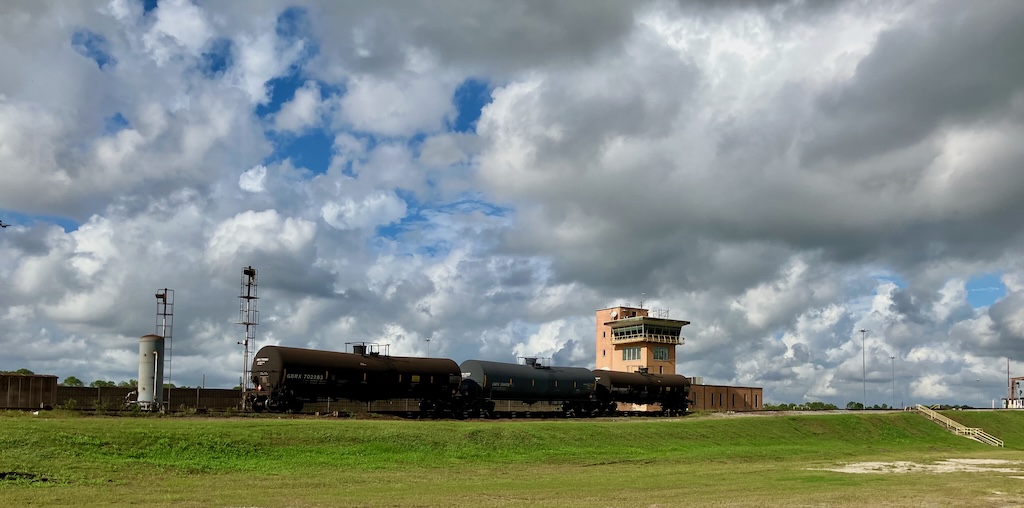
Third, the 10-track local yard can be used as surge switching capacity that can help the railroad recover from a hurricane or to simply keep up on higher volume days. “That helps us switch about 150 extra cars a day when we do get heavy,” Clark says. “So it’s kind of like a relief valve.”
Elsewhere, CSX now has three tracks (up from one) that allow maintenance forces to expedite car repairs without having to send the cars to Rice Yard’s shop. “These are defects that we can get turned around within a matter of minutes to get that train back out,” Mechanical Superintendent Ronnie Potts says.
And, looking longer term, CSX aims to reduce inspection-related track closures by deploying autonomous aerial drones that can spot defects such as broken rails, joint bar problems, and switch point gaps. CSX is currently using the inspection technology at Waycross and a dozen other yards.
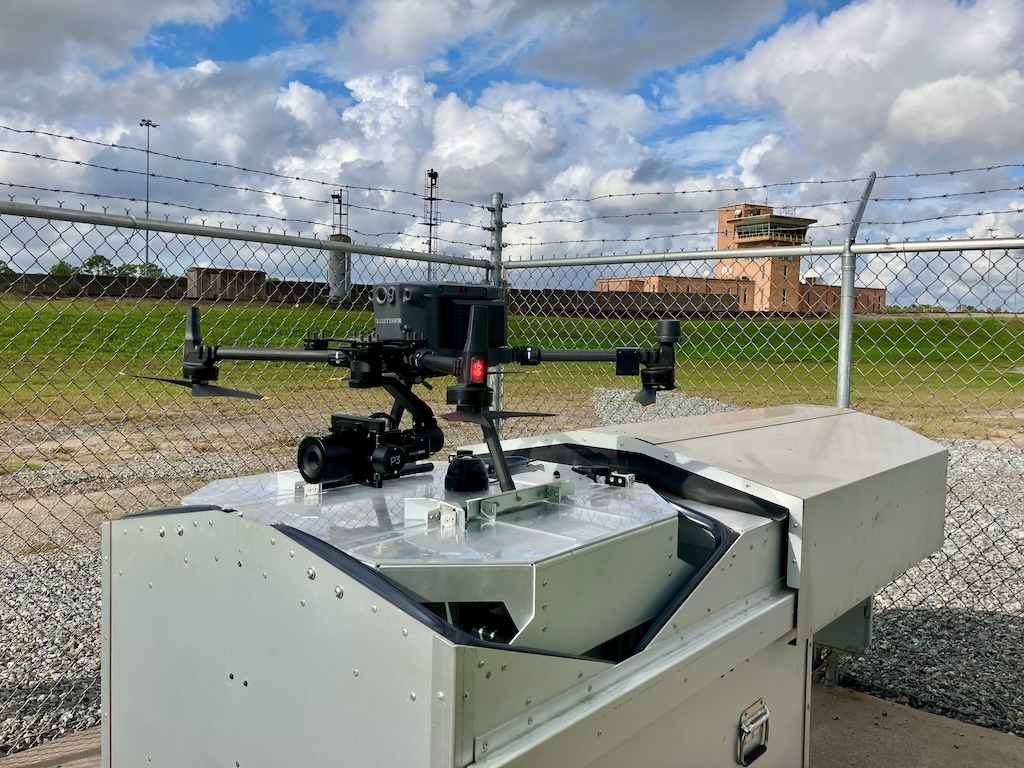
For now, the drones allow CSX to inspect track more frequently than the minimum 30-day intervals required under Federal Railroad Administration regulations. When a track is clear, the drone automatically launches from its base near the hump tower, trains its high-resolution camera on a track below, and then returns to its base. Once there, its inspection data is downloaded and its battery is changed robotically in about 41/2 minutes. If any defects are found, the yardmaster is notified automatically.
Ultimately, CSX hopes to gain FRA approval to allow the drone inspections to replace those performed by human track inspectors. The traditional visual inspection can shut down a track for an hour or two, while a drone inspection can be conducted without restricting operations. It’s another way CSX hopes to wring more productivity out of Waycross and other yards.
Rice Yard also is home to CSX’s largest locomotive and car shops, as well as the paint shop that has been producing the railroad’s heritage locomotive fleet. In all, 428 people work at the 700-acre yard that’s nearly five miles long.
Classification relies on two, single-person remote control locomotive assignments that use the dual hump leads. At the other end of the bowl, CSX assigns three, two-person remote control jobs that build trains and pull them to the departure yard. Overseeing it all: Two yardmasters stationed in the yard tower overlooking the hump.