

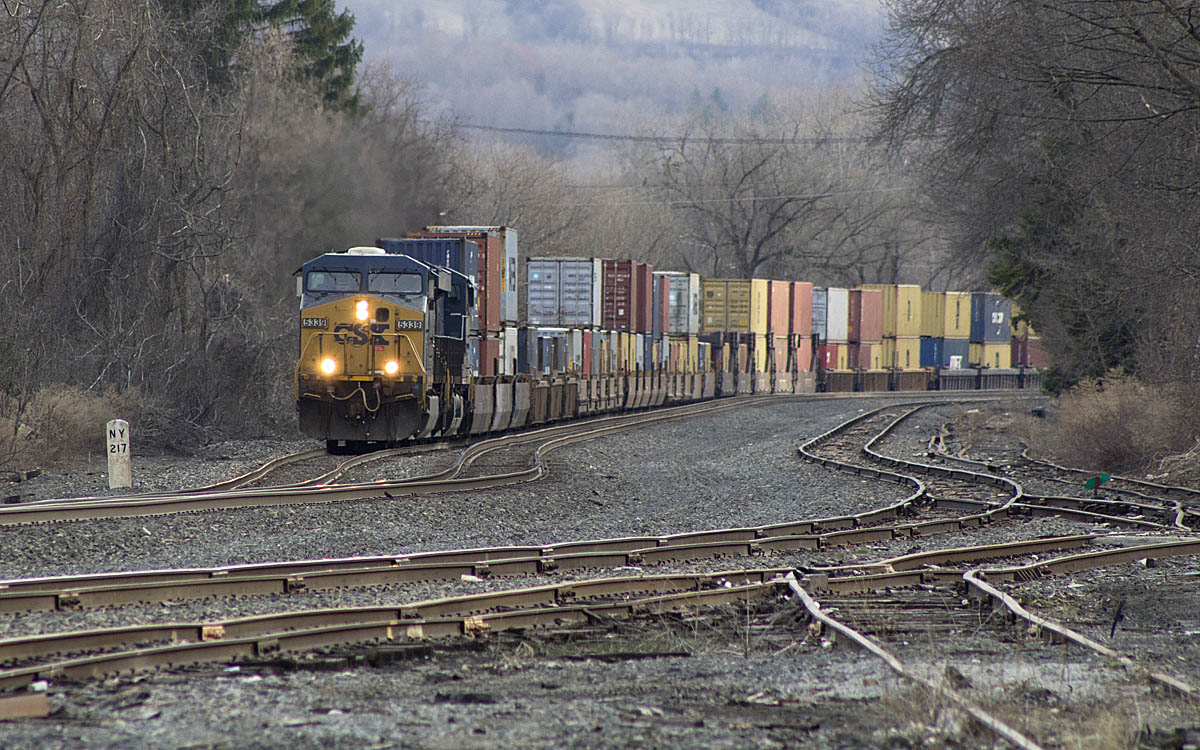
Class I railroads’ intermodal volumes have been strong this year, but the growing threat of an East Coast ports work stoppage risks upending supply chains just as the freight industry was normalizing.
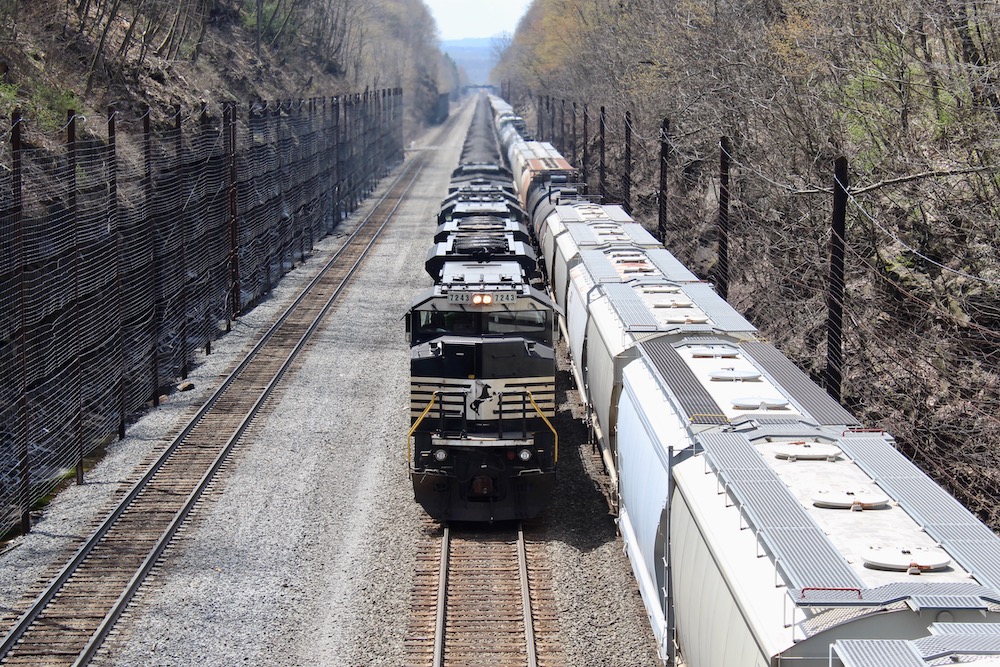
East Coast Class I railroads CSX and Norfolk Southern are keeping an eye on the potential for a widespread strike at intermodal ports along the East and Gulf coasts, but the threat of work stoppages at ports may not be detrimental to each railroads’ intermodal programs. Executives from both railroads recently spoke at Morgan Stanley’s 12th annual Laguna Conference.
CSX President and CEO and President Joe Hinrichs said an East Coast strike would not have a lot of risk for the railroad over an extended period because intermodal shifting to West Coast ports still must move to population centers in the East, creating a longer haul for the railroad.
“A lot of [intermodal] that comes into the eastern ports gets trucked from the port to the population centers that are on the Eastern Seaboard, so in many cases, it could actually be a short-term positive for us,” said Hinrichs.
CSX doesn’t want to see an East Coast ports work stoppage happen, pointing to its investment and growth in the East, but the threat doesn’t have major risk for the railroad currently.
Norfolk Southern’s newly appointed President and CEO Mark George, in one of his first addresses since his appointment last week, joined NS Chief Operating Officer John Orr at the conference. George said the railroad isn’t seeing freight diversions currently and the railroad’s intermodal program has largely been geared towards moving West Coast volumes into the East, referencing its strong partnerships with western railroads at Chicago. George said the railroad’s nimbleness allows it to handle volumes that shift from one region to another.
“There’s puts and takes on where it lands on our network. Either way, we have no problem moving it. So, it’s not really a big focus internally for us,” said George.
Labor negotiations have stalled out between the International Longshoremen’s Association and the U.S. Maritime Alliance, the organization representing ports, terminals, and ocean carriers. The current six-year agreement expires Sept. 30 and union workers have agreed to strike if certain conditions are not met. Among those include wage increases, retaining contract language limiting how automation is used, health care benefits, and higher retirement contributions. Most significantly, the union has asked for a 77% pay increase for its workers, significantly higher than the 32% negotiated for West Coast dockworkers last year.
Dockworkers represented by the stevedore’s union are employed at ports and terminals across the entire Eastern Seaboard and Gulf Coast, affecting most rail-served ports. CSX and Norfolk Southern have the most touchpoints within the potentially affected regions, but a strike would spill into the intermodal franchises of other railroads, likely involving most all Class I railroads in some fashion.
Intermodal volumes have been strong for most railroads this year with supply chains stabilizing and inventories returning to normal. So far this year, intermodal is up year-over-year across the four big U.S. railroads. BNSF intermodal volumes are up 16%; NS 8%; UP 6%; and CSX 4%.
Share this article