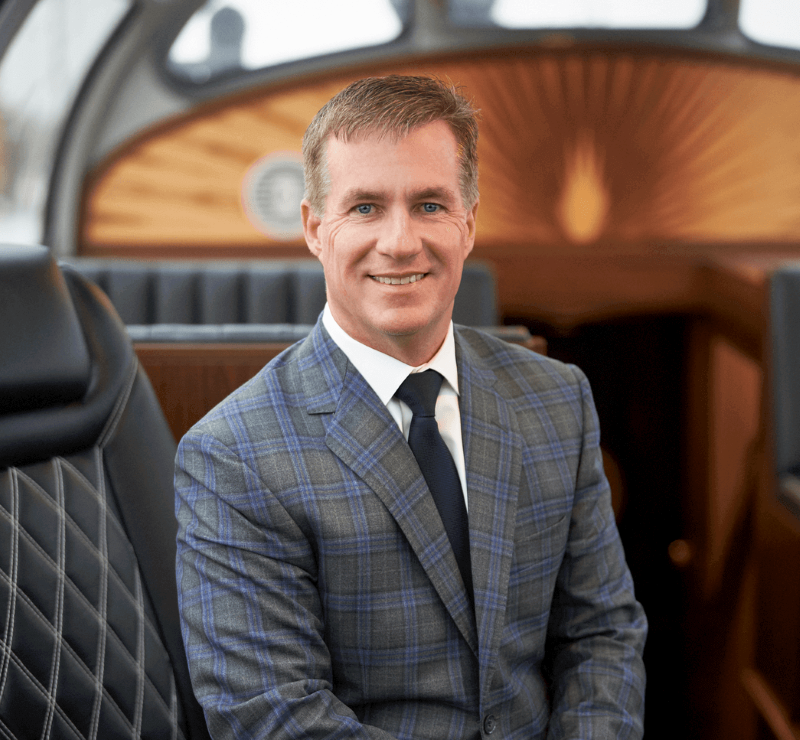
Jamie Boychuk, the activist investor candidate aiming to lead operations at Norfolk Southern, says improvements the railroad has made in recent weeks under new Chief Operating Officer John Orr — like increasing train velocity, reducing dwell, and removing 75 locomotives from active service — are low-hanging fruit that will help reduce the operating ratio by a point or two.
“What really needs to be done there, though, is we got to strip this thing down to the studs — and that’s the difference,” Boychuk told investors on a webcast today. “What our plan is, our plan is to really take it down to the studs. It’s got great, great bones and a good foundation as a franchise, as a railroad, but it needs to be redesigned.”

Boychuk was a key player in E. Hunter Harrison’s 2017 Precision Scheduled Railroading makeover at CSX and went on to become the railroad’s executive vice president of operations. He was dismissed from the railroad in August under new CEO Joe Hinrichs.
Activist investor Ancora Holdings has launched a proxy battle at NS, and is proposing a majority slate of directors. Ancora wants former UPS executive Jim Barber Jr. to replace NS CEO Alan Shaw. And it wants Boychuk to implement the low-cost Precision Scheduled Railroading operating plan at NS.
Aiming to fend off Ancora, NS last month brought PSR operating experience to its management team by hiring Orr, a former Canadian National and Canadian Pacific Kansas City operating official, to accelerate change.
Ancora released a detailed presentation today on its plans for the railroad. Among the proposed actions to reach a 62% operating ratio goal within 12 months: An $800 million cost improvement plan that involves storing 450 locomotives, idling 35,000 freight cars, improving fuel consumption, and reducing switching through a complete network redesign.
“None of this can really be done … through tweaking the operation through pulling unproductive pieces here and there,” Boychuk says. “This is what the full redesign gives you.”
Ultimately Ancora says its management candidates can produce a 57% operating ratio at NS. NS says it will reach a sub-60% operating ratio in three to four years partly through $550 million in productivity improvements.
Boychuk says the Ancora plan hinges on equipment- and operations-related cost reductions — not job cuts — because of the wave of workforce downsizing the Class I railroads have undertaken since 2017. Instead, the plan initially will rely on attrition to reduce the workforce by 800 positions. Ultimately, Ancora would use attrition to eliminate a total of 1,750 jobs.
Barber says NS needs to commit to operational excellence in order to improve service for customers and financial results for shareholders. “The foundation of that happens to be PSR,” he says.
The UPS and Norfolk Southern networks are similar, Barber says. Jim Casey, who founded UPS predecessor American Messaging Co., preached that the company should always have the best service at the lowest cost – which Barber says is applicable to railroads.
The NS resiliency strategy — which relies in part on not furloughing train crews during freight downturns to that the railroad can maintain service and capture volume during an economic rebound — is flawed, Barber says.

“That would be like us at UPS hiring a hundred thousand people at peak season and keeping them on for the next nine months, even though I don’t need them to be resilient,” Barber says. “And who do you think loses in that world? The shareholders do.”
That’s why it’s critical for NS to fully implement Precision Scheduled Railroading, cut costs, improve financial results and then bring on volume growth, Barber says.
NS shifted to a PSR-based operating plan under investor pressure in 2019. But Ancora says that transition didn’t go far enough and that Shaw’s better way strategy has reversed key tenets of PSR, especially its emphasis on operating with just enough locomotives, cars, and people.
CSX experienced a bumpy PSR transition under Harrison, who moved quickly and created widespread service problems that prompted shipper complaints and scrutiny from regulators.
Boychuk says Harrison moved too fast at CSX and failed to properly communicate with customers, regulators, and employees. Boychuk says he would roll out operational changes more slowly and with plenty of communication beforehand.
NS shareholders will vote on the dueling plans offered by current management and Ancora during the railroad’s May 9 annual shareholder meeting.
Barber, Boychuk, and Ancora board candidate Sameh Fahmy spoke with Deutsche Bank analyst Amit Mehrotra during today’s webcast.
Share this article