




As an Episcopal priest serving in Iowa in the 1960’s, I was lucky to have Gordon V. Smith as my bishop. Bishop Smith was always eager to do whatever he could to make life easier and happier for us clergy who were in his jurisdiction. He was fascinated with my interest in railroads, and was […]
Subscription: Metered
The Right Touch
For many years, the Lehigh Valley maintained some offices in downtown Philadelphia, even though this was an off-line point. In the mid-1940’s, the Valley relocated the offices to its building just west of the Bethlehem (Pa.) Union Station. The LV cushioned the hardship of the move by having a special chartered train run each working […]
Welch: Santa Fe’s Arizona Outpost
Before a 1960 line-relocation project, the two main tracks of the Santa Fe Railway’s transcontinental main line split at Supai, a few miles west of Williams, Ariz. The westbound track followed a more circuitous route, enabling trains to more easily climb the steep Supai hill. Twelve miles west of Williams the tracks met again, at […]
Amtrak trains on May 1, 1971
Note: Most trains grouped in pairs. Prior to November 14, 1971, Amtrak did not assign its own train numbers, instead using numbers assigned by the individual freight railroads operating its trains. 101, 104 – Metroliner – New York-Washington (Ex. Sun.)103, 100 – Metroliner – New York-Washington (Ex. Sat. and Sun.)105, 106 – Metroliner – New […]
Selling the service
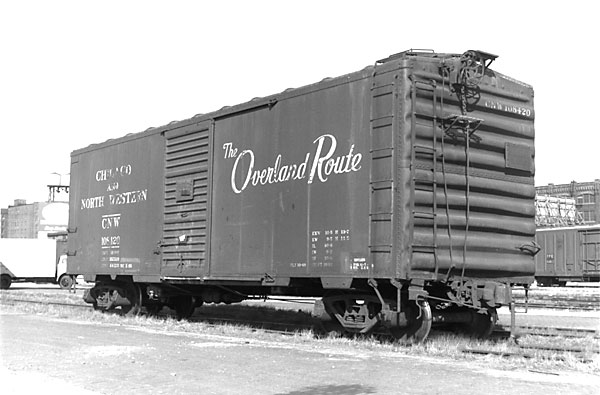
In the days before airlines and interstates began siphoning off rail freight and passenger business – and big railroads merged to form today’s even bigger mega-systems – virtually every large city and town was served by multiple railroads. Shippers had their choice of carriers to move goods between Points A and B. Passengers, too, had […]
ACL No. 1 Falters
Many years ago, when the Atlantic Coast Line was almost all double track from Richmond to Jacksonville and the passenger-train speed limit was 100 mph, a calamity nearly occurred in an obscure south Georgia swamp. ACL’s raceway occasionally would narrow to single track when encountering a drawbridge over a river, or a wide marsh associated […]
Outfits I Have Known
One of the most memorable aspects of my career in railroad maintenance of way is the “outfit.” An outfit was usually a collection of old revenue cars — both passenger and freight — converted to sleeping, cooking, shower, supply, tool, storage, and machinery transport use. An outfit could be one lone car for a signal […]
Some Water on the Cheap
Water was a problem for both the Clinchfield Railroad and for local residents at Elkhorn City, Ky. The town is in far eastern Kentucky, at the north end of the Clinchfield where it met the south end of Chesapeake & Ohio’s Big Sandy Division, forming a through route for merchandise as well as the region’s […]
Talking to the Man in the Hat
Like many a now-mature railfan, my passion for railroading began at an early age as I haunted the local depot. Many of us also met someone, usually a friendly clerk or an engineer, who inspired us to pursue our passions. For me, Wayne Junction, Pa., in the heart of Reading’s Philadelphia commuter network, was the […]
Last call to dinner
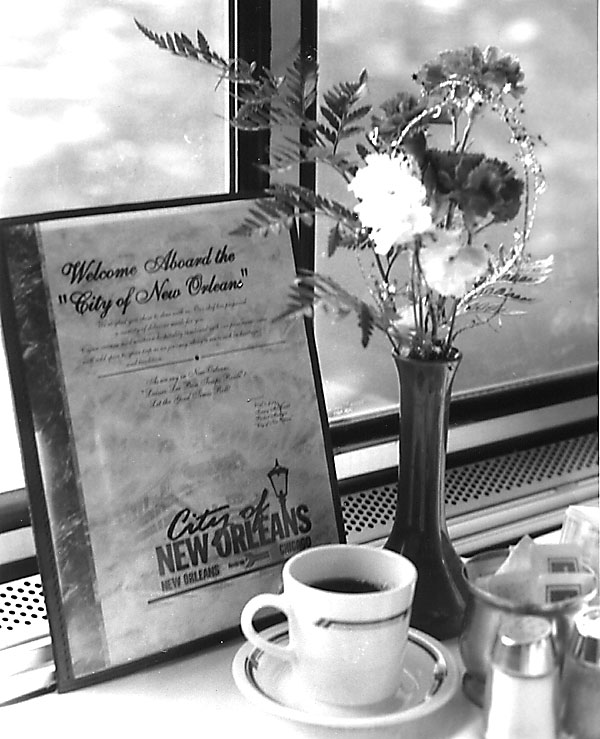
Enjoying a meal on board a moving train is an experience that is as popular today as it was in the late 1800s when the first dining cars were introduced on passenger trains. The singular combination of mouth-watering food, good company, and ever-changing scenery remains a selling point of long-distance train travel. “Settle down in […]
Life-Like Proto 1000 HO scale FM Erie-built diesels
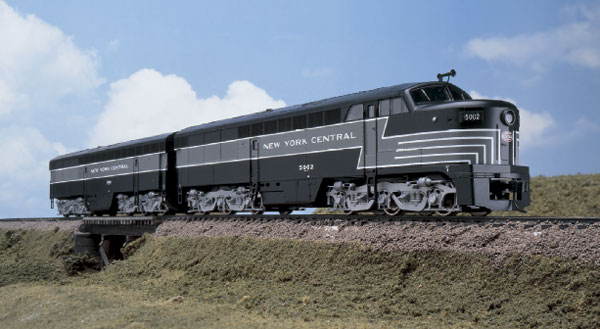
Life-Like Proto 1000 HO scale FM Erie-built diesels Here’s a change of pace for transition-era diesel locomotive rosters. Life-Like’s Fairbanks-Morse Erie-built locomotives are sturdy, fine-running replicas of a relatively rare prototype that was built for both freight and passenger service. Part of the Proto 1000 line, these models lack the fuller detailing of their Proto […]
Railroad electrification proposals
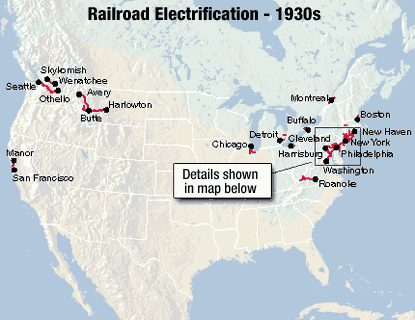
At the end of the 1930s, the United States stood as the world leader in railroad electrification. With 2400 route-miles and more than 6300 track-miles under electric power – far more than any other country – U.S. electrification represented more than 20 percent of the world total. Electricity was harnessed for a variety of railroad […]