

Should you include graffiti on your layout? When we set out to build our model worlds, one of the questions we end up answering is how realistic we want to be. This answer is defined by what we decide to include, and what we chose to ignore. Most of these choices will create little controversy, but there’s one that’s sure to get people to choose sides.
Graffiti
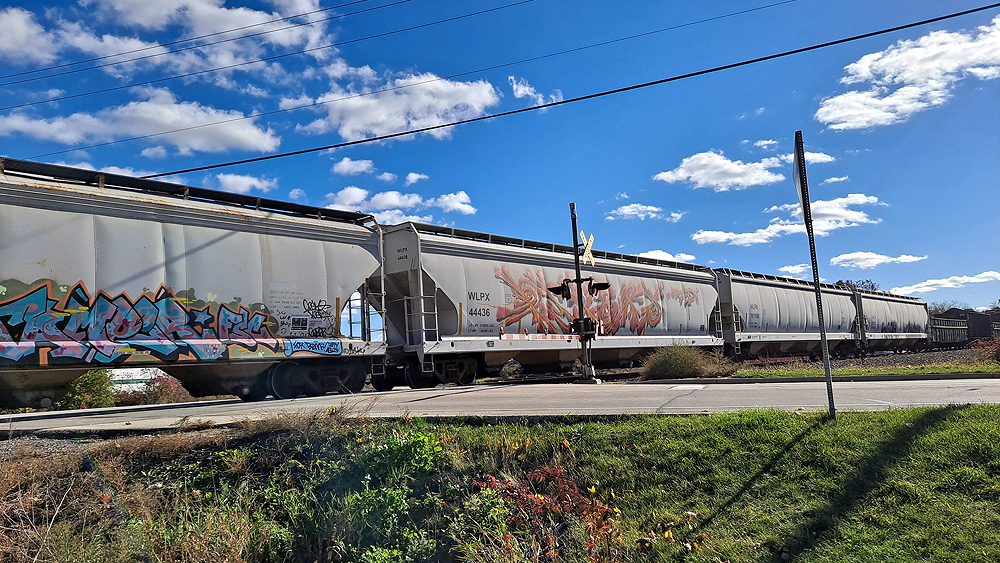
It’s nothing new; archeological digs at Pompeii, the famous Roman city covered in ash by Mount Vesuvius in the year 79, uncovered graffiti not unlike what we see today, other than being written in Latin. While that’s certainly interesting, our focus here is on railroad models, so it’s the graffiti we see on railcars we’ll pay attention to.
One way to avoid the discussion is to model an era before the 1980s, when graffiti on railcars was still most often chalk marks made by yard workers. But by the end of the 80s, graffiti was starting to proliferate. Modern modelers therefore have a choice to make: include it or ignore it.
There are very strong feelings against it. Graffiti is vandalism and therefore illegal. Just as some folks don’t wish to depict other criminal activity on their layouts, they may decide not to include graffiti. That’s certainly legitimate. These are our worlds, and we get to decide what they should look like.
Where we can run into a problem is if we claim to strive for realism by depicting the world around us accurately. If we say this and model an era where graffiti is commonplace, but it isn’t to be found on our layouts, then we miss our own stated goal. So let’s look at the pros and cons of whether you should include graffiti on your layout.
Many well-known modelers have included graffiti on modern-era layouts.
“I don’t really overthink it. If something is there I model it. In some locations in Miami the quality of the tags approaches that of mural artists. Often a gray cinder block wall looks better after being tagged. However, it is still vandalism unless you get permission,” says frequent MR contributor Lance Mindheim.
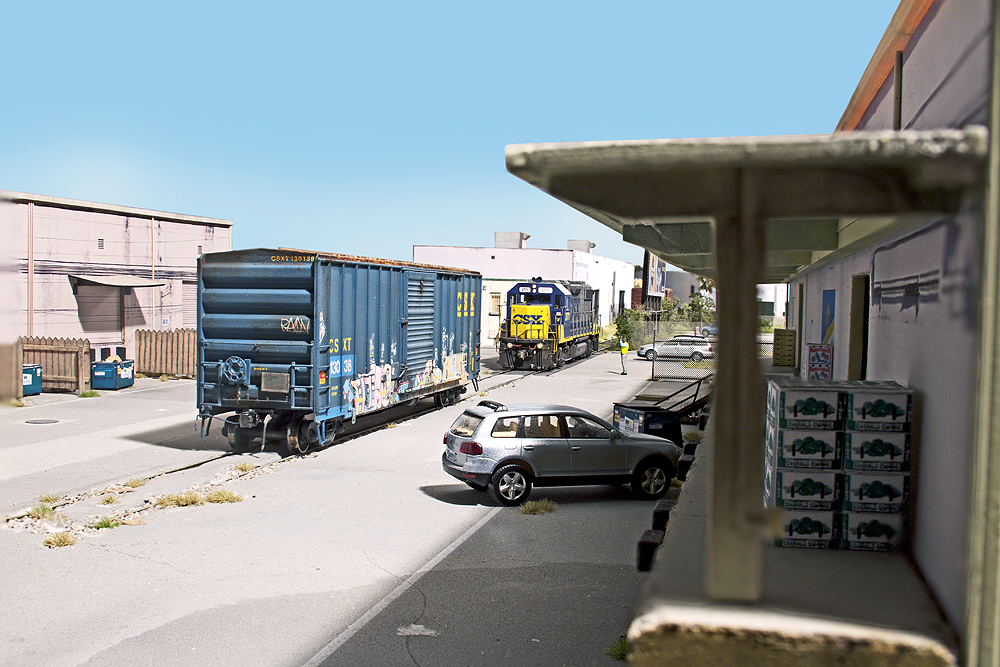
Making choices
Some don’t model the “graffiti era,” but aren’t opposed to it.
“I don’t model an era affected by much graffiti, but if I did, I’d include it like any other detail such as rust, broken boards, weathered rolling stock, peeling paint, etc.,” said MR contributing editor Tony Koester. “I can’t decide that all structures in the 1950s were painted yesterday, that all locomotives and rolling stock were shopped earlier this week. I am not at liberty to edit out imperfections.
“That said, were I modeling a major city scene, I would not go out of my way to depict someone being mugged or worse. No sense looking for trouble. But in recent years, ignoring graffiti would involve a major editing effort, and the resulting scene simply would not reflect reality,” Tony said.
Another of our contributing editors, Pelle Søeborg, sees it as a necessary evil.
“Personally I don’t like graffiti. I simply don’t see the point in vandalizing other people’s property. But if you model present time, as I do, you can’t ignore it.
“It may sound contradictory that I hate graffiti but still model it, but modeling is about making believable scenes. I also don’t like filthy locomotives. I like nice clean locomotives better, but I still weather my locomotives because that is how they look in the real world. I model what I see, raw and unfiltered, and it is not always pretty.”
Cody Grivno has ideas on how to add graffiti to your models here.
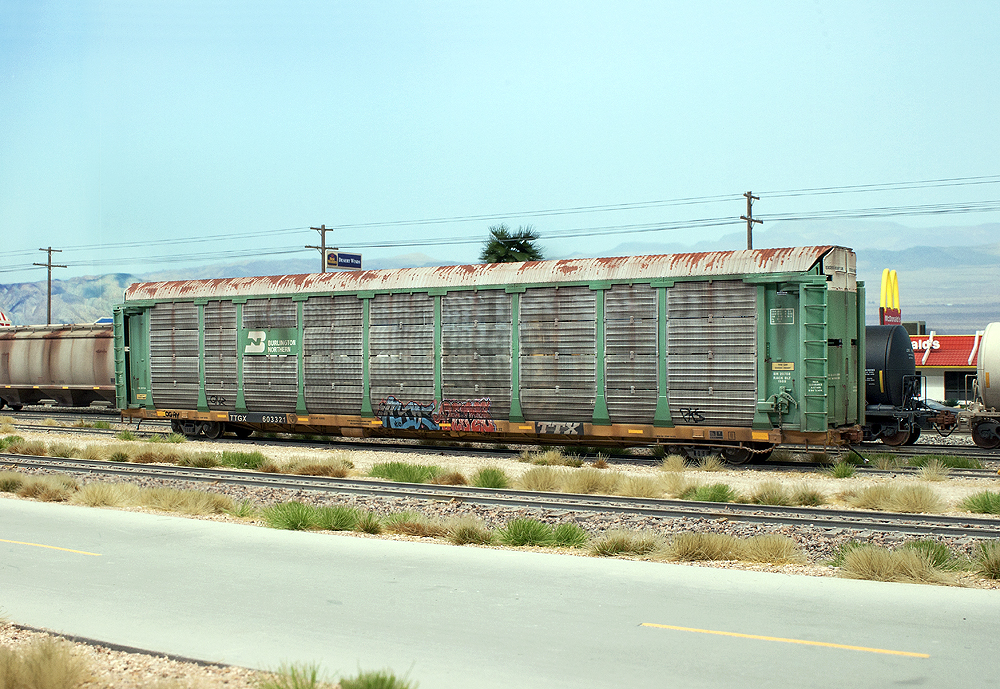
The realism problem
Another modeler who falls into the graffiti era is Dave Abeles.
“Graffiti is part of the scene on modern freight cars as well as areas along the tracks and right-of-way. Coincidentally, my 1994 era predated much of the extensive graffiti we see today on equipment, but I do roster some cars with it. Graffiti is a detail element like chalk drawings or trackside litter, and as such it’s important to include to some degree based the prototype.”
But there’s also Model Railroading Rule 1 – it’s my railroad, and I’ll do what I want.
“I’m sort of on the fence on this graffiti thing,” says Gerry Leone. “However, if you’re a modeler who’s modeling a ‘could have been’ railroad, or a ‘should have been/could be’ branchline, or a prototype-based railroad in which you’ve eliminated or rearranged the prototype towns, you’re already tinkering with reality and creating your own world. So if you’ve taken the opportunity to say ‘The Union Pacific’s Elk River Branch is now a reality in my basement,’ you can also say, ‘And freight car graffiti never came about in this world.’ They’re both equally as valid in my book. And let’s face it: who among modelers is fully faithfully reproducing reality when they’ve got two giant 2-56 machine screws holding the trucks on to their freight cars?”
Lou and Cheryl Sassi offer similar thoughts on whether you should include graffiti on your layout.
“If you want to model an era which includes graffiti realistically, you would most likely try to include some of it. If you want to make your model railroad what you want and do not like drawings all over your cars, then you leave it off. Remember the old adage: It’s your layout and you can do what you like.”
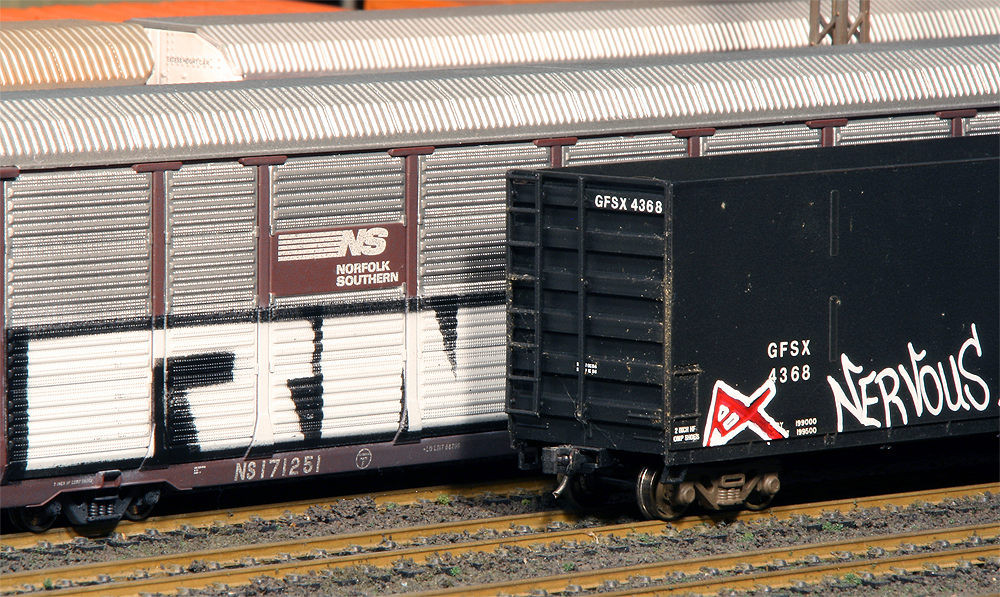
Modeling graffiti can be tricky. Some of it takes talent to create, and if you want to replicate a particular car, you’ll have to develop similar talents if you don’t already have them. Matt Snell offered suggestions in a Model Railroader article in the April 2012 issue. Matt Snell photo
A polarizing topic
Matt Snell reminds us about how touchy the subject can be.
“The first thing of note is what a polarizing topic this can be. I’ve heard many near arguments about the plus/minus of this subject.
“With that said, I model the modern era and if you are modeling any large urban area it is present and almost ‘normal’ in varying degrees. Even the smaller and more rural areas have it, and often always have, such as the names painted on the side of a bridge or water tower.
“Then there’s the trains themselves and as it stands right now, what used to be limited to lower thirds of the solid side cars has now expanded to entire sides and even locomotives too. Where do they get the time – and the paint?”
Railroad graffiti has a long history.
“My next thought goes to the degree and what it represents – or can. I am told a large part of what we see is gang related. I’m not a criminologist by any means, but what I see out there is a mixture of scribbles right up to pieces of ‘art’. What I am sure of is that some ‘taggers’ have become sophisticated enough to leave the required data intact so their ‘work’ is not painted over by a railroad carman.”
Should you include graffiti on your layout?
When I’m trackside, watching the graffiti is occasionally interesting. There are some talented people painting freight cars. But there’s much more of it that’s just ugly. My overall inclination is to try to depict things as close to reality as possible, so for a modern layout, that means including graffiti. Where do you stand?
Share this article