

Model Railroader is celebrating its 90th anniversary in 2024, so there’s a lot of history there, with all kinds of innovations, great layouts, and amazing products. One thing there hasn’t been is a model railroaders hall of fame.
It’s time to do something about it, so this year, we’re going to nominate people we think should be in a model railroaders hall of fame, and we’re going to ask readers of Model Railroader magazine and members of Trains.com to weigh in.
Each month, we’ll nominate a few people we think deserve recognition as the inaugural class of the Model Railroaders Hall of Fame, and we’d like you to vote. We’ll also have a comments field so you can tell us why you voted as you have. If you want to make a suggestion for a nominee, please e-mail us at editor@modelrailroader.com. To be eligible, candidates should have made recognizable contributions to the hobby, either as modelers, innovators, manufacturers, communicators, or some combination of those attributes. This will be a posthumous award to ensure the folks recognized are remembered.
We’re starting off with three people who have each had a large impact on the hobby, and given where this is starting, it shouldn’t be a surprise that the first nominee is our founder, Albert C. Kalmbach.
Al Kalmbach
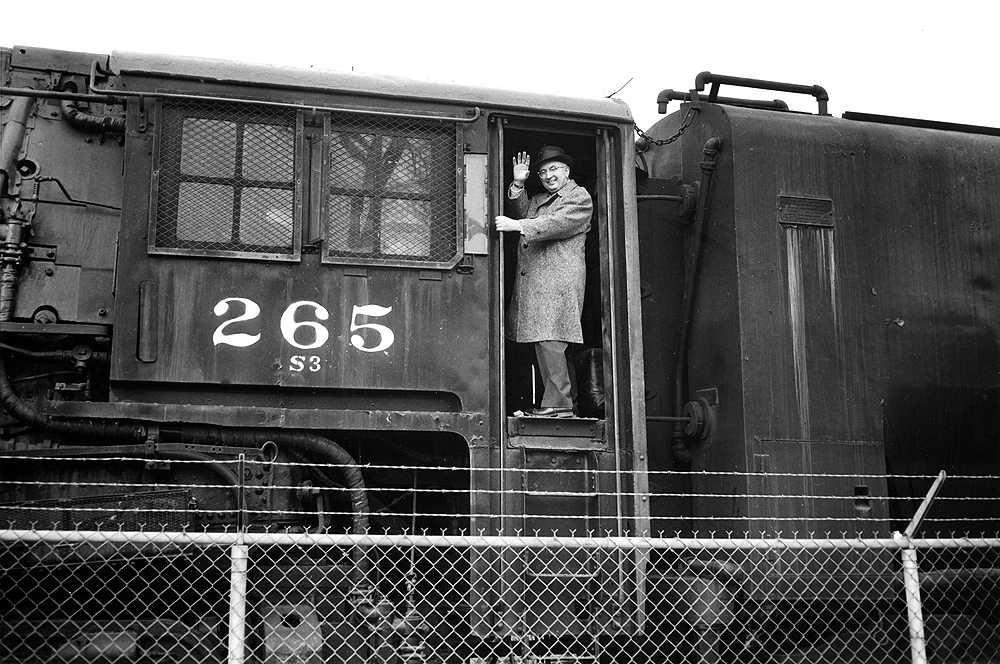
Al started The Model Railroader in the midst of the Great Depression, sending out his first issue in January 1934. Al was a printer by trade, and was making a living with a print shop in West Allis, Wis., a Milwaukee suburb. Al was also a model railroader, and had a group of friends involved in the hobby. He thought there might be a need for a way for folks to learn about the hobby, so he started his magazine.
Given the times, this was a significant gamble, but it certainly paid off, and it was clear he had found an audience. In 1940, Al would found Trains Magazine just before the United States would find itself embroiled in World War II. Both magazines survived the war, and were perfectly positioned to reap the rewards of a booming postwar economy and population that was looking for diversions in a quickly changing world.
Al used his organizing skills to help get the National Model Railroad Association off the ground, and with Wm. K. Walthers helped form a hotbed of model railroading in the Milwaukee area. Al would helm Kalmbach Publishing Co. (now Kalmbach Media) until his death in 1981. It’s safe the say the hobby would have been much different without the company he founded, which leads us to the next nominee.
Linn Westcott
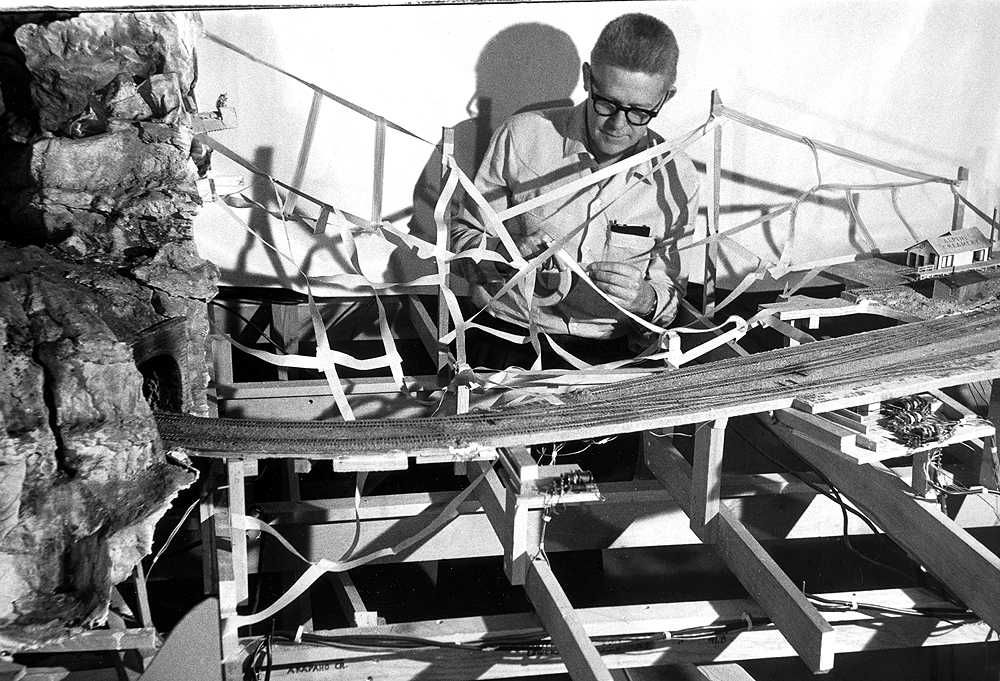
Linn Westcott was the editor of Model Railroader from 1961 to 1977, and while he held that position, and even before, he found the time to offer many innovations to the hobby. People still build their layouts using Linn’s L-girder benchwork, made by adding a 1×2 or 1×3 flange to a 1×4 or 1×6 plate to create an inverted L-shaped beam that’s light, cheap, and strong. Hard-shell scenery, where paper or cloth is dipped in soupy plaster and draped over a form of wadded newspaper and masking tape, is another innovation that remains with us today, albeit with updates such as plaster-impregnated gauze and woven cardboard forms.
Linn was also interested in electronics. He created some of the first transistorized direct-current throttles, as well as detection circuits to trigger signals, and momentum features for DC throttles. Linn joined the staff of Model Railroader during its first year of publication as a draftsman, with his name appearing on the masthead in September 1934. Earlier that year, he had an article on building an automatic pantograph, complete with cutaway drawings. Linn was also know for his photography, appearing in articles about various model railroading subjects, and is also known as an accomplished railfan photographer.
W. Allen McLelland
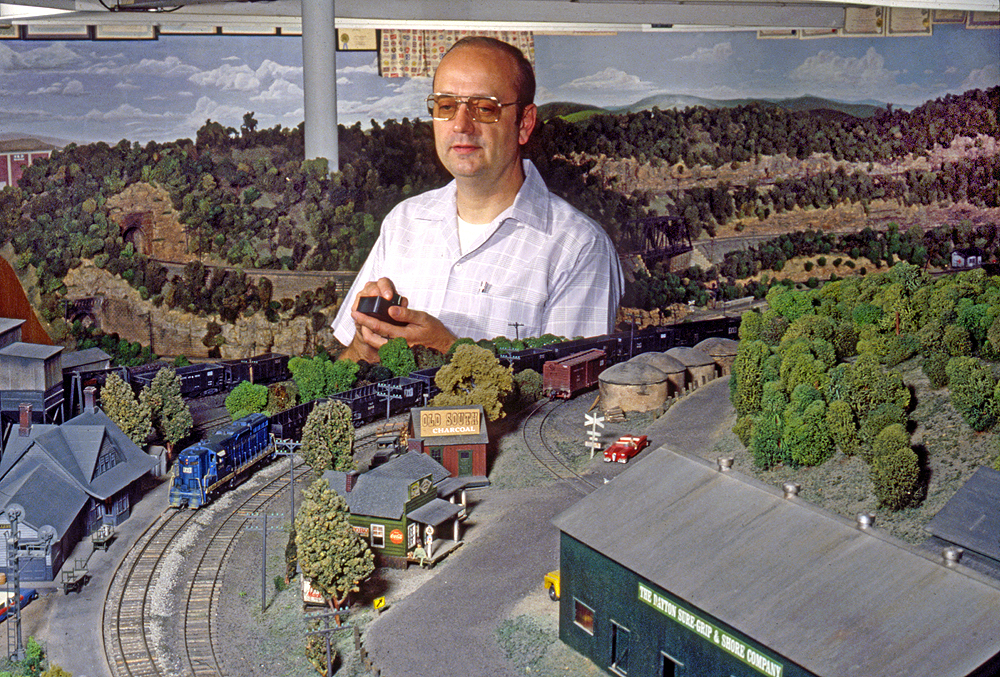
Our third nominee, Allen McClelland, is best known as the builder of the freelanced Virginian & Ohio HO scale model railroad. The part that made the V&O more than just a model railroad was the way Allen wanted to make it a believable transportation system.
Allen’s railroads (he built more than one part of the imaginary V&O) didn’t run in a circle. They started at one place and went to another. The track didn’t circle over itself, the main line only appeared once in each scene. At the end of the railroad, the main line disappeared out of view and went to a staging yard, where trains could wait for their next appearance “on stage.” The layout was built with a linear design so the operator could follow his train around the layout. This meant Allen had to design a control system operators could carry with them, and walkaround Digital Command Control throttles didn’t exist in the 1960s.
Allen saw what model railroading could be, and moved to make his vision happen. Neary everything that has come since in layout design can be traced back to Allen and his Virginian & Ohio. Allen was important enough we published a book about him. Certainly, he’s someone who deserves to be recognized!
You can vote for the January candidates here.
Share this article